


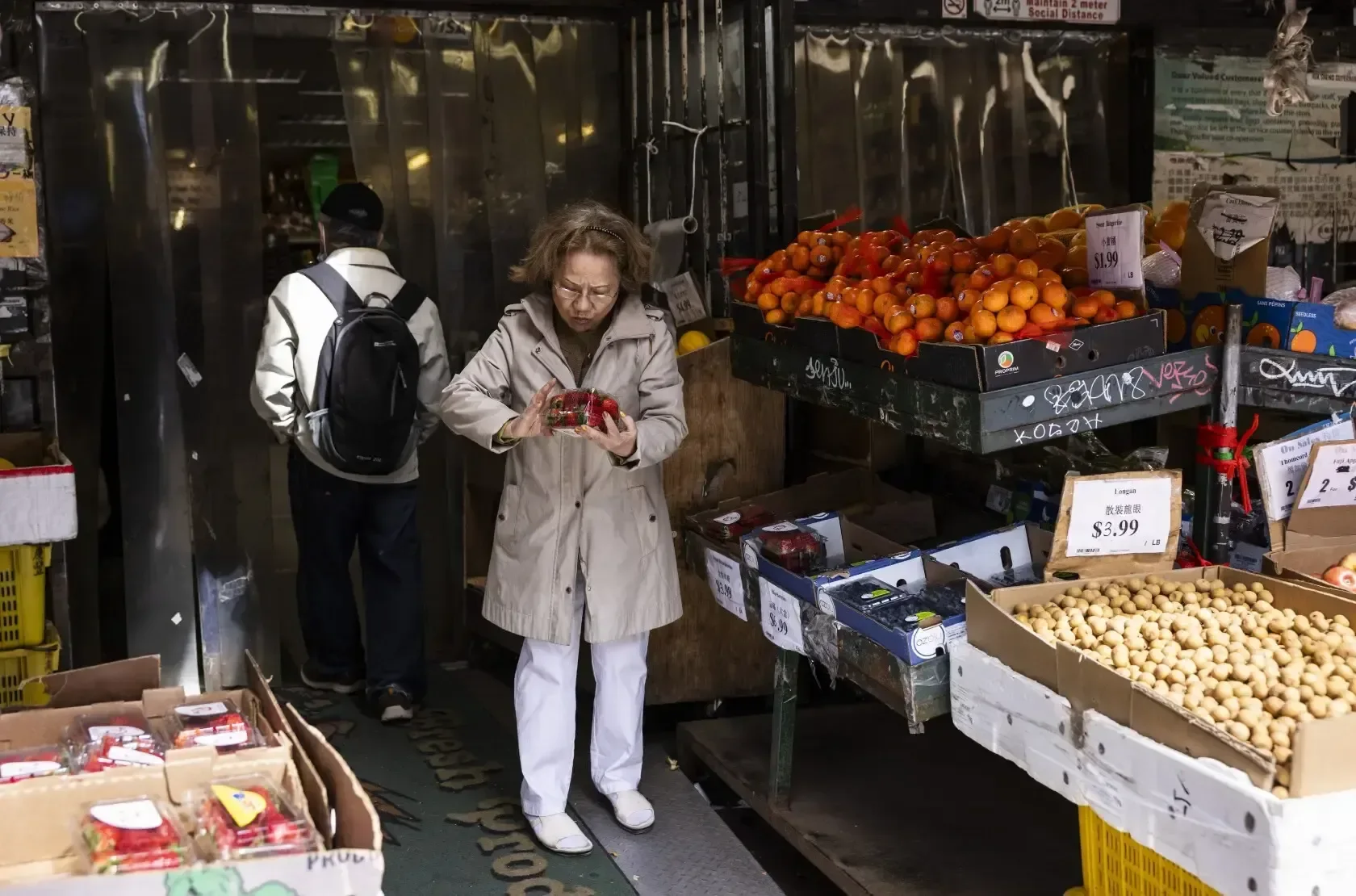
Toronto Chinatown produce can cost less because small grocers buy and sell in a different way. Prices move daily. Stores can choose smaller wholesale lots, pack more food into less space, spend less on marketing and sell ripe food quickly.
The cheap price does not automatically mean the food is unsafe. It also does not mean every item will last a week. The best first shop is a small basket for the next two or three meals.
This guide explains where the food comes from, how to check quality, what the latest public health records say and how to store the food so a bargain does not become waste.
<div class="lit-quick-picks">
The short answer
- Best first stop for variety: Lucky Moose Food Mart.
- Best first stop for the classic Spadina sidewalk-market feel: Kai Wei Supermarket.
- Useful second price check on the same walk: Hua Sheng Supermarket.
- Best buying rule: Buy ripe fruit for tonight and sturdy vegetables for later in the week.
- Best safety check: Look at the current DineSafe record, then inspect the actual item.
- Biggest mistake: Buying a large amount because it is cheap without a meal or freezer plan.
- Important fact: The Ontario Food Terminal is wholesale only. It is not a public discount market.
</div>
Is there a catch with cheap Chinatown vegetables?
Usually, the “catch” is time and service, not a secret ingredient.
Some fruit may be fully ripe and ready to eat. It can taste excellent today but soften quickly. Some vegetables may be a less uniform size or shape. The store may have narrow aisles, simple displays and fewer staff.
The trade can be worth it. You get a lower price. You give up some of the long shelf life, space, presentation and easy return service that a larger supermarket may build into its price.
That trade is not the same for every item or shipment. Chinatown shoppers also find firm vegetables and fruit that lasts well. Judge the food in front of you, not the store category.
Seven reasons the price can be lower
There is no single Chinatown discount switch. Several small advantages can add up.
1. Wholesale prices change every day
Fresh produce is not like a box of cereal with one stable wholesale cost.
Weather, harvest size, border delays, holidays, restaurant demand and how quickly a shipment needs to move can change the price. The Ontario Food Terminal calls itself a stock exchange for fruit and vegetables because supply and demand set prices that can move daily.
A small grocer can see a good lot in the morning and price it to move that day.
2. A small store can use a smaller opportunity
A national chain needs a very large, uniform supply. It may need the same apple size for many stores and enough volume for a distribution system.
One neighbourhood market has a different problem. It only needs enough for its own shelves. That can make a smaller lot useful.
Independent buyers may also work with other buyers or wholesalers. Pooling a large purchase and splitting it is a known practical idea in the trade, but no public source proves that each market in this guide uses it.
3. Ripe food has to move
A peach that needs four days to become ready may suit a weekly supermarket trip. A peach that is ready tonight suits a busy market with regular local shoppers.
When a wholesaler has a lot that needs quick sale, a store willing to move it fast can sometimes get a better price. The shopper gets flavour sooner and storage time later.
This is why a very cheap berry can be a great dessert and a poor plan for next Friday.
4. The stores use space hard
Chinatown grocery aisles can be tight. Boxes become displays. Outdoor stands put a large amount of food in front of a small storefront.
That can lower the amount of retail space needed for each item. It also creates a real accessibility problem for some shoppers. A person using a wheelchair, walker or large stroller should expect tight turns and ask staff for help.
5. There are fewer extras to pay for
A small independent market may have no loyalty app, national ad campaign, large prepared-food department or wide decorative aisle.
That does not mean large-store services are fake. Space, delivery, customer support, online ordering and a broad return policy cost money. Some shoppers need them.
But a person buying bok choy for dinner may prefer a basic store that puts most of its effort into selling food.
6. Competition is close and visible
Several produce sellers operate within a short Chinatown walk. A shopper can see a price, cross the street and compare it.
That is real local competition. The federal Competition Bureau has said Canada's grocery business is concentrated and that independent grocers can improve choice. It has not said every high price is illegal or that every independent price is fair.
The useful fact is simpler. More nearby choices make it easier to say no to a bad price.
7. The customer base knows the ingredients
Many Chinatown shoppers buy leafy greens, herbs, mushrooms, gourds and other fresh ingredients often. A store can move a large amount of a product that another neighbourhood may treat as a small specialty item.
High demand can improve turnover. It can also make a product less “special” and less expensive.
Does all Toronto produce come from the Ontario Food Terminal?
No. The Ontario Food Terminal is a major source, but it is not the only source.
The terminal says it moves more than 2 billion pounds of produce a year. It serves local fruit and vegetable stores, independent supermarkets, chain supermarkets, restaurants, farmers' markets and other buyers.
Large grocers can also buy directly from growers or use their own warehouses and contracts. Small stores may use a wholesaler, the terminal, a farm or a mix.
That means two stores can sell fruit from the same region without selling the same lot, grade, size or stage of ripeness.
<div class="lit-place-card">
Ontario Food Terminal
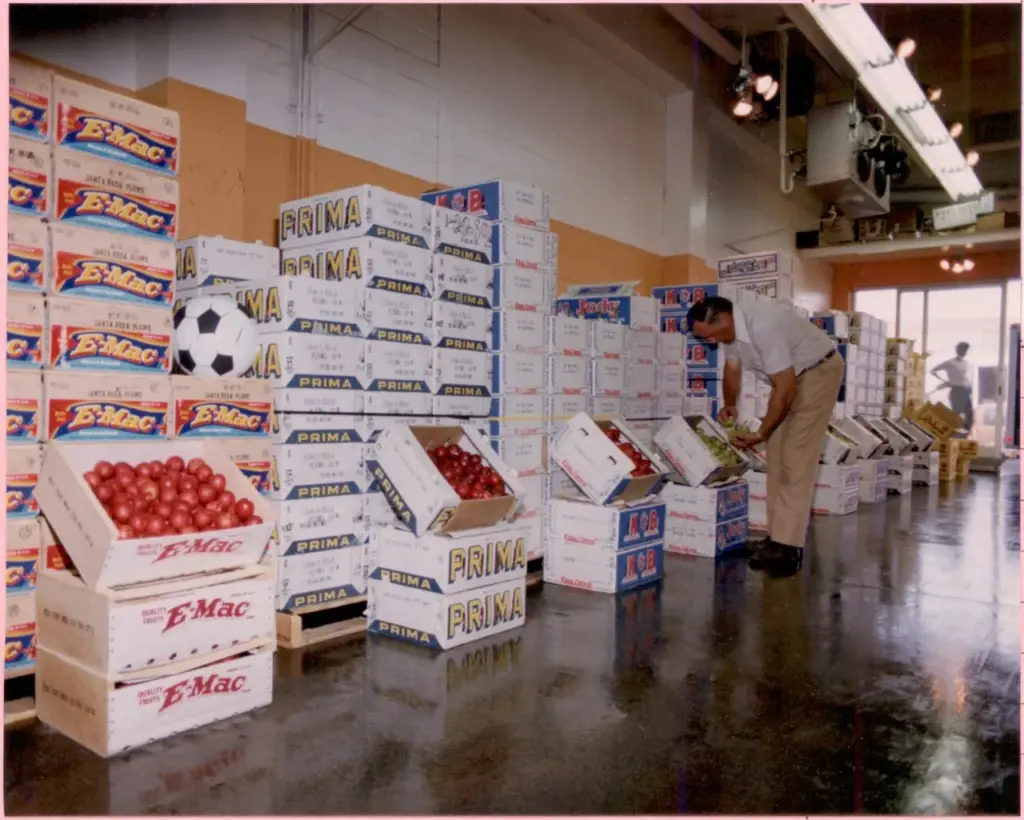
The Ontario Food Terminal at 165 The Queensway is the engine behind much of Toronto's fresh-produce trade. It is worth understanding, but it is not a place for a normal household shop.
Only wholesalers, Farmers' Market occupants and registered buyers may purchase there under the current rules. Sales are wholesale. Do not drive there expecting a public fruit stand.
Its value to a shopper is indirect. It gives many independent stores access to many sellers in one place. Daily supply and demand can create the short-term buys that later appear on a Chinatown sidewalk.
</div>
Is the produce lower grade?
Sometimes it may be a different grade, size or appearance. “Lower grade” does not describe every bargain and does not mean unsafe.
Food grades can cover quality traits such as size, colour, shape and defects. The exact rules depend on the fruit or vegetable. Grade does not tell you where food was grown. It is also not a public-health inspection of the store.
A bent cucumber can be crisp. A small apple can taste good. A spotted leaf can be trimmed.
Food with mould, leaking liquid, a bad texture or serious decay is a different matter. Do not buy unsafe food because it has a charming shape or a low price.
Is imported produce less safe?
Country of origin is useful information. It is not a safety score.
The Canadian Food Inspection Agency says food sold in Canada must meet Canadian safety requirements whether it is domestic or imported. Imported prepackaged fresh fruit and vegetables generally require country-of-origin labelling.
Read the sign, box or package. Ask when the origin is not clear. Do not assume an Asian vegetable came from China. Ontario growers produce many vegetables and herbs for local communities.
Rumours about farming practices in another country do not prove anything about the item in your basket. Use labels, recalls, inspection records and the condition of the food.
How to inspect produce before you buy it
Use your eyes and hands. Do not squeeze everything hard.
Leafy greens
Look for crisp stems and leaves that are mostly firm. A few tired outer leaves may be easy to remove. Slimy patches, wet decay and a sour smell are reasons to leave the bunch.
Check the centre of a dense bundle. Moisture can hide there.
Berries
Turn the clear container over. Look for juice, collapsed fruit or fuzzy mould at the bottom.
One crushed berry can spread moisture. If the box is deeply discounted and the rest looks sound, buy it only when you will sort, eat or freeze it right away.
Tomatoes, peaches, mangoes and other soft fruit
Press very gently near the stem. A little give can mean ripe. A sunken wet spot can mean damage.
Buy different stages if you want fruit over several days. Choose one ripe piece for today and firmer pieces for later.
Root vegetables and squash
These are often safer choices for a longer plan. Look for firmness and avoid deep soft spots, leaking cuts or major mould.
Surface dirt is normal. Active wet decay is not.
Herbs
Lift the bunch and check the stems. Fresh-looking leaves above can hide black or slimy stems below.
Buy only the amount a recipe needs unless you have a second use.
Packaged food beside the produce
Fresh whole produce often has no best-before date. Packaged rice, sauce, tofu and other products have their own labels and date rules.
Read them. Do not let a cheap produce basket make you stop checking the rest of the cart.
Check DineSafe, not stereotypes
Store size, language and aisle width do not tell you the current food-safety result.
Toronto Public Health publishes DineSafe inspection records for food premises. A green Pass is a dated inspection result. It does not promise that nothing will ever go wrong. A past closure is also not proof that a store remains unsafe forever.
Look at the newest result and the history. Then look at the store today.
The three markets below were checked in the City dataset on August 27, 2026. Their results can change after this article is drafted.
Three Chinatown produce markets worth comparing
These are not interchangeable. The useful move is a short loop with a shopping list. Compare the item you actually need.
<div class="lit-place-card">
Kai Wei Supermarket
Address: 253 Spadina Avenue
Kai Wei is the strongest first stop for the classic Chinatown produce experience. The outdoor display makes prices easy to scan before entering. Inside, expect a compact supermarket, not a wide suburban aisle.
The best use is a focused fresh-food shop. Check ripe fruit carefully. Look at leafy greens from more than one side. Buy a small amount the first time so you learn how that day's stock holds in your kitchen.
The inspection history needs a clear explanation. Toronto Public Health closed Kai Wei on February 19, 2026 after crucial and other infractions. It passed a reinspection on February 24. Its July 9 inspection was also a Pass, with two minor infractions recorded.
That history should not be hidden. It also should not be written as if the February closure is still in force. Check the live DineSafe record before shopping.
Payment methods, hours and return rules can change. Confirm them directly. Tight aisles and sidewalk displays may be difficult for some mobility devices.
</div>
<div class="lit-place-card">
Hua Sheng Supermarket
DineSafe address: 293 Spadina Avenue
Hua Sheng is a useful second check after Kai Wei. It gives a shopper another set of prices and another shipment to inspect without planning a separate trip.
The Chinatown BIA lists 299 Spadina Avenue, while Toronto Public Health records the premise at 293 Spadina Avenue. The storefront may cover more than one municipal number. Use the market name and map pin, then verify the entrance before publication.
On June 2, 2026, the DineSafe record showed a Conditional Pass with one crucial, two significant and one minor infraction. A June 8 reinspection recorded a Pass with no infractions observed.
Our opinion is simple. Use Hua Sheng as a comparison shop, not as a promise that every item beats the first store. If one market's berries look tired, the second store may have the better box even at a slightly higher price.
</div>
<div class="lit-place-card">
Lucky Moose Food Mart
Address: 393 Dundas Street West
Lucky Moose is our pick when one person needs produce plus the rest of a practical grocery shop. The range makes it easier to finish a meal list in one stop.
Do not assume that means it wins every produce price. Compare high-use items such as greens, mushrooms, herbs and fruit. A two-minute check against the Spadina displays can save more than chasing a dramatic discount on one item you will not use.
The latest DineSafe record available when checked was August 26, 2026. It was a Pass with one minor equipment-surface sanitation infraction recorded.
The store is compact and can feel busy. Shop at a calmer time if you need more space to read labels or ask questions. Confirm current hours, payment and accessibility directly.
</div>
A shopping plan that prevents waste
Cheap food is expensive when half of it goes in the green bin.
Step 1: Plan three meals, not seven vague ideas
Write the meal, day and amount. “Stir-fry Tuesday, soup Thursday” is better than “buy vegetables.”
Choose one flexible meal for leftovers. Fried rice, soup, noodles, curry and an omelette can use small amounts of several vegetables.
Step 2: Split the basket by time
Use three groups:
| Use time | Good buying target | Plan |
|---|---|---|
| Tonight | Very ripe fruit, tender herbs, soft tomatoes | Eat or cook the same day |
| Next two days | Leafy greens, mushrooms, berries | Refrigerate correctly and check daily |
| Later in the week | Cabbage, carrots, onions, squash | Store in the right place and keep dry |
This is more useful than calling the whole store “fresh” or “old.”
Step 3: Compare the real unit
A handwritten sign may show a price per pound, per bunch, per box or per item.
Do not compare a large bunch with a small supermarket bunch as if they are equal. Check the unit. Think about the edible amount after trimming.
Take a photo of the price only for your own comparison. Prices can change the next day.
Step 4: Carry a separate bag for fragile food
Do not put ripe peaches under a cabbage. Keep berries level. Keep raw meat and seafood separate from produce.
On a hot day, go home after buying cold food. A long patio stop can erase careful store handling.
Step 5: Process the urgent items first
When you get home, sort what needs attention. Remove a crushed berry. Trim a damaged area. Cook the soft eggplant tonight.
Do not wash every item before storage. Current Health Canada guidance says most fruit and vegetables last longer when stored unrinsed until use. Leafy greens are treated as an exception in that guidance.
How to store the produce so it lasts
The store price matters once. Storage matters every day after.
Berries
Remove mouldy or leaking berries. Keep the sound berries cold in a ventilated container. Wash just before eating or freezing.
Freeze extra berries on a tray, then move them into a freezer container. They work well in oatmeal, yogurt, baking and smoothies.
Leafy greens
Follow current Health Canada guidance to rinse leafy greens before storing. Dry them well. Extra water speeds decay.
Use a container or bag that prevents crushing while letting you manage moisture. Plan the tender bunch before the sturdy cabbage.
Herbs
Trim tired stem ends. Most herbs can go in a container or reusable bag in the crisper. Basil is different because cold can blacken the leaves.
Turn extra herbs into a sauce, chopped freezer portion or cooked dish before they wilt.
Root vegetables
Remove leafy tops from carrots, beets and radishes because the tops spoil faster and draw moisture.
Keep potatoes, onions and garlic in suitable cool, dry and ventilated storage. Do not seal damp potatoes in plastic.
Fruit that needs to ripen
Pears, mangoes, peaches, plums, avocados and some other fruit can ripen at room temperature. Move them to the fridge when ripe to slow the process.
Check them daily. A fruit bowl is not long-term storage.
Vegetables for the freezer
Most vegetables keep better frozen after blanching. Health Canada describes boiling them briefly, cooling them in ice water, draining, freezing on a tray and then packing them.
Lettuce and cucumber have so much water that they do not freeze well for normal fresh use. Cook or eat them first.
How to wash Chinatown produce safely
Wash it the same safe way you would wash produce from any store.
Use cool, potable running water. Rub firm produce with a clean produce brush. Do not use dish soap or another cleaning product.
Do not soak the food in a sink full of water. Bacteria in the sink can move to the food.
Wash your hands and clean the cutting board. Keep raw meat, seafood and their juices away from fruit and vegetables.
Cut away bruised or damaged areas before cooking. Throw food away when you doubt its safety. Smell and taste cannot find every harmful germ.
When the bigger supermarket is worth the extra money
Chinatown is not the right answer for every shop.
A larger store can be worth more when you need delivery, very wide aisles, one exact variety, a published return process or enough matching produce for a large event.
It can also make sense when you shop once every two weeks and need firm produce selected for storage.
Our rule is not “independent good, chain bad.” It is “pay for the thing you need.” Do not pay for a week of shelf life when dinner is tonight. Do not save 80 cents on fruit that must survive seven days.
What about a farm box or farmers' market?
Those are different choices, not automatic cheaper replacements.
A community-supported agriculture box can give a farm money early and give the member a seasonal share. It may require a subscription, pickup schedule and comfort with whatever is harvested.
A farmers' market can offer direct contact and excellent local food. It may cost more than a Chinatown wholesale bargain.
Choose those models to support a farm, learn the season or get a specific quality. Choose Chinatown when you want flexible quantities and immediate price comparison.
Frequently asked questions
Why is produce cheaper in Toronto Chinatown?
Small grocers can act on daily wholesale prices, use compact space, sell ripe food quickly and spend less on national marketing and store extras. Nearby competition also keeps prices visible. No single reason applies to every product or store.
Is Chinatown produce safe to eat?
The low price does not make produce unsafe. Check the current DineSafe record, inspect the item and follow normal food-safety steps. Food can still be unsafe without a bad smell, so check recalls and throw it away when in doubt.
Does all Chinatown produce come from the Ontario Food Terminal?
No. The terminal is a major wholesale source for independent and chain buyers, but stores can also use wholesalers, farms, direct contracts and other distribution systems. Two stores may carry different lots even when the country of origin is the same.
Can the public shop at the Ontario Food Terminal?
No. It is a wholesale market for registered buyers, wholesalers and Farmers' Market occupants under its current rules. Household shoppers should buy from retailers supplied by the terminal.
Does cheap produce spoil faster?
Some bargains are fully ripe and have less storage time. Other vegetables can last as long as a higher-priced item. Inspect each item and buy ripe food only when you have a quick meal or freezer plan.
Should I wash fruit and vegetables as soon as I get home?
Most produce lasts longer stored unrinsed until you prepare, freeze or eat it. Health Canada's current storage guidance treats leafy greens as an exception. Always use running potable water and never use soap on produce.
Do Chinatown grocery stores take credit cards?
Payment rules vary by store and can change. Bring a second payment method and ask before filling a large cart. Do not assume every independent market accepts the same cards or mobile wallet.
Which Chinatown grocery store should I try first?
Start at Lucky Moose if you need a broad grocery shop. Start at Kai Wei for a quick scan of outdoor produce, then compare Hua Sheng on the same Spadina walk. Buy from the store with the best item today, not the name with the strongest reputation.
The bottom line
Chinatown produce is cheap because the stores are close to daily wholesale trade, use small spaces hard and sell food fast. Sometimes the bargain is ripe. Sometimes it is simply a strong buy.
Start small. Compare the unit. Check the DineSafe history. Buy tonight's fruit and this week's sturdy vegetables.
The best Chinatown deal is not the biggest bag. It is the food you actually eat.