

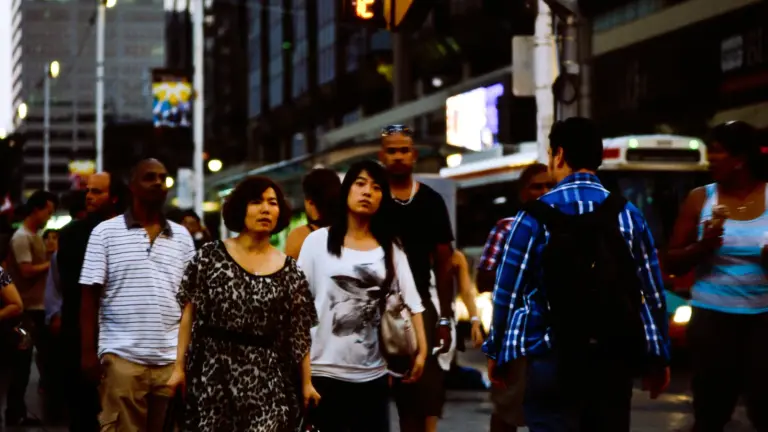

Toronto's narrow sidewalks are not just an annoyance. On busy streets, they force wheelchair users, parents with strollers, delivery workers, people waiting for transit and everyone else into the same small strip. The city often gives more room to moving cars, parked cars, patios, poles and construction than to the people already on foot.
Our verdict: Yonge Street through the downtown core has the clearest mismatch between foot traffic and sidewalk space. Queen Street West around Spadina is the most frustrating mix of crowds, transit stops, street furniture and storefront queues. YongeTOmorrow shows the right direction, but Toronto's pace is too slow. The fastest fix is not another study. Remove curb parking or a traffic lane where the foot traffic is already overwhelming the sidewalk.
There is no official list of Toronto's 20 narrowest sidewalks. The places below are practical pinch points, not a measured league table. Conditions can change with construction and seasonal patios.
What width should a Toronto sidewalk have?
The City separates the full sidewalk zone from the clear path where people can actually move. A wide-looking sidewalk can still have a bad clearway if poles, signs, planters, trees, patios and bike rings fill it.
Toronto guidance generally calls for a clear pedestrian path of about 2.1 metres on arterial and collector roads, 1.8 metres on local roads and 2.5 metres on specified downtown streets under Chapter 742. Busier areas and major transit stops may need more.
Those are minimum targets, not a promise that two wheelchairs, a stroller and a line of people can pass comfortably. YongeTOmorrow used a preferred minimum clearway of about 4 metres on each side in its central design work. That difference tells the real story. A legal minimum is not enough for a major city street.
Why Toronto sidewalks feel smaller than the number suggests
Five problems stack on top of each other:
- The clear path is narrower than the paved width.
- Transit riders wait in the same path used by through pedestrians.
- Store and restaurant lines spill outside.
- Construction closes or shifts the route with weak protection.
- Snow, garbage bins and delivery activity reduce the usable space again.
The sidewalk can pass a drawing review and still fail at 5:15 p.m.
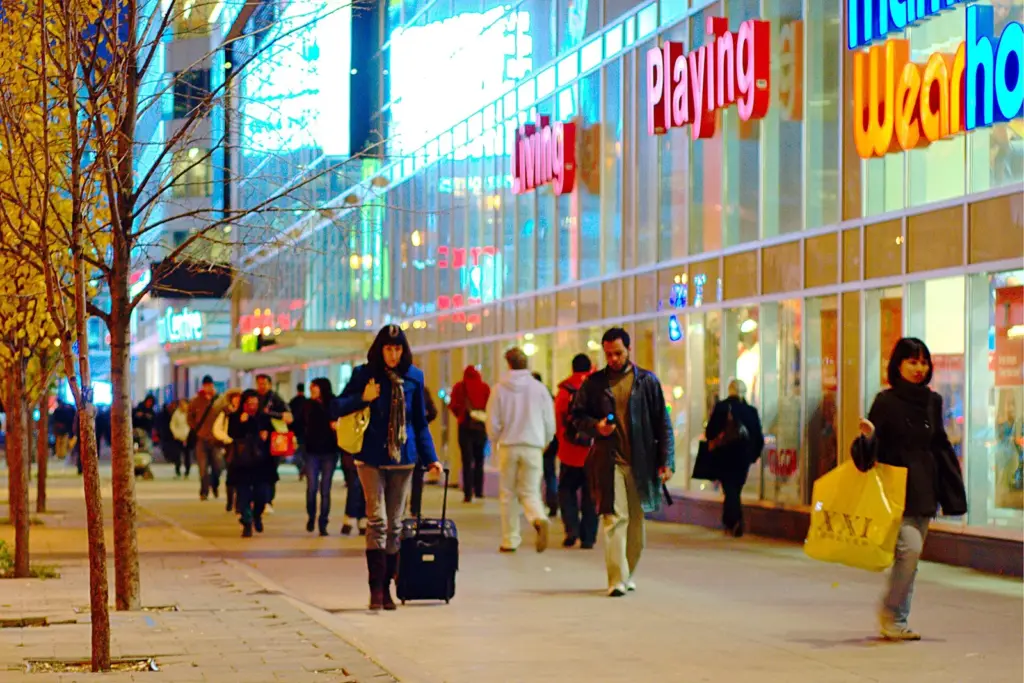

20 Toronto sidewalk pinch points worth fixing
This map shows an approximate area. Open the full map.
1. Yonge Street beside the Eaton Centre
This is the strongest case for taking space from cars. Huge numbers of shoppers, office workers, tourists, subway riders and street performers move through the same blocks. Store entrances and crossings create constant sideways movement.
The fix is a much wider continuous pedestrian zone, fewer private vehicles and tightly managed delivery hours. Small decorative changes are not enough.
2. Yonge Street around College and Carlton
College Station, hospitals, offices, shops and new towers push a lot of people onto a corridor that still behaves like a narrow traffic street.
Wider corners and a protected transit-waiting area would help. The stronger answer is to carry the Yonge public-realm redesign farther north.
3. Yonge Street south of Bloor
The approach to Bloor-Yonge has enormous pedestrian demand, but the walkway is interrupted by driveways, doors, signs and construction.
This area needs a station-sized sidewalk, not a leftover strip beside traffic. Development approvals should deliver the space before towers open, not years later.
4. Queen Street West at Spadina Avenue
Streetcar stops, turning vehicles, narrow corners, takeout lines and heavy shopping traffic all meet here. A single slow group can block the flow.
Remove curb parking close to the intersection and build larger corner waiting areas. This is a better use of the street than storing a handful of cars.
5. Queen Street West near the MuchMusic building and Peter Street
Tourists, club lines, event crowds and streetcar passengers make the walkway unpredictable. Night conditions are very different from a quiet weekday morning.
Toronto should judge this block at its busiest useful hour, not during a daytime site visit.
6. King Street West through the Entertainment District
Patios, club queues, valet activity, streetcar stops and construction compete for the edge of the road. The King transit project improved movement, but the pedestrian space still feels fragmented.
The fix is a continuous public-realm plan with clear loading zones. A patio should not quietly leave a wheelchair user with the worst route.
7. King Street West near Portland Street
Weekend nightlife can turn the sidewalk into a waiting room. Ride-share pickups and people standing outside venues add another layer.
Late-night curb management matters here. Convert parking space into pickup bays or pedestrian space instead of letting cars stop wherever they can.
8. Bloor Street around Yonge Street
This is one of Canada's busiest transit areas. Even improved corners can become jammed when people leave the station, wait to cross and enter shops at the same time.
The correct standard is not whether people fit. It is whether a person using a mobility device can move without having to negotiate every metre.
9. Bloor Street near Bathurst Station
Station entrances, bus and streetcar connections, bike traffic and storefronts create several small conflicts. Snow makes them worse.
Transit waiting should have its own space. Painting a stop pole on an already narrow sidewalk does not create a stop.
10. Spadina Avenue in Chinatown near Dundas Street West
Produce displays, restaurant lines, poles, transit shelters and busy crosswalks make the sidewalk lively but cramped.
Do not erase the street life that makes Chinatown useful. Move fixed clutter, widen the pedestrian area and create proper legal display zones.
11. Kensington Market on Augusta Avenue
Kensington is not a standard narrow-sidewalk problem. The whole street acts like public space, but cars still move through it. That forces people to guess where they belong.
The best fix is a carefully managed pedestrian-priority area with delivery windows and resident access. A tiny sidewalk beside slow cars is the wrong design for the way people already use the market.
12. St. Lawrence Market on Front Street East
Market crowds, tour groups and bus activity can overwhelm the edge near entrances. Saturday conditions are the real test.
Market Street already shows how a more pedestrian-focused space can work. The surrounding blocks should connect to it more clearly.
13. Yorkville Avenue and Bellair Street
The district sells a high-end walking experience, but construction, valet stands, planters and luxury storefront activity can make movement awkward.
The city should not let valet convenience outrank an accessible path. This is one of Toronto's richest retail areas. It can afford a better sidewalk.
14. Ossington Avenue between Queen and Dundas
Small storefronts, restaurant waits, patios and evening crowds fill a street built for a quieter era.
Removing some curb parking would create room for people and legal loading. Constant double parking is not a better answer.
15. College Street through Little Italy
Streetcar islands, patios and busy restaurant blocks make the route tight, especially near major intersections.
Seasonal design should include a measured clearway and accessible routes at every patio. A nice patio is not nice when it blocks someone else.
16. Danforth Avenue around Broadview Station
Subway passengers, bus transfers, streetcar movements and bridge approaches create surges of people. The sidewalk does not always absorb those surges well.
The corner needs transit-first space. That means reducing turning conflicts and giving waiting passengers room outside the through path.
17. Danforth Avenue through Greektown during busy evenings
Patios and restaurant queues can narrow the path. Special events make the demand much larger.
Use parking lanes for seasonal pedestrian space. Asking thousands of people to squeeze past empty parked cars is poor planning.
18. Yonge Street at Eglinton Avenue
Years of construction made this one of the city's clearest examples of temporary pedestrian space becoming a long-term burden. Line 5 is open, but surrounding development work can still change routes.
Construction plans should protect a straight, visible and accessible path. A sign telling people to cross three times is not equal access.
19. Liberty Village around East Liberty Street and Atlantic Avenue
Dense towers, GO users, event traffic and narrow connections can create large waves of walkers. The neighbourhood was built quickly, but its pedestrian network still has gaps.
Wider sidewalks alone will not solve it. Liberty Village needs more complete through routes so everyone is not pushed onto the same few streets.
20. Queen Street East through the Beaches
Patios, streetcar stops, strollers, dogs and summer crowds can make the commercial strip tight. The feeling changes sharply by season.
Use flexible curb space in summer and protect transit stops from patio spill. The street should admit that walking is one of its main uses.
Construction is Toronto's most avoidable sidewalk failure
Permanent street width is hard to change. A bad construction detour is a choice.
People should not discover a closed sidewalk only after reaching a fence. Detours need advance signs, a firm accessible surface, enough width, safe crossings and protection from moving traffic. Someone using a wheelchair should not be sent into a muddy strip or forced to backtrack several blocks.
The City has accessibility standards. Enforcement and daily site management decide whether those standards mean anything.
If a construction route is blocked, take photos that show the address, full width and obstruction. Report it to 311. Include whether a wheelchair, walker or stroller can pass.
Patios are not the enemy, weak design is
CafeTO made many streets better. It also exposed lazy layouts.
A patio belongs in the curb lane when the sidewalk is already tight. Putting tables against the building can work only when a clear, straight and predictable path remains. The route should not zigzag around chairs, menu boards and people waiting for a table.
We would keep the patio and remove the parking space. Toronto too often tries to keep both, then asks the pedestrian to pay the price.
Why street furniture becomes clutter
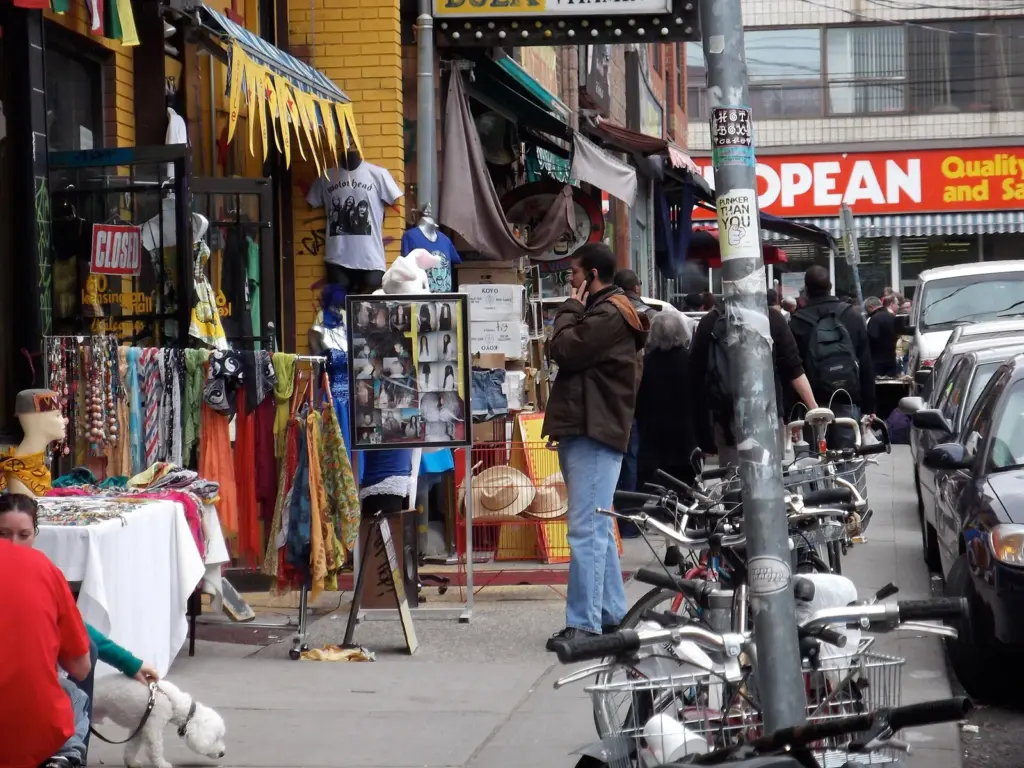
Benches, bike rings, trees, bins and shelters are useful. They become a problem when every agency places them alone.
The fix is a furnishing zone near the curb. Put poles, trees and bins in one organized band. Keep the building-side path straight. This makes the street easier for people with low vision and for anyone using a mobility device.
A lonely bench in the middle of the clearway is not accessibility.
.jpg)
Snow reveals the real sidewalk
A two-metre path can shrink to one metre after plowing. Piles collect at corners, curb ramps and transit stops, which are exactly the places that need the most room.
Toronto should measure winter clearance at the narrowest point, not claim success because most of a block is passable. Corners and curb cuts need priority clearing.
If snow blocks an accessible route, report the exact address to 311. A general complaint about a whole neighbourhood is harder to act on.
What would actually fix narrow Toronto sidewalks?
Remove curb parking on the busiest blocks
This is the fastest and cheapest major change. One parking lane can become a wider sidewalk, transit platform, loading area or seasonal public space.
Give transit riders a real waiting area
A stop is not just a pole. Busy stops need enough space for people to wait without blocking through movement.
Use road lanes during construction
When a sidewalk closes, build a protected temporary path in the curb lane. Do not send pedestrians across a dangerous intersection only to preserve car capacity.
Enforce the clearway every day
An approved drawing is useless when sandwich boards, patio chairs, bins and deliveries block the route.
Measure at busy times
Count people at lunch, rush hour, a Saturday market and after an event. A street designed from a quiet Tuesday morning observation will fail.
Build complete pedestrian routes
A wide block that ends at a narrow bridge or broken crossing is not a network. Toronto needs connected routes, not isolated showcase projects.
How to report a blocked or unsafe sidewalk
Use 311 for a current obstruction, damaged sidewalk, missing curb ramp, snow blockage, construction problem or sign that needs attention. Give the exact side of the street and nearest address.
Contact your councillor when the problem is a policy choice or repeated failure, such as a whole corridor with inadequate space, a construction plan that keeps returning or a proposed road redesign.
For immediate danger, call 911. Do not use 311 for an emergency.
Keep exploring Toronto
- Toronto driving rules for visitors and new drivers
- Six four-hour itineraries near the Financial District
- What Olivia Chow has accomplished as Toronto's mayor
Official pages to check
Prices, rules, hours and project details can change. Check these primary pages before you spend money or make a special trip:
- City sidewalk programmes, policies and bylaws
- City accessibility standards and legislation
- Toronto Complete Streets Chapter 4
- YongeTOmorrow final report
Frequently asked questions
What is the minimum clear sidewalk width in Toronto?
City guidance generally uses about 2.1 metres on arterial and collector roads, 1.8 metres on local roads and 2.5 metres on specified downtown streets. Busy areas may need more than the minimum.
Why does a wide sidewalk still feel narrow?
The full paved area may include trees, poles, patios, signs, shelters and door zones. The clear path left for movement can be much smaller.
Are restaurant patios allowed to block the sidewalk?
No. An accessible pedestrian clearway must remain. Report a blocked route to 311 with the exact location and a photo.
Who clears snow from Toronto sidewalks?
Responsibility depends on the street and local service. The City clears many sidewalks, while some property owners remain responsible. Use the current City snow page or 311 for the exact address.
Can Toronto widen a sidewalk without rebuilding the whole street?
Yes. It can remove curb parking, use temporary barriers or modular platforms, change loading hours and move street furniture. Permanent curb work costs more but is not the only option.
What should I do if construction closes the accessible path?
Photograph the obstruction and the full route, then report it to 311. State whether a wheelchair, walker or stroller can pass and whether the detour is signed before the closure.
Which Toronto street needs wider sidewalks most?
Yonge Street through the downtown core is our first pick because the pedestrian demand is far larger than the space on several blocks. Queen and Spadina is the most frustrating single intersection in this guide.