

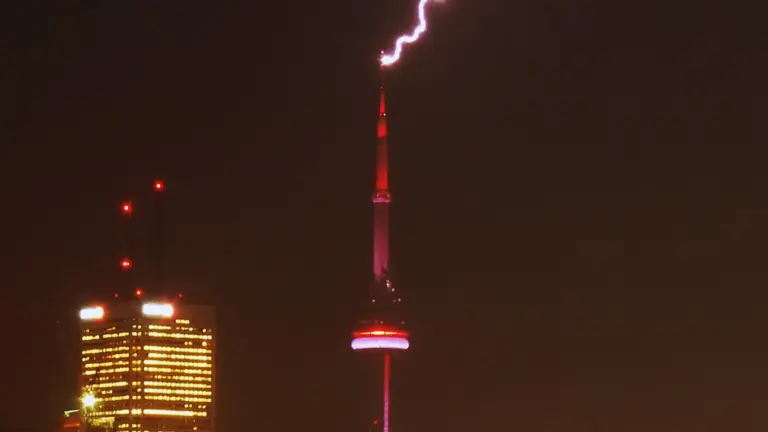

The CN Tower is struck by lightning about 75 times in an average year, according to the tower. It does not explode, shut down forever or send a bolt through every nearby building. A dedicated system carries the electrical discharge down copper strips and into massive grounding rods below the tower.
Our verdict: the strike is spectacular because the tower is tall and visible, not because the building is unsafe. The dangerous part is going outside to photograph it. If you hear thunder, get inside a fully enclosed building or metal-roofed vehicle and stay there for at least 30 minutes after the last thunder.
The biggest bad idea is standing on a waterfront hill, balcony, roof or open parking deck with a tripod. A photograph is not worth becoming the tallest object in an exposed area.
The short answer
| Question | Answer |
|---|---|
| How often is the CN Tower struck? | About 75 times a year on average, according to the CN Tower |
| Why does it survive? | Copper conductors carry current to large grounding rods below the tower |
| Does the lightning enter the public floors? | The protection system is designed to give the current a controlled path to ground |
| Is it safe to stand nearby and watch? | No outdoor location is safe when thunder is audible |
| Can lightning hit the same place twice? | Yes. Tall structures can be hit repeatedly, even in one storm |
| Is a car safe? | A fully enclosed metal-roofed vehicle is a recognized safe shelter. A convertible is not |
| How long should I wait? | At least 30 minutes after the last rumble of thunder |
How the CN Tower handles a strike
A series of copper strips runs down the full height of the tower. Copper conducts electrical current well. The strips connect to massive grounding rods buried below the ground floor.
When lightning attaches to the tower, the intended path moves the discharge down those conductors and into the earth. The grounding system spreads the energy below.
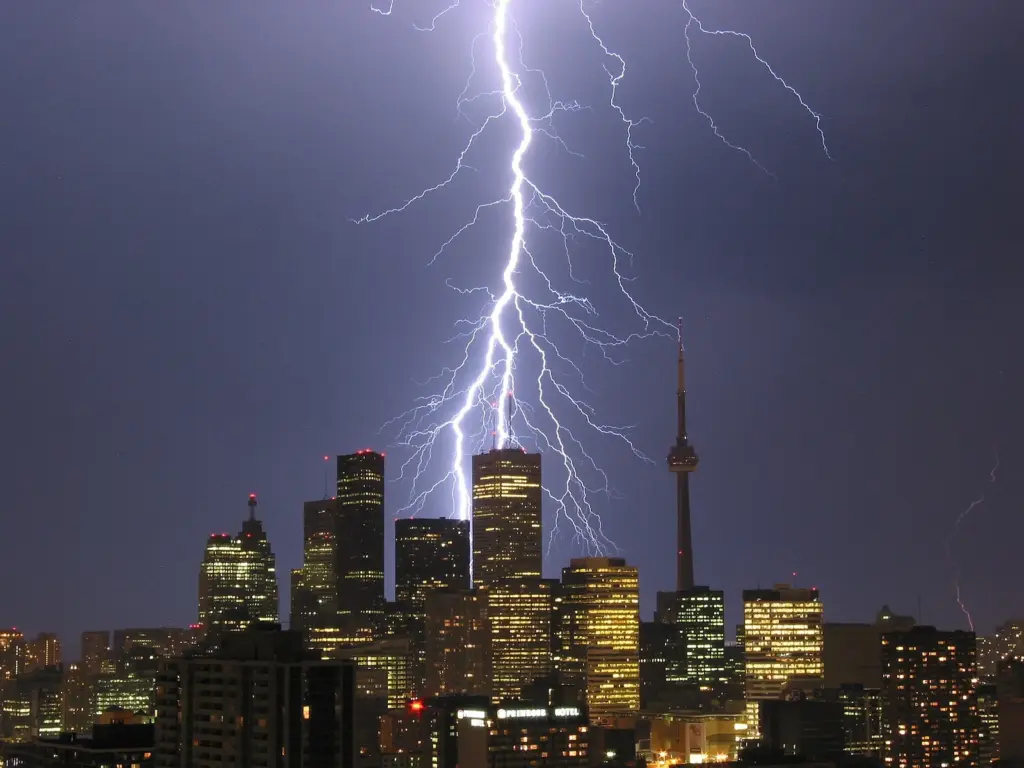
That is the basic design. Real lightning is complicated. A flash can contain several rapid strokes, current can vary and electromagnetic fields can affect nearby systems. Engineers have studied CN Tower flashes for decades because the structure provides a repeatable high point for measurement.
.jpg)
Why lightning chooses the tower
Lightning forms when electrical charge builds between areas of cloud, air and ground. The electric field can become strong enough to break down the insulating air and create a conductive channel.
Tall objects affect the field around them. Their height reduces the distance a developing channel must bridge. The CN Tower also stands well above most nearby structures.
It is not a lightning magnet in the cartoon sense. It does provide a likely attachment point when conditions and channels line up.
Does lightning strike down or up?
The simple school drawing shows a bolt travelling from cloud to ground. A real flash develops through branching channels and upward connections from objects below.
Very tall structures can also be involved in upward lightning, where a leader develops upward from the structure under strong electric-field conditions. Researchers use the CN Tower to study current and electromagnetic fields from these events.
You do not need to identify the flash type from a phone video. Many apparent "bolts going up" are also an effect of how the channel brightens and how a camera records it.
Why one strike can flicker several times
A lightning flash can include multiple strokes travelling through the same or related channel. The eye sees flicker. A long camera exposure can record a brighter, thicker path.
That means five bright pulses are not necessarily five unrelated flashes. Researchers studying the CN Tower specifically examine multi-stroke events and their current.
Video frame rate, rolling shutter, exposure and reflections can also change what a clip appears to show.
Is the CN Tower safe during a thunderstorm?
The tower is engineered for lightning and severe weather. Its public operation still depends on conditions, safety procedures and possible attraction closures.
Do not interpret the grounding system as a promise that every outdoor area around the tower is safe. The system protects the structure. Lightning can strike elsewhere, current can travel through ground and a side flash can jump from an object.
Follow staff instructions and current closure notices. If an outdoor attraction closes, do not argue that the tower has copper strips.
Can people inside feel the strike?
A close lightning strike creates intense light and thunder. People may see a flash, hear a sharp crack or feel vibration. Building systems can also respond.
That sensory experience does not mean current passed through a visitor. The protected path is designed to keep the discharge away from occupied spaces.
Anyone with an active medical concern should follow staff and emergency direction, not internet reassurance.
Can lightning damage electronics?
Surges and electromagnetic effects can damage electrical and communication systems even without a direct strike to the device. Major structures use grounding, bonding and surge protection to reduce risk.
At home, Environment and Climate Change Canada advises avoiding wired electrical equipment and plumbing during a storm. Disconnect sensitive devices before the storm, not while lightning is already overhead.
A mobile phone running on battery indoors is different from a plugged-in device.
Why thunder sometimes sounds immediate
Light reaches you effectively at once. Sound travels much more slowly. When lightning hits the tower nearby, thunder can follow almost immediately and sound like a crack or explosion.
A longer delay means the flash is farther away, but counting seconds is not a reason to stay outside. Canada's current advice is simpler: if you can hear thunder, you are within striking distance and should go indoors.
The 30-minute rule
Stay inside for at least 30 minutes after the last rumble of thunder. Restart the clock every time thunder returns.
Rain ending is not the all-clear. More people are struck before and after the heaviest part of a storm than many people expect. Lightning can also occur far from the visible rain core.
Choose a fully enclosed building with wiring and plumbing, or an all-metal vehicle with the windows closed. A gazebo, picnic shelter, dugout, tent, condo balcony and covered patio are not safe lightning shelter.
Safe ways to watch or photograph a CN Tower storm
From inside a substantial building
Use a window that gives a distant tower view while you remain indoors. Keep away from an open balcony and avoid touching metal frames or plugged-in equipment.
Photograph through glass. Reflections are annoying. They are still better than standing outside in an electrical storm.
From inside a metal-roofed vehicle
Pull over legally in a safe place, away from trees, flooding and falling debris. Keep the windows closed and remain inside.
Do not park on a highway shoulder or under a tree to improve the angle.
With a remote weather camera
An existing fixed camera can record the skyline without putting a person outdoors. Do not install equipment on a roof while a storm approaches.
After the storm
Wait 30 minutes after the last thunder before going outside. The dramatic bolt has already happened. Accept that missing it is the safe outcome.
Unsafe places that look perfect online
- Polson Pier and exposed waterfront edges
- open roof decks
- condo balconies
- sports fields
- parks and beaches
- marina docks
- the Toronto Islands shoreline
- open parking garages
- bridges
- under a lone tree
These places can offer excellent skyline views in fair weather. They are bad storm shelters.
Do not publish a guide called "best outdoor spots to shoot lightning" and bury the danger at the bottom. There is no safe outdoor viewing spot when thunder is audible.
Can I photograph through a condo window?
Yes, from inside. Close the window and balcony door. Keep back from the glass and metal frame. Turn off room lights to reduce reflections.
Use a phone or battery-powered camera. Avoid a plugged-in tripod setup beside the window during an active storm.
If strong winds or a tornado warning accompany the storm, move away from windows and follow the more urgent safety direction.

Camera settings without the outdoor risk
From a safe indoor position:
- Stabilize the camera without leaning equipment on the window frame.
- Use manual focus on the skyline before the rain obscures it.
- Lower ISO to reduce bright-city noise.
- Try exposures of a few seconds when conditions and glass reflections allow.
- Shoot continuous video if you do not want to time a still frame.
- Review later. Do not stare at the screen and miss a warning.
A phone in night mode may stack frames and create unusual artefacts. The result can be beautiful without being a perfect scientific record.
What the colour of the bolt means
Photos can show white, blue, purple, orange or pink lightning. Atmospheric moisture, dust, distance, camera white balance, exposure and city light all influence the colour.
Do not diagnose temperature or electrical power from one edited image. Social platforms also change saturation and compression.
Does the tower close after a strike?
Not automatically for every strike. Operations depend on weather, inspections and attraction safety. Outdoor experiences can close in conditions that leave indoor areas operating.
Check the CN Tower's official visitor information on the day. Do not use a viral strike video as proof of current opening status.
Could lightning make the tower fall?
The tower was designed for severe weather, including lightning and wind. A routine strike is not a structural crisis.
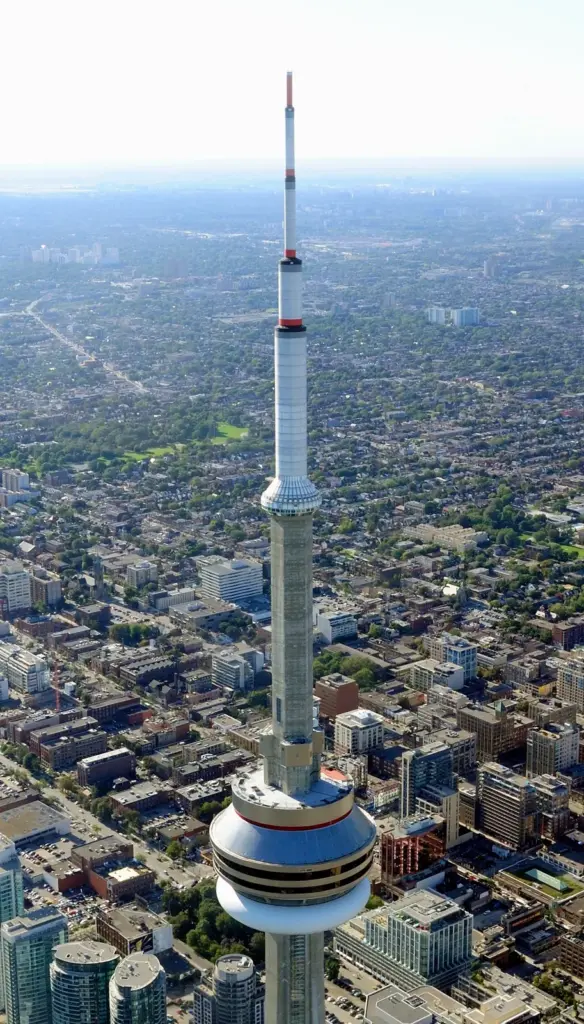
The CN Tower explains that its shape, triangular base, steel cables and weighted antenna systems also manage wind movement. The building can sway within its design.
An official emergency notice would matter. A social-media joke about the tower "getting cooked" does not.
Lightning first aid
A lightning victim does not hold an electrical charge. It is safe to touch and help them.
Call 911. Begin CPR if breathing has stopped and you are able. Use an automated external defibrillator when available and follow its instructions.
Do not wait for burns to appear. Lightning can affect the heart, nervous system, hearing and other organs.
How to track lightning over Toronto
Use the WeatherCAN app or Canada's online weather map and turn on the lightning layer. Circles indicate detected lightning activity.
A map is a planning tool, not a safety bubble. If you hear thunder, go inside even if the app looks delayed or the nearest symbol seems far away.
Our final answer
The CN Tower handles lightning through a deliberate copper path to ground. That is why repeated strikes create photographs instead of repeated disasters.
Watch from inside. Photograph through glass. Stay indoors for 30 minutes after the last thunder. Toronto already has enough CN Tower photos. It does not need one bought with a preventable injury.
Keep exploring Toronto
- Where to go stargazing near Toronto
- How to spend four hours near Toronto's Financial District
- Five landmarks from Toronto's history and culture
Official pages to check
Prices, rules, hours and project details can change. Check these primary pages before you spend money or make a special trip:
- CN Tower, Design, Science and Innovation
- Environment and Climate Change Canada, Lightning Safety Overview
- Government of Canada, Thunderstorms, Get Prepared
- Environment and Climate Change Canada, Lightning Map
Frequently asked questions
How often does lightning hit the CN Tower?
The CN Tower says it is struck about 75 times per year on average. The number varies with storm activity.
Why does lightning not destroy the CN Tower?
Copper strips run down the tower and connect to large grounding rods. They provide a controlled conductive route for the electrical discharge into the ground.
Is it safe inside the CN Tower during lightning?
The structure is designed with lightning protection. Visitors must still follow staff directions, closures and severe-weather procedures.
Is a balcony safe for lightning photography?
No. A balcony is outdoors. Photograph through a closed window from inside a substantial building.
How long should I wait after thunder?
Wait at least 30 minutes after the last rumble. Restart the clock if thunder returns.
Can lightning strike the same place twice?
Yes. The CN Tower is struck repeatedly and a single flash can contain multiple strokes.
Is it safe to touch a person struck by lightning?
Yes. The person does not retain electrical charge. Call 911 and provide CPR or use an AED if needed.
Where can I see current lightning around Toronto?
Use the WeatherCAN app or Canada's online weather map with the lightning layer. Go indoors whenever you hear thunder, even if the map appears clear.