

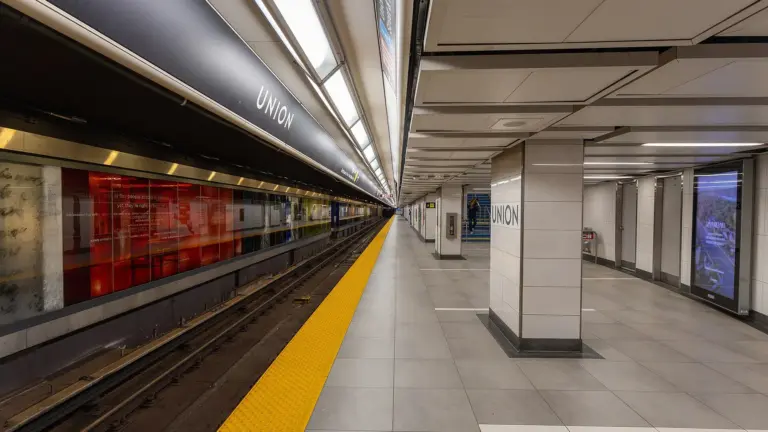

Visiting every Toronto subway station in one day is possible. It is not a good way to see Toronto. Most of the day happens inside trains, and a single delay can destroy the plan.
Our verdict: do the 70-station subway challenge on Lines 1, 2 and 4, not the entire TTC rapid-transit network. Start at Vaughan Metropolitan Centre, ride the full Line 1 loop to Finch, add Line 4, then finish Line 2 from Kennedy to Kipling. Allow at least six hours if you step onto every platform, use washrooms and collect photos or transfers.
The best alternative is a three-day challenge with one line each day. The main deal-breaker is accessibility. As of spring 2026, 64 of 70 subway stations were accessible, and elevator outages can break a step-free plan.
The rules of the challenge
Choose your rule before starting:
Ride-through challenge
The train only needs to pass through every station. This is fastest and easiest.
Platform challenge
Step onto the platform at every station, take a photo or note, then board the next train. This adds a lot of time.
Red-transfer challenge
Collect a dated paper transfer from the red machine at every subway station where one is available and accessible. This is the classic version seen in Toronto transit communities.
Important: a paper transfer is valid proof of payment only under the TTC's current fare rules for the way it was issued. If you tapped PRESTO, debit, credit or a mobile wallet, that same payment method is your proof. Do not present a souvenir transfer as if it proves a fare you did not pay.
Exit challenge
Leave paid fare control at every station. Do not do this in one day. It creates extra fares or transfer-window problems and turns a transit puzzle into gate exercise.
Our pick is the platform challenge with one photo per station. It proves the visit without wasting 70 paper slips.
What counts as a Toronto subway station?
This guide counts the 70 unique stations on heavy-rail Lines 1, 2 and 4.
Line 5 Eglinton and Line 6 Finch West are LRT. They are part of the TTC rapid-transit network, but surface stops, fare-paid zones and transfer machines make the classic challenge different. Add them only as a separate expert version.
Line 3 Scarborough is closed and does not count.
.jpg)
The most practical route
Leg 1: Vaughan Metropolitan Centre to Finch on Line 1
Start at Vaughan Metropolitan Centre shortly after service begins. Ride south through the University side, around Union, then north on Yonge to Finch.
This covers all 38 Line 1 stations without reversing.
Leg 2: Finch to Don Mills on Lines 1 and 4
Ride south three stops to Sheppard-Yonge. Transfer to Line 4 and ride to Don Mills.
If your rule requires every platform or transfer, reverse Line 4 back to Sheppard-Yonge. If riding through each unique station is enough and you are ending the challenge elsewhere, you still need to return because Line 4 is a branch with no connection at Don Mills.
Leg 3: Sheppard-Yonge to Kennedy
Take Line 1 south to Bloor-Yonge. Transfer to Line 2 eastbound and ride to Kennedy.
Leg 4: Kennedy to Kipling
Reverse at Kennedy and ride the entire Line 2 westbound to Kipling. This covers all western stations and repeats the eastern section.
The unavoidable backtracking comes from a network with terminal branches instead of a grid.
This map shows an approximate area. Open the full map.
The 70-station checklist
Transfer stations appear on more than one line but count once in the unique total.
Line 1, Vaughan to Finch: 38 stations
- Vaughan Metropolitan Centre
- Highway 407
- Pioneer Village
- York University
- Finch West
- Downsview Park
- Sheppard West
- Wilson
- Yorkdale
- Lawrence West
- Glencairn
- Cedarvale
- St Clair West
- Dupont
- Spadina
- St George
- Museum
- Queen's Park
- St Patrick
- Osgoode
- St Andrew
- Union
- King
- Queen
- TMU
- College
- Wellesley
- Bloor-Yonge
- Rosedale
- Summerhill
- St Clair
- Davisville
- Eglinton
- Lawrence
- York Mills
- Sheppard-Yonge
- North York Centre
- Finch
Line 4: four additional unique stations
- Bayview
- Bessarion
- Leslie
- Don Mills
Sheppard-Yonge is already counted on Line 1.
Line 2: 28 additional unique stations
Spadina, St George and Bloor-Yonge are already counted on Line 1. The remaining unique stations bring the total to 70.
- Kennedy
- Warden
- Victoria Park
- Main Street
- Woodbine
- Coxwell
- Greenwood
- Donlands
- Pape
- Chester
- Broadview
- Castle Frank
- Sherbourne
- Bay
- Bathurst
- Christie
- Ossington
- Dufferin
- Lansdowne
- Dundas West
- Keele
- High Park
- Runnymede
- Jane
- Old Mill
- Royal York
- Islington
- Kipling
How long does it take?
A pure ride-through can fit into roughly four to five hours when service is smooth. The platform or transfer challenge usually needs about five to seven hours. A Reddit rider reported about five hours to collect Line 1 transfers alone, which shows how much each short stop adds.
Build a 25 per cent delay margin. Shuttle buses, security incidents, slow zones, missed trains and washroom lines are normal possibilities.
Do not schedule a flight, job shift or non-refundable dinner immediately after.
The best day and start time
Use a weekday after the morning rush or a weekend with no subway closures. Weekends can have more planned construction. Weekdays can have heavier peaks.
Check the TTC service-alert and planned-closure pages the night before and again before leaving. A closure on Line 1 or 2 can make the strict challenge impossible.
Start early enough to finish before evening service thins, but not so early that a terminal washroom or coffee option is closed.
Our pick is a non-holiday weekday start around 9:30 a.m. when no major event is affecting the network.
Fare and proof of payment
Tap one PRESTO card, contactless card or mobile wallet at the first station and use that same method as proof of payment. Staying inside the paid subway area usually avoids another fare.
If you exit paid control for food, a street-level photo or washroom, current transfer time and fare rules apply. A challenge lasting six hours will exceed the normal two-hour transfer window.
Budget for another fare if you leave. Do not tailgate through a gate or enter a bus bay to avoid payment.
Red transfer machines explained
Red machines issue paper transfers in subway stations. Under current TTC guidance, senior and youth cash riders who pay at the farebox beside the Customer Service Agent collect paper proof from the red machine. Adults paying cash buy and tap a PRESTO Ticket.
Paper transfers support a continuous one-way trip and do not create the same two-hour freedom as a PRESTO tap, except where TTC rules specifically say otherwise.
For a collector, the timestamp and station name are the attraction. Keep the slips dry and in order. Do not block the machine or take stacks.
Ask a TTC employee if collecting one souvenir transfer at each station is okay during your trip. Operational rules and machine availability can change.
Washroom plan
TTC lists washrooms at these challenge stations:
- Vaughan Metropolitan Centre
- Finch West
- Sheppard West
- Wilson
- Eglinton
- Bloor-Yonge
- Sheppard-Yonge
- Finch
- Don Mills
- Kennedy
- Kipling
Plan around them. Do not wait until it is urgent because a washroom may be at the far end of a concourse, temporarily closed or outside your immediate platform path.
Our route uses Vaughan at the start, Finch after Line 1, Don Mills during the branch, Kennedy before the final long Line 2 ride and Kipling at the end.
Food and water
Eat before entering. Carry water and compact food that does not smell, spill or create a mess.
Good challenge food is a sandwich, banana, granola bar or nuts where safe for you. Bad challenge food is soup, a full takeout tray or anything that needs a table.
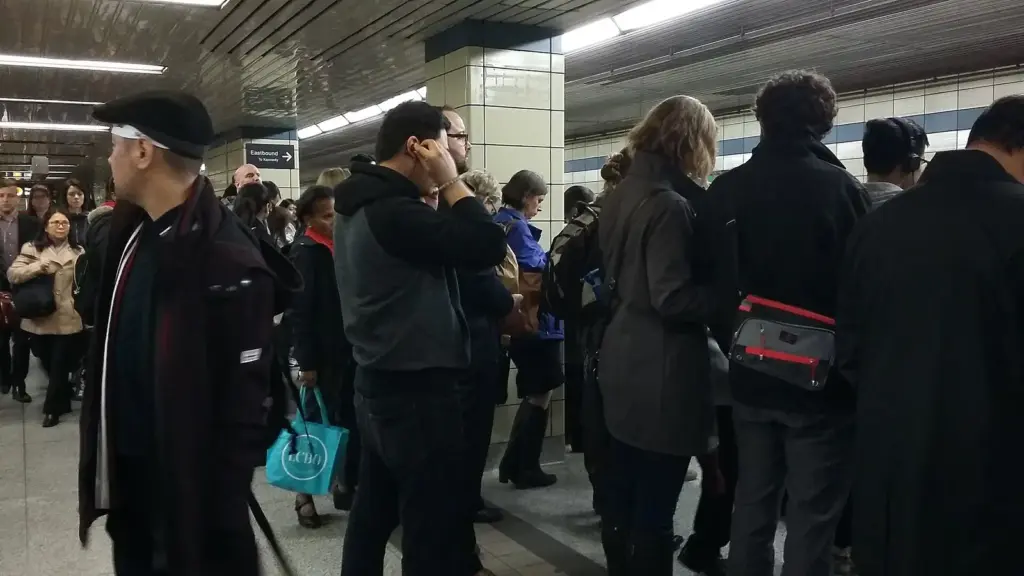
Never leave garbage on the train. Avoid eating when the car is packed.
If you need a real meal, exit at a station with a planned break and pay again if the transfer window expires. The challenge is not worth feeling sick.
.jpg)
Accessibility plan
TTC reported 64 of 70 subway stations accessible in spring 2026. College, King, Museum, Spadina, Islington and Old Mill had work or future completion schedules that can change.
Even an accessible station can lose an elevator temporarily. Check the live elevator status for every required transfer and terminal.
A step-free challenge should count passing through a non-accessible station, not stepping onto a platform that cannot be exited independently. Design the rule around the participant, not social-media purity.
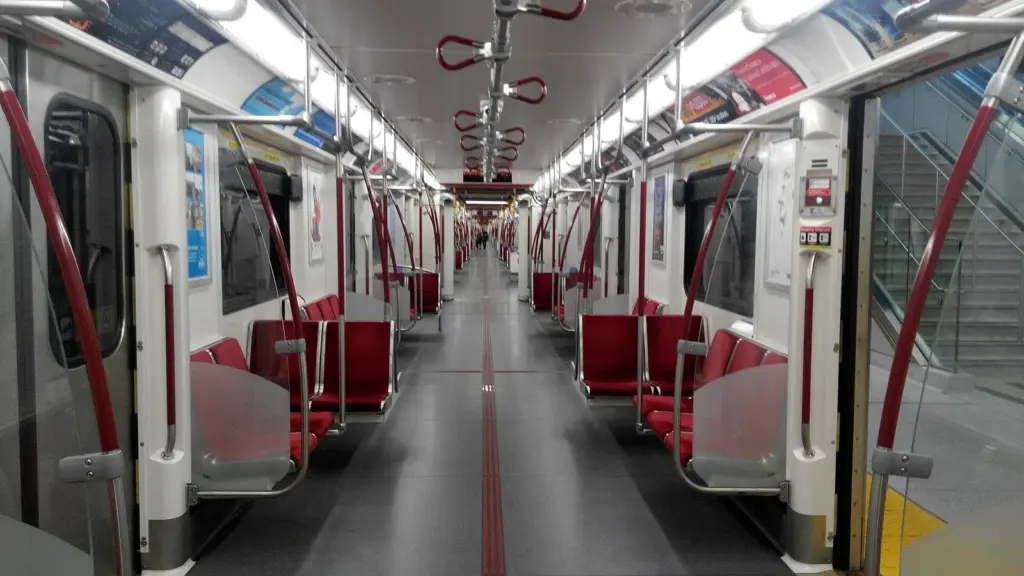
Line 1 and Line 2 trains have different layouts. Leave extra time for boarding, platform gaps and crowded transfer stations.
The station-name trap
Maps and old challenges may use former names. Eglinton West became Cedarvale. Dundas became TMU Station.
Use the current TTC map, not a 2023 printable checklist. A transfer slip or old tile may preserve another name, but the challenge follows current service.
Platform photos without annoying everyone
Stand behind the yellow edge and outside the main flow. Do not photograph strangers close-up without consent. Never hold train doors for a picture.
Use the station wall name as proof. One quick frame is enough.
At busy stations, skip the photo if stopping would block an elevator, stairs or emergency route. Write the time instead.
What to do when service breaks
Set three possible rules before starting:
- Strict: every station must be reached by train that day.
- Practical: shuttle-bus passage counts during an unexpected closure.
- Completion: pause and return another day for missed stations.
Our choice is practical for an unplanned disruption and strict for a closure announced before departure. Starting a known impossible challenge wastes the day.
Take screenshots of alerts and record the missed station. Do not argue with staff about reopening a platform.
Adding Lines 5 and 6
The full active TTC rapid-transit challenge is much longer. Line 5 has 25 stations and stops between Mount Dennis and Kennedy. Line 6 has 18 stations and stops between Finch West and Humber College.
Several are surface stops rather than enclosed subway stations. Fare payment happens before boarding, and surface machines differ. Red subway-transfer collection is not a consistent rule.
Add them as two separate legs on another day. Calling that version "all TTC rapid transit" is accurate. Calling it "all subway stations" is not.
A better three-day version
Day 1: Line 1
Ride Vaughan to Finch and stop at five neighbourhoods. This turns the line into a city tour.
Day 2: Line 2
Ride Kipling to Kennedy with breaks at Old Mill, High Park, Bloorcourt, Greektown and the east end.
Day 3: Line 4 plus Lines 5 and 6
Combine the short Sheppard branch with the newer LRT lines based on current hours.
This version is slower but actually lets you see Toronto. It is our recommendation for everyone except the dedicated completionist.
Keep exploring Toronto
- A practical map of public washrooms in Toronto
- Non-touristy fun to have in Toronto
- Nineteen Toronto summer date ideas
Official pages to check
Prices, rules, hours and project details can change. Check these primary pages before you spend money or make a special trip:
- TTC routes and schedules
- TTC subway, streetcar and LRT map
- TTC fares and passes
- TTC Proof of Payment
Frequently asked questions
How many Toronto subway stations are there?
Lines 1, 2 and 4 have 70 unique stations. The total is higher when Line 5 and Line 6 LRT stations and stops are included.
Can I visit all 70 stations in one day?
Yes. A ride-through can take roughly four to five hours in smooth service. Stepping off, taking photos or collecting transfers can push it to six hours or more.
What is the best route?
Start at Vaughan Metropolitan Centre, ride Line 1 to Finch, add Line 4 through Sheppard-Yonge, then ride Line 2 from Bloor-Yonge to Kennedy and back west to Kipling.
Do I need to pay at every station?
No if you remain inside the paid area. If you exit, normal fare and transfer rules apply. A long challenge can exceed the two-hour transfer window.
Are red paper transfers valid with PRESTO?
Your tapped PRESTO card, contactless card or device is your proof of payment. Do not use a collected paper transfer as proof for a fare paid another way.
Which stations have washrooms?
TTC lists washrooms at several terminals and interchanges, including Vaughan, Finch, Sheppard-Yonge, Don Mills, Kennedy and Kipling. Check the current full list and closures.
Are all 70 stations accessible?
Not yet in the spring 2026 status. TTC reported 64 accessible stations and ongoing projects. Check the live station and elevator status before a step-free attempt.
Do Lines 5 and 6 count?
They count in an all-rapid-transit challenge. They are LRT lines with surface and underground stops, so they do not fit a traditional 70-subway-station transfer challenge.