


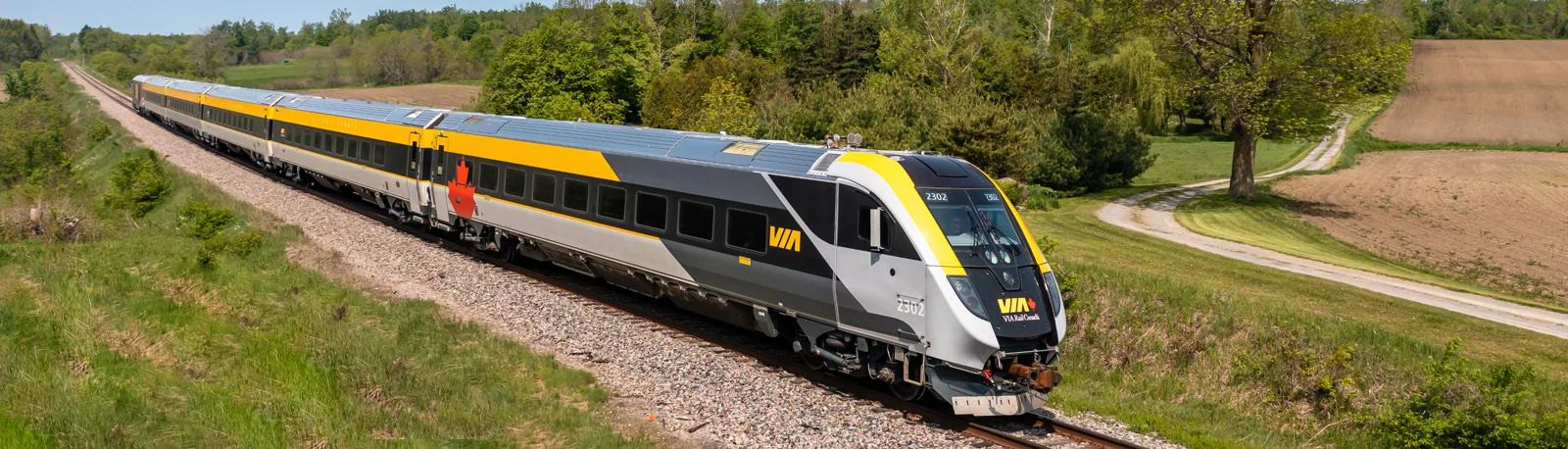
The Toronto-to-Montreal train is our pick for a downtown-to-downtown trip when you want to leave the car behind. VIA Rail lists an average journey of five hours and 13 minutes on its route page. Your chosen train's schedule is the number to use.
Driving is the stronger alternative when several people are sharing costs or your destination is well outside central Montreal. Flying deserves a comparison when time matters, but count the airport trips and boarding time as well as the flight.
Compare the full fare before choosing
Start with VIA's Toronto-to-Montreal route page and price your exact outward and return dates. A remembered bargain fare is not a current offer.
Check baggage, change and refund conditions for the fare you select. A cheap ticket becomes less useful if your plans are uncertain or the luggage you need costs extra.
For driving, divide fuel, parking and other trip costs across the people actually travelling. Don't divide a car bill by four when only two people have committed. In Montreal, add the cost and effort of keeping the car while you're there.
For flying, compare the full trip from your Toronto door to your Montreal destination. The train's downtown endpoints are its strongest practical advantage, not proof that it is always cheapest or fastest.
Economy is enough for most leisure trips

VIA's class guide describes Economy seating with power and Wi-Fi, with food and drink available to buy. Business adds services such as a meal, lounge access and priority boarding on applicable routes.
Choose Economy when you mainly need a seat between the cities. Pay for Business when the current price difference is worth those included services to you. A meal is a useful extra, not a reason to ignore a large fare gap.
Read the Wi-Fi information before treating the journey as a guaranteed workday. Download files and entertainment in advance. Don't schedule a meeting that depends on uninterrupted train internet.
Arrive early and leave room for delays

VIA recommends arriving 30 minutes before departure. Extra services and specific assistance needs can require more time. Follow the instructions attached to your booking.
Union is not the place to test whether five minutes will be enough. Find the VIA departure area, check your train and keep the ticket ready.
Don't make a tight, separate onward booking on the assumption that arrival will be exact. If a wedding, flight or other fixed event cannot be missed, an earlier train or an extra night is worth comparing.
VIA's delay-credit policy sets compensation rules for qualifying delays. These can involve a future travel credit or points, with conditions and exceptions. They are not a promise of cash back or repayment of every expense caused by arriving late.
Choose the train for a comfortable city-to-city journey with a sensible time buffer. Skip a fragile connection that only works if everything is punctual.
Compare train, bus, plane and car using the same trip
| Mode | Strongest case | Cost people often leave out |
|---|---|---|
| Direct VIA train | Central Toronto to central Montreal, no car needed | Bag or seat extras on the chosen fare |
| Intercity bus | A lower-cost trip when the schedule suits | Longer road exposure and terminal transfers |
| Flight | A schedule that genuinely saves door-to-door time | Airport access, baggage and boarding buffer |
| Car | Several travellers or a destination outside the city | Parking, wear, rental insurance and fuel |
Get quotes for the same dates and number of people. A last-minute train fare compared with an airline sale on a different Tuesday is not a useful comparison.
For a weekend in central Montreal, leaving the car behind is often the easier plan. For a family visiting several places outside the centre, the car's flexibility can outweigh the station-to-station advantage. The destination after arrival matters as much as the line on the map.
Choose a direct train unless the saving really matters
A cheaper itinerary through Ottawa can add a transfer and a longer journey. Compare the full duration and connection protection on the actual booking. Do not assume two separate tickets create the same protection as one through itinerary.
A modest saving is weak compensation for a much longer travel day, especially on a short weekend. Use a direct service when its price is affordable and time in Montreal is the point of the trip.
Check the station names carefully. Downtown Montreal's Central Station and an airport-area stop are not interchangeable destinations. Book the endpoint that matches your onward plan.
Escape, Economy and flexible fares are different purchases
VIA's fare comparison lists Escape as non-refundable and non-exchangeable. Economy and Business have change and refund conditions, while the Plus versions offer more flexibility. A fare difference can still apply when changing a flexible ticket.
Read the conditions shown with the train you select. The current comparison page contains inconsistent repeated wording for one Economy refund fee, so this guide does not choose one percentage and present it as settled. The booking terms and VIA's confirmation should settle the charge before purchase.
If a meeting or family plan could move, compare the cost of flexibility with the amount you risk losing. The lowest initial fare is the best choice only when its restrictions fit the trip.
Baggage can change the cheapest option
Use the current VIA baggage policy for dimensions, weight and the personal-item allowance. The fare comparison distinguishes the included carry-on size by class and charges different rates for an additional bag.
The displayed additional carry-on fees in the Corridor comparison are $25 on Escape, $20 on Economy and $15 on Economy Plus, plus tax per direction, subject to space. Business lists an additional carry-on without that fee. Check your booking rather than assuming an airline-sized case has the same allowance on every fare.
Measure and weigh the bag before leaving home. Include the wheels and handle when the policy requires it. Do not assume Corridor travel includes a checked-baggage service because VIA offers baggage cars on other routes.
If the cheapest fare needs extras in both directions, add those before comparing it with the next fare level. A $25 charge each way is a $50 round-trip difference before tax.
Seat choice: choose for the journey you will take
If sitting together matters, inspect the seat map during booking and the selection charge for that fare. Do not assume two tickets bought together guarantee the exact seats you imagined.
A table arrangement can suit a group and be less appealing for someone who wants a quiet solo ride. A window is useful for the view; an aisle makes getting up easier. Choose according to your priorities rather than treating one seat as universally best.
If facing backwards is a concern, ask VIA about the equipment and seat information available for your departure. Do not promise yourself a particular trainset from a photograph in a review. Operational changes can affect the equipment.
Is Business worth the difference?
List what you would otherwise spend on food and what you value about lounge access and boarding. Then compare that with the actual upgrade cost. If the difference is small on your departure, Business can be a sensible treat. If it is large, Economy remains our default.
Do not assume the meal will meet a dietary need without checking the booking options and notice required. Bring any essential food that the rules allow. A dining service is not a substitute for confirming an allergy or medical requirement.
Business also does not make the train immune to delays. Pay for the onboard experience and applicable fare terms, not an expectation of a different arrival time.
Working on the train: useful time, with limits
Download documents, music, films and tickets before departure. Keep a charger where you can reach it without emptying the suitcase. If a deadline requires an upload, complete it before boarding or leave time after arrival.
Wi-Fi and mobile reception can vary along the route. The train is a good place for reading, writing and offline work. It is a poor place to promise uninterrupted video calls or a confidential conversation in a shared carriage.
Use headphones and keep calls brief and considerate. Other passengers buying a seat have not agreed to spend five hours inside your meeting.
Union and Montreal arrival: finish the plan
At Union, find the VIA area and departure information rather than following GO signage automatically. Keep your train number and ticket available. If you need assistance, arrange it under VIA's current policy and follow the earlier arrival instructions it provides.
Montreal Central Station is at 895 de la Gauchetière West, under the Queen Elizabeth Hotel, near Bonaventure and McGill métro stations. Use Montréal Central Station when you want the downtown endpoint. Dorval is a different stop.
Save the onward route to your hotel before arrival. If you need a step-free connection, verify the exact entrance and transfer route instead of assuming every underground passage is accessible. VIA's station page lists curbside assistance booked at least 48 hours ahead through 1-888-842-7245.
If your accommodation will not accept an early check-in, ask about luggage storage. A good train arrival time can still leave you carrying bags for hours if that part is not arranged.
Delays, discounts and a realistic booking strategy
Leave a larger buffer before a flight, wedding or other fixed event. A separate onward reservation does not automatically make VIA responsible for every consequence of a delay. Read the delay policy linked above and keep the booking record.
Check VIA's official offers and any discount you genuinely qualify for. For example, CAA terms exclude Escape fares, so a member code does not necessarily improve the lowest displayed option.
Do not rely on an old claim that every Tuesday produces the cheapest ticket. Compare available departures and conditions now. An earlier booking can offer more choice, but no guide can promise the lowest fare for every date.
Our pick is a direct Economy train with baggage and flexibility priced honestly. Upgrade when the real difference is worth it, and choose another mode when your destination or group costs make the train the weaker option.
Frequently asked questions
How long is the Toronto-to-Montreal train?
VIA’s route page lists an average of five hours and 13 minutes. Check the scheduled duration of the specific train you are booking.
How early should I get to Union?
VIA recommends 30 minutes before departure for the ordinary boarding process. Follow any earlier arrival instructions for assistance or other services.
Is Business class worth it?
Compare the actual fare difference with the included meal, lounge and other applicable services. Economy is our default for a straightforward leisure trip.
Can I rely on the Wi-Fi for work?
Download essential files first. Do not make the trip depend on an uninterrupted video call or internet connection.
Do delays mean a cash refund?
Not automatically. VIA has a qualifying delay-credit policy with conditions, and a travel credit or points is different from cash compensation.