


We couldn't verify a Toronto restaurant serving specifically halal jajangmyeon from the current primary sources checked on October 11, 2026. That doesn't prove none exists. It means we won't send you to a restaurant with a halal promise its own menu hasn't made.
The strongest confirmed alternative is Sarang Kitchen if you want halal Korean food and are happy to change the dish. For black-bean noodles, ask a restaurant to confirm the whole recipe and meat sourcing before travelling. Don't assume a seafood version or a request to remove pork makes the sauce suitable.
The short answer, without the menu mix-up
| Option | What is verified | What is not verified |
|---|---|---|
| Sarang Kitchen | The restaurant describes itself as a halal Korean restaurant | A current halal jajangmyeon offering |
| Kim's Noodle | Its official menu sells jajang noodles and identifies pork in the regular dish | A halal version or a pork-free base sauce |
| A seafood black-bean noodle dish | Some menus describe seafood ingredients | Whether the prepared sauce contains pork, lard or alcohol |
| A vegetarian version | It can be a useful request | Whether the restaurant makes a separate base and what ingredients it uses |
| A home-cooked version | You control the ingredients you buy | Whether any particular paste meets your dietary standard without checking it |
A directory tag for “halal Korean” is not enough. You need evidence for the dish you plan to order.
What is jajangmyeon?
Jajangmyeon, also written jjajangmyeon, is a Korean-Chinese noodle dish with a dark black-bean sauce. Restaurant recipes differ.
The sauce is the part to investigate. Meat can be cooked into a batch before a customer places an order. Asking a server to leave off visible pieces won't remove an ingredient already in the sauce.
That is why a menu photo isn't a full answer. It shows how the bowl looks, not what went into its base.
Start with the exact item name and branch. Ask whether the restaurant can make a new sauce for your order, or whether all bowls use one prepared batch.
Kim's Noodle: a verified reason to ask before ordering
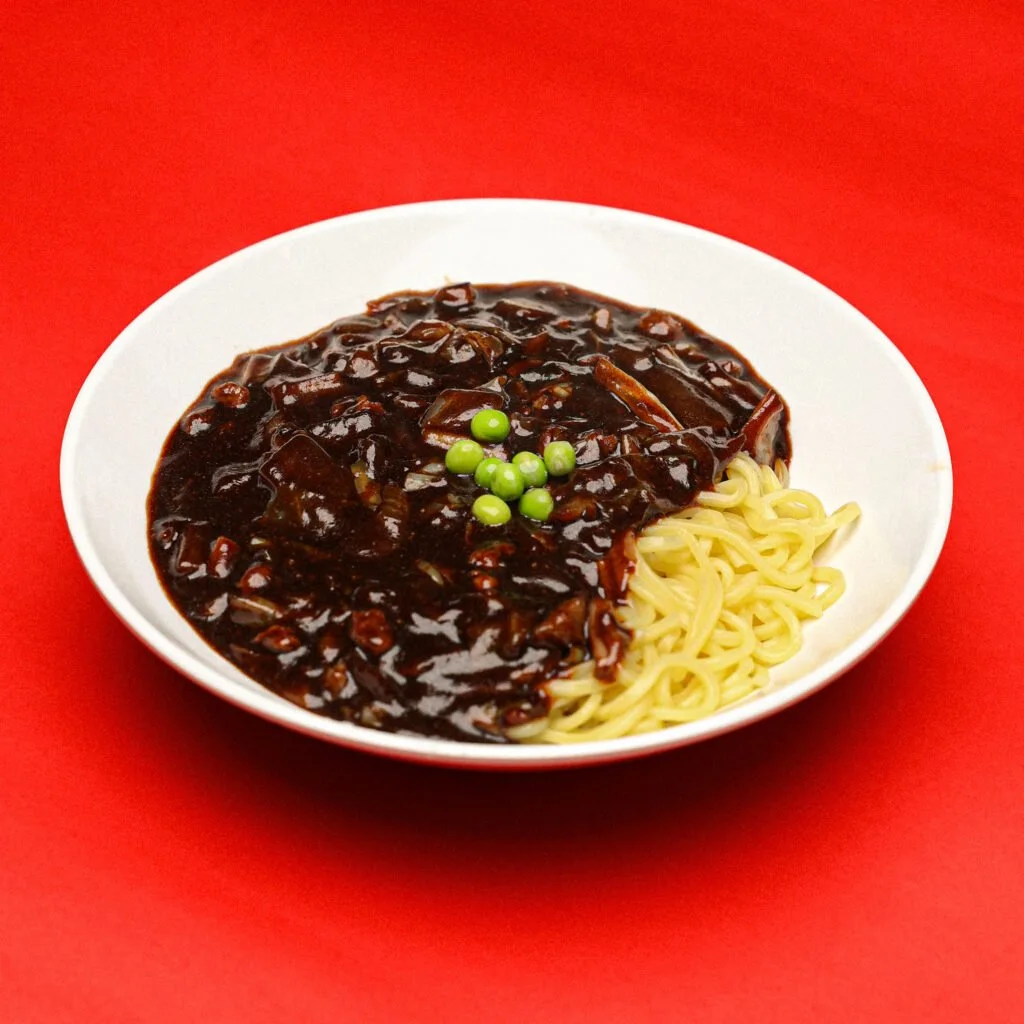
Kim's Noodle's current menu describes its regular jajang noodles as containing stir-fried pork and vegetables. It displays $9.99 for the regular portion and $11.99 for a larger portion at the time of our check.
That makes the regular item a clear no for someone avoiding pork. We haven't verified that the restaurant offers a halal replacement.
The menu also lists a seafood-style jangban jjajang. Its listed toppings are not enough to prove the sauce is pork-free or halal. Ask about the base, cooking fat and preparation.
Kim's Noodle lists an Eglinton location at 201-30 Eglinton Avenue East and a Steeles location at 1549 Steeles Avenue East. Use the exact branch's answer.
Choose it for this question only after the restaurant confirms a suitable preparation. Don't order the standard bowl and hope the pork can be picked out.
Sarang Kitchen: the useful alternative when the cuisine matters more than the noodle
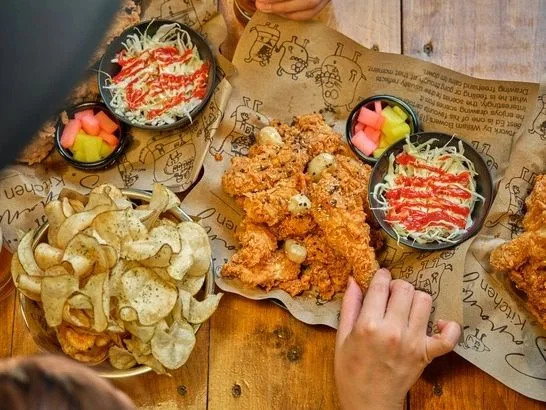
Sarang Kitchen describes itself as a halal Korean restaurant and social enterprise. Its current menu page focuses on fried-chicken platters, other dishes, sides and drinks.
Its locations include Bloor Street West and the Danforth. Confirm the branch, the dish and any ingredient concerns directly before ordering.
The advantage is that the restaurant itself makes the halal statement. That is stronger than an anonymous suggestion or a broad directory category.
The limitation is that Korean fried chicken isn't jajangmyeon. We did not find verified evidence that the requested noodle dish is on its current menu.
Choose Sarang when your priority is a halal Korean meal. If the black-bean noodles are the whole reason for going out, ask first and be prepared to choose another plan.
Why seafood doesn't settle the halal question
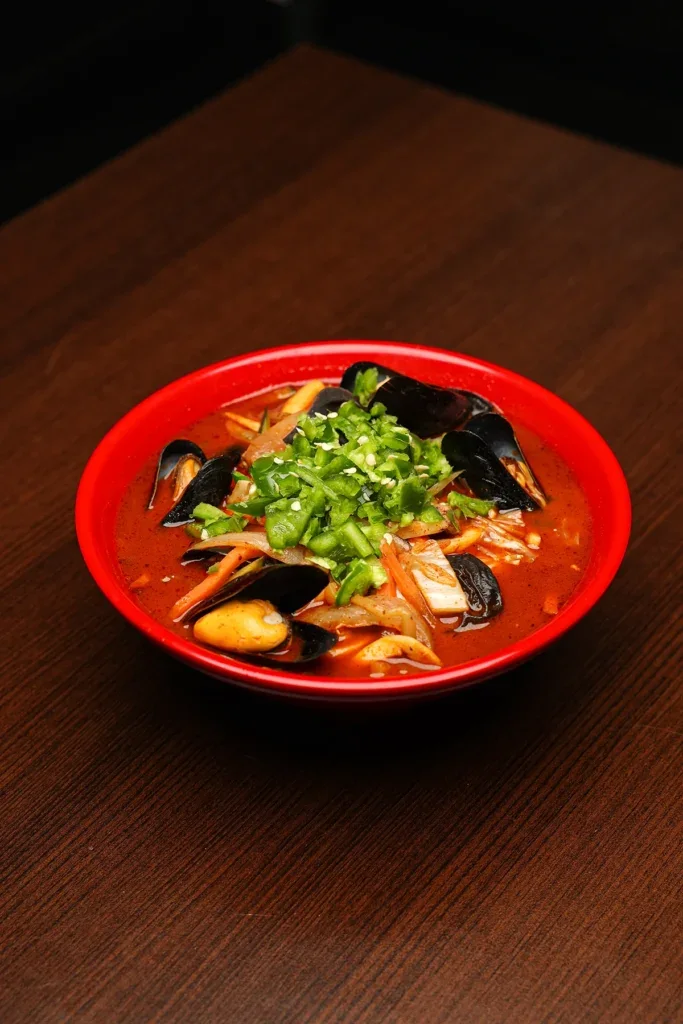
A seafood topping changes one visible part of the dish. It doesn't establish the sauce ingredients or the kitchen's process.
This is especially important with a large sharing plate. A group can order a seafood-labelled dish and still receive sauce prepared with another ingredient.
The useful decision is simple. Choose seafood only after checking the recipe you will actually receive. Skip the assumption that a dish is suitable because its name doesn't mention pork.
For an allergy, make a separate allergy request. Dietary suitability and allergy cross-contact are different questions.
Three practical paths, with the exact menu evidence
Korean Village offers a vegetable gan jajang option, but halal status is not established
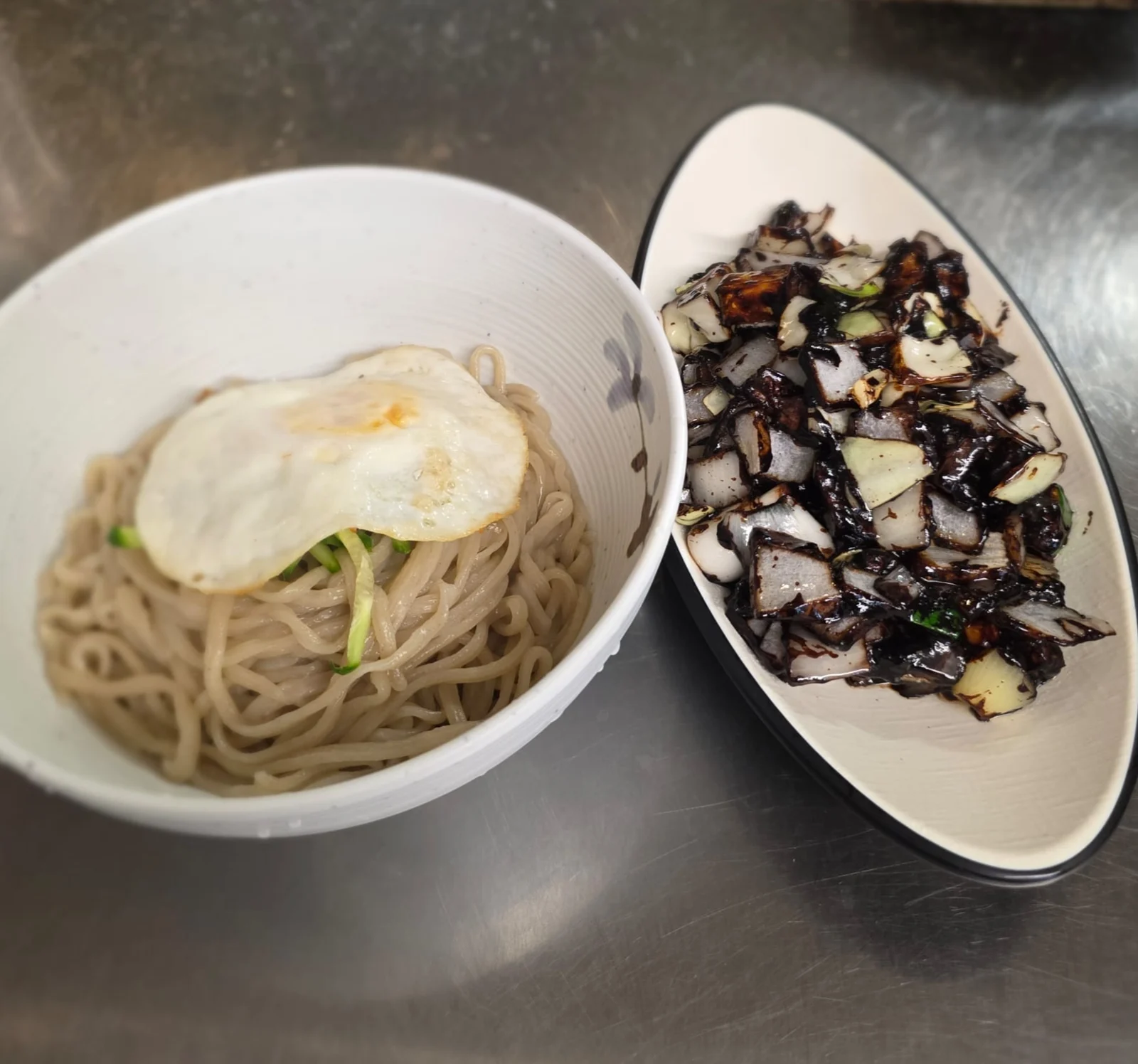
There is a more specific lead than asking a random Korean restaurant to remove pork. Korean Village's menu lists gan jajang myun at $22.99 with beef, seafood or vegetables. It describes the dish as made to order. The ordinary jajang myun is $16.99 and lists diced pork.
The menu therefore supports a vegetable choice in that particular preparation. It does not establish halal certification, a pork-free sauce base or separate equipment. The restaurant is at 628 Bloor Street West and normally closes Mondays.
The question to send is specific: “For the vegetable gan jajang myun, does the sauce or stock contain pork, lard, meat extract or cooking alcohol? Can you tell me the paste used and how it is prepared?” That is much easier to answer than “Is your food halal?” when you mean one dish.
If the answer doesn't meet your needs, don't order it on the strength of the vegetable label. The menu lead is useful because it narrows the conversation, not because it clears the meal. Choose it only after the restaurant supplies the ingredient and preparation information you need.
Sarang is the clearer halal Korean alternative when you can change the dish
Sarang Kitchen's menu is the useful next path when the goal is halal Korean food, rather than that exact black-bean noodle. Its regular menu lists a chicken platter at $27.99 and a two-to-three-person platter at $51.99. Spicy rice-cake stew is listed at $29.99 for medium and $39.99 for large.
These are not jajangmyeon. Rice-cake stew and chicken should not appear in a search answer as though they solve the noodle request. They solve a different problem: finding a Korean meal at a restaurant that presents itself as halal.
For two people sharing the $51.99 platter, the food subtotal is about $26 each. For three it is about $17.33 each. Those are simple divisions of the listed serving range, not proof that either amount will satisfy every appetite. Add the drinks and other dishes you actually want.
Sarang's hospitality model includes service rather than encouraging a separate tip. Read the current menu's bill details instead of automatically comparing its price with a restaurant where gratuity is extra. Ask about your particular dish and requirements even at a halal restaurant.
Choose Sarang when halal sourcing and a Korean flavour profile matter more than getting jajangmyeon tonight. Don't call it the answer if you will still be disappointed without the noodles.
Home cooking gives ingredient control, not an automatic certified meal
The grocery task is to find suitable chunjang, the black-bean paste used for this dish. Gochujang is a different chilli paste. Buying a brand's halal gochujang does not prove that its chunjang is halal too. Sempio's halal range illustrates why certification needs to match the exact product.
The most practical shopping record is a photo of the front label, ingredient list and certification mark on the actual jar. Record the product name and size. An online photograph of another market's packaging can describe a different formula or certification.
For a home version, choose the protein after the paste. A vegetable version avoids the need to source meat for that recipe, but the sauce and stock still need checking. A chicken version needs the right meat as well. Neither choice changes the status of a paste with ingredients you cannot use.
Don't buy a five-kilogram overseas catering tub because a search result calls it halal. Overseas prices, certification claims and shipping availability do not establish a usable Toronto grocery option. A local stocked product with an exact label is the more useful result.
The decision table
| Path | What is supported | What remains unresolved | Choose it when |
|---|---|---|---|
| Korean Village vegetable gan jajang | A named $22.99 vegetable variation on the official menu | Halal status, sauce and preparation details | The restaurant answers the specific questions to your satisfaction |
| Sarang chicken or rice-cake dish | A halal Korean restaurant with a published menu | Whether a different dish satisfies the actual craving | You are happy to change the meal |
| Home-cooked jajangmyeon | You control the recipe and shop for the exact ingredients | The status of the paste and every other ingredient | You can source products that meet your requirements |
| Ordinary pork jajang with meat removed | A bowl can lose visible meat | The existing sauce may still contain pork or lard | Skip this as a shortcut |
The honest limit remains: this research has not confirmed a Toronto restaurant serving a specifically verified halal jajangmyeon. More restaurant names would not fix that evidence gap. The new vegetable-menu lead and the priced halal alternatives give you actual next choices without inventing a certification.
Making it at home
If the exact dish matters, cooking it at home gives you more control. Use a recipe that tells you how the sauce is made, then check the packaging of the paste and other ingredients.
Don't assume every brand of black-bean paste has the same ingredients. Don't replace pork with beef and call the result halal unless the meat and all other ingredients meet your requirements.
A home version won't solve the desire for a restaurant night out. But it is a better answer than paying for an uncertain dish.
A useful recipe route while the restaurant answer is unresolved
Use a recipe that was built without pork, rather than removing meat from a finished pork sauce. Chef Seonkyoung Longest's vegan jjajangmyeon recipe uses shiitake-mushroom broth, vegetables, chunjang and vegetarian oyster sauce. The creator lists 40 minutes and four to six servings. Those are recipe estimates, not our cooking test.
This solves one part of the problem: the recipe doesn't call for pork. It doesn't certify the jars or noodles you buy. Check the actual black-bean paste, vegetarian sauce and noodle package against your own halal requirements. We haven't verified a specific certified product sold in Toronto.
Chunjang is the Korean black-bean paste to look for. Ordinary canned black beans won't give you the same sauce. The recipe also explains a rice version, which is useful if you don't have suitable noodles.
Compare the cost over several meals. Buying every sauce for one bowl can cost more than expected, even when the ingredients last. Use the linked creator's full method rather than guessing quantities from a restaurant description.
Our decision is to use a checked home recipe when this exact dish matters and the restaurant cannot answer the sourcing questions. If you want someone else to cook tonight, choose a confirmed suitable dish instead of accepting an uncertain sauce.
More places for a halal Korean meal or a home-cooked noodle bowl
Mix2: verified halal meat wording, with a different meal format
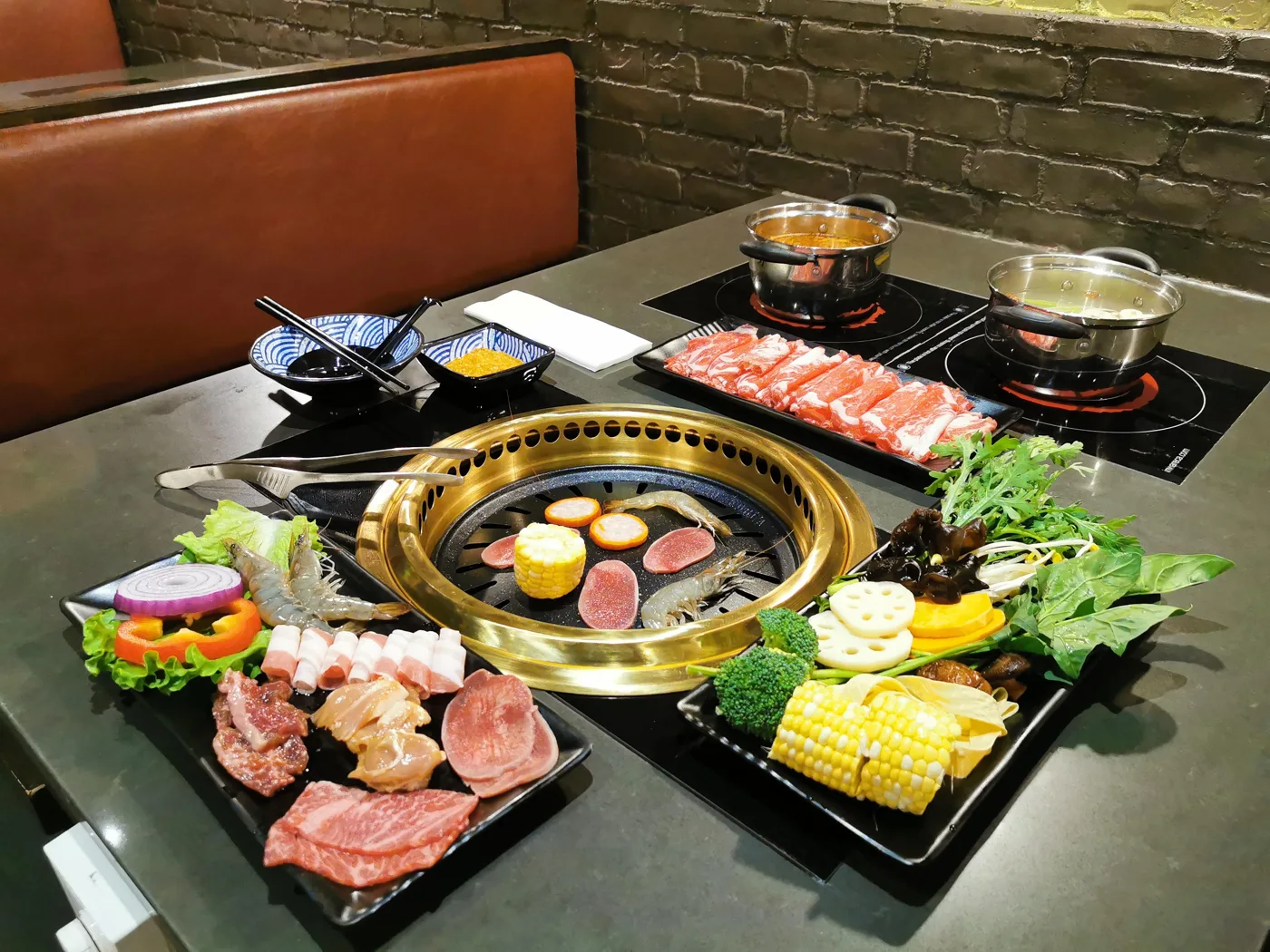
Mix2 Grill & Hot Pot is at 436 Dundas Street West, on the second floor. Its own website says its beef, lamb and chicken meats are halal certified. It offers hot pot and a Japanese-and-Korean barbecue format.
That is a useful new choice when your priority is eating a Korean-influenced meal with halal meat. We have not verified halal jajangmyeon there. The meat statement also does not establish the ingredients in every broth, sauce or side dish.
Choose it for grill and hot pot. For black-bean noodles, keep the dish-specific checks in this guide. They are different decisions.
PAT Central: a practical place to read ingredient labels yourself
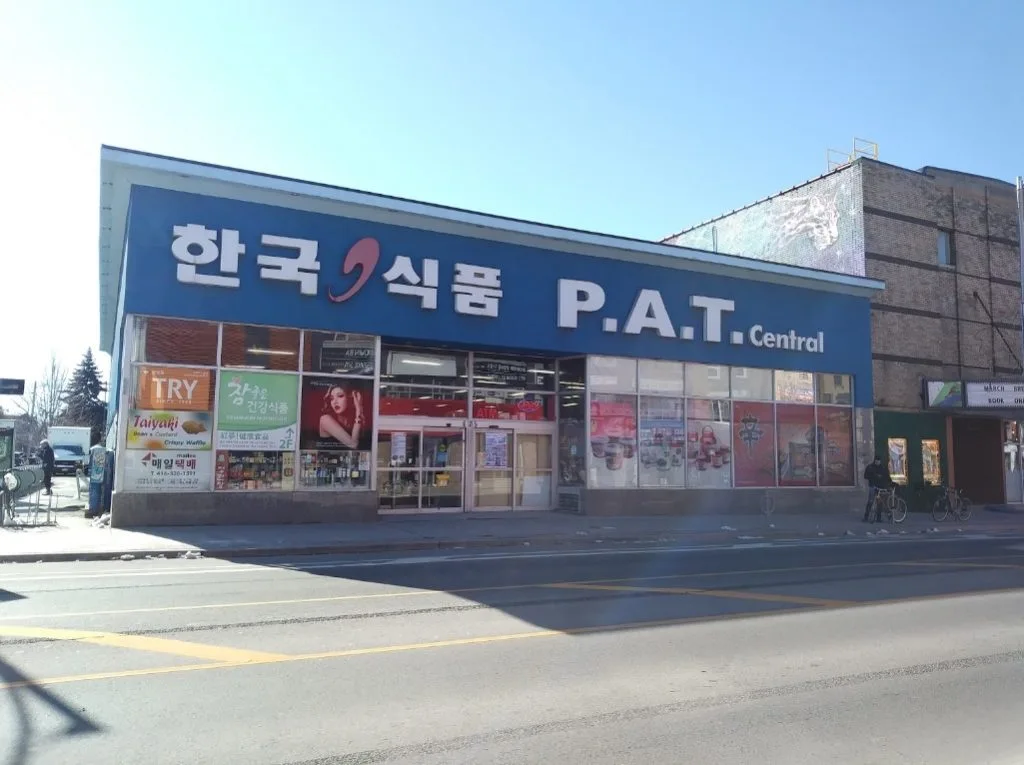
PAT Central is at 675 Bloor Street West. Its own listing gives regular hours of 9 a.m. to 9 p.m. Monday to Saturday and 9:30 a.m. to 9 p.m. Sunday. Its store directory also lists 63 Spring Garden Avenue and 5 Glen Cameron Road in Thornhill.
Choose a Korean grocery when you want to inspect the actual paste and noodles before buying. Ask for chunjang, the black-bean paste used for jajangmyeon. We haven't confirmed a particular halal-certified brand in stock at these branches. Read the label and certification on the exact package, then choose the meat and cooking ingredients separately.
Galleria's branch list adds 865 York Mills Road, 558 Yonge Street and 351 Bloor Street West in Toronto, plus 7040 Yonge Street in Thornhill. Those are shopping options, not claims that every branch carries halal chunjang.
For a restaurant meal now, Sarang or Mix2 is the clearer cuisine alternative. For control over the exact noodle dish, home cooking gives you more control over ingredients, but only after you check every product.
Frequently asked questions
Is jajangmyeon usually made with pork?
Some Toronto menus explicitly use pork, including Kim's Noodle's regular version. Recipes vary. Check the dish and sauce at the exact restaurant.
Is there confirmed halal jajangmyeon in Toronto?
We couldn't verify a restaurant offering the exact dish from the current primary sources checked on October 11, 2026. This is an evidence gap, not a claim that it cannot be found.
Does Sarang Kitchen serve halal jajangmyeon?
The restaurant describes itself as halal, but we haven't verified that jajangmyeon is on its current menu. Ask the branch before going for that dish.
Can a restaurant simply remove the pork?
Only if it can change the preparation. Pork already cooked into a sauce can't be removed by leaving off a topping. Ask whether the sauce is made separately.
Is seafood jajangmyeon automatically suitable?
No. Check the base sauce, cooking fat and any other ingredient requirements. Seafood in the dish name is not complete evidence.
Should I trust a halal restaurant directory?
Use it to find places to contact. Confirm the exact dish with the restaurant and decide whether its evidence meets your standard.
For a different meal, see our Toronto restaurants with vegan options and restaurants recommended by people who grew up with the food. For jajangmyeon, get the sauce answer first. If it isn't clear, change the dish or cook it with ingredients you can check.
Related Toronto guides: Affordable Family-Owned and Independent Restaurants in Toronto and the GTA.