


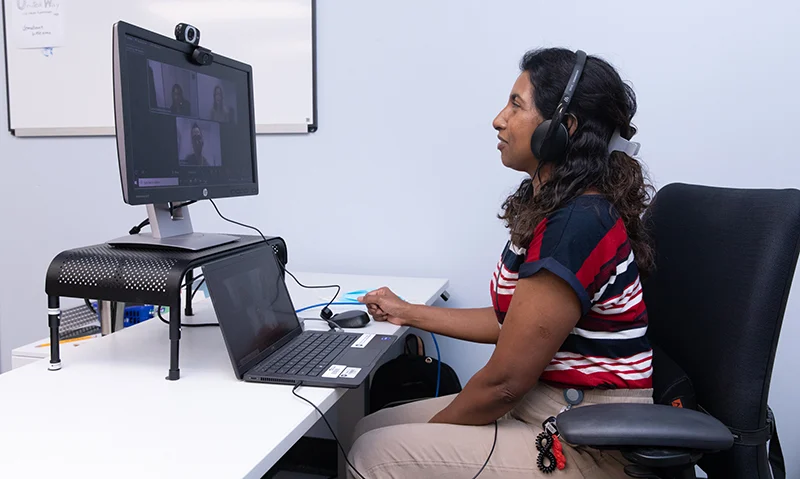
If your goal is to reduce uncertainty in a conventional office interview, covering a visible tattoo is a practical option. It is not proof that the tattoo is unprofessional, or a guarantee you will get the job.
If keeping it visible matters to you, showing it can help you assess the employer's culture. That choice can carry a cost when the interviewer's expectations are unknown. Our advice is to get the actual dress policy before accepting a role rather than hiding a neck tattoo for months and hoping the issue disappears.
The decision is about the job, not a rule for all Toronto workplaces
| Situation | Sensible first step | Main tradeoff |
|---|---|---|
| A client-facing office role with an unknown policy | Use ordinary professional clothing and ask about the policy | Covering can reduce one unknown but hide a possible mismatch |
| A workplace that openly welcomes visible body art | Check that the policy applies to your role | Photos don't prove every manager acts the same way |
| You want to work where your tattoo is accepted | Show it and assess the response | Some employers may not be a fit |
| The tattoo is connected to a protected ground, such as creed | Understand the accommodation issue separately | Style advice is not a substitute for rights guidance |
| An offensive or discriminatory design | Consider the content, not only visibility | Other workplace rules and rights can be relevant |
There is no verified rule that all Toronto employers accept tattoos, or that all corporate employers reject them.
Covering can be practical without endorsing the bias
An interview is short. You often don't know the manager's preferences or the client's expectations. A covered tattoo can remove one thing you don't want to spend the meeting discussing.
The drawback is that it can leave a real workplace issue unresolved. If the job later requires constant coverage, you should know that before accepting.
Choose coverage for the interview if it helps you feel comfortable and keeps attention on your work. Then ask for the policy. Don't turn a short-term choice into indefinite concealment.
You shouldn't have to prove your competence twice because of a flower on your neck. But an unfair preference can still affect a hiring decision. Practical advice should acknowledge both facts.
Showing it can help you judge the employer

A visible tattoo can reveal whether the workplace fits how you want to present yourself. That matters if covering it daily would be uncomfortable or expensive.
It is not a magic screening tool. An interviewer can be polite while the written policy is stricter. A manager's reaction also doesn't necessarily represent the whole organization.
Ask a neutral question: “Are there appearance or uniform requirements for this role that I should know about?”
If there are limits, ask what they mean in practice. Which tattoos must be covered? During client meetings only, or every shift? Does the rule apply consistently?
Choose a workplace whose real requirements you can live with. Don't rely solely on a friendly reaction in one video call.
Neck and hand tattoos create a different practical problem
A sleeve tattoo can often be covered by ordinary work clothing. A neck or hand tattoo may be harder to cover without changing your outfit or using makeup.
That doesn't make it more meaningful as a measure of character. It changes how easily you can meet a coverage rule.
Try the clothing you plan to wear before interview day. Check that it is comfortable in the room and doesn't distract you while speaking.
If makeup is your choice, test the product and the finish beforehand. Look at it in daylight and on camera. Don't make a first attempt ten minutes before the call.
Choose the method that feels natural enough to stop thinking about. Skip an uncomfortable outfit that undermines the interview you were trying to simplify.
What makeup can and can't promise
The original lead recommends Dermablend. The manufacturer's body-cover product page describes tattoo coverage and resistance to transfer when used with its setting product.
That is a manufacturer's claim, not our test. We haven't verified that it covers every tattoo or stays invisible for an entire workday.
Colour matching, application and clothing contact matter. Follow the product instructions and avoid using makeup on irritated or unhealed skin.
We haven't confirmed a particular Toronto retailer's stock or price. Don't assume a US web price is a Canadian store price.
Choose makeup only if you have tested it and are comfortable using it. Clothing may be the simpler option where it works.
The human-rights question is separate
Ontario human-rights protections can be relevant when an appearance requirement connects to a protected ground. The Ontario Human Rights Commission's creed policy discusses dress and appearance rules and the duty to accommodate creed-related needs.
The policy distinguishes an actual accommodation need from a style preference. That means the answer isn't “all tattoos are protected” or “an employer can do anything it wants.”
The facts of the situation matter. A religious or creed-related marking can raise a different issue from decorative body art. A rule applied differently because of a protected characteristic can also need careful review.
If that is your situation, use Human Rights Legal Support Centre information for case-specific help. Don't treat an interview-style article as a legal decision.
Ask about the rule and keep written records of relevant communications. Don't make a broad legal accusation from a single awkward comment without understanding the facts.
The evidence is more mixed than “tattoos cost you jobs”
A wage study and an interviewer opinion answer different questions
The Human Relations study by French, Mortensen and Timming, first published online in 2018, studied US employment and earnings. It found no statistically significant general wage or employment penalty for tattooed people in its sample.
That is important evidence against a blanket claim that having a tattoo ruins your career. It is not proof that every interviewer is unbiased, that every visible location has the same result, or that a Toronto employer has no appearance policy.
The distinction matters. A study asking managers what they prefer measures attitudes. A study comparing actual employment or earnings measures outcomes. A manager's dislike can exist without producing a measurable general wage penalty. A general average can also hide particular roles or individuals.
Use the study to question the sweeping claim. Use the actual employer's rules for the decision in front of you. Don't turn a US sample into a Toronto acceptance percentage.
A formal employer can have a permissive tattoo rule
The Canadian Armed Forces' current appearance instructions permit tattoos while restricting specified content, including criminal connections and discriminatory, hateful or sexually explicit material.
That is an example of a real written policy, not a rule for all Toronto jobs. It also shows why “formal workplace” is too broad a label. An older archived dress manual can show a different policy. Read the current instructions rather than a search snippet from years ago.
For a bank, healthcare provider, school or restaurant, get that organization's own policy. The uniform or brand image may matter, but it doesn't let us invent a ban. Nor does a tattoo-friendly industry stereotype guarantee that this hiring manager shares it.
A practical decision table for the interview
| Situation | Our interview choice | What to establish before accepting the job |
|---|---|---|
| An arm tattoo naturally covered by normal interview clothing | Wear the usual outfit; no special explanation needed | Whether the normal work uniform exposes it and whether that matters |
| A visible tattoo and no published restriction | Keep the presentation deliberate and focus on qualifications | The actual appearance policy, rather than a rumour |
| A tattoo whose wording or imagery could be read as hostile | Cover it where practical and consider the interpretation | Whether the content conflicts with a written rule or the role |
| A hand or neck tattoo that needs daily makeup to conceal | Don't promise effortless permanent concealment | The routine required during real shifts, including washing or protective equipment |
| A tattoo connected to a protected religious practice | Treat this as an accommodation question | The relevant rights and facts, with specific advice if needed |
This is editorial guidance, not a prediction of your interview result. The important difference is between an easy clothing choice for one meeting and an expensive daily requirement for a job.
The uniform test is more useful than the interview-only test
Ask what you will wear on a normal shift. A long-sleeve interview shirt can hide a forearm tattoo that a short-sleeve work uniform exposes. Passing the interview with it covered does not resolve the later policy.
Also ask about protective equipment and hygiene requirements. Don't choose sleeves, jewellery or makeup that conflict with the actual job. The workplace needs to explain the requirement; you shouldn't infer it from an industry stereotype.
For a desk role with flexible clothing, ordinary sleeves may be an easy option. For a wet or physically active shift, makeup may be impractical. The value of covering changes with the daily conditions.
A simple policy question that doesn't turn into an apology
After discussing the role, ask: “Is there a written appearance or uniform policy I should review before accepting?” That asks for the rule without assuming your tattoo is a problem.
If the answer is vague, make the practical question specific: “Would this need to be covered during ordinary shifts?” Ask whether the rule concerns content, location or all visible tattoos. Those are different requirements.
If the recruiter says it is fine, keep that answer with the offer discussion. If the policy requires concealment, decide whether you can and want to do it every day. You can reject a mismatch without pretending the employer's preference is a judgement of your worth.
Why the human-rights answer needs care
The Ontario Human Rights Code protects specified grounds. Tattoo preference by itself is not a separate protected ground. The OHRC dress-code guidance explains why a workplace rule can still raise issues when it affects a protected characteristic.
A tattoo's religious connection needs actual facts. Calling every personal design a creed does not settle an accommodation claim. Likewise, an employer calling something a brand rule does not automatically settle the rights question.
If this is becoming a dispute, keep the written policy, job requirements and relevant exchanges. The answer then depends on those details. A general interview article cannot decide a specific legal claim.
Our recommendation for someone who needs the job now
Use ordinary professional clothing when it covers the tattoo comfortably. Put the interview effort into evidence of your skills, clear examples and the role's needs. Don't let concealment become the entire preparation.
Before accepting, resolve any daily-covering requirement. That is the point where a small interview choice can become an ongoing cost. If the employer has no restriction, don't manufacture one for yourself. If it does, decide with the actual rule in front of you.
Toronto places to get interview help or discuss a workplace problem
For interview practice, use a real employment service before spending money on tattoo removal or expensive cover-up products. ACCES Toronto, at 489 College Street, Suite 100, offers individual job-search support. YES lists offices at 1610 Bloor Street West and 555 Richmond Street West, Suite 711. Ask which programme fits your situation.
Bring the job posting and explain the practical concern: a uniform, customer-facing role, hand tattoo or cultural or religious meaning. Ask to practise answering a relevant question calmly. These services can help you prepare. They cannot certify that a particular employer will accept visible tattoos.
For a workplace-rights problem, the Workers' Action Centre lists 720 Spadina Avenue, second floor, Suite 202. Its support is free and confidential. Call 416-531-0778 to arrange help before visiting. The centre says it does not handle workplace-problem inquiries by email.
If the concern involves discrimination connected to a protected ground, use the Human Rights Legal Support Centre contact service. A dislike of tattoos and a Code-protected discrimination claim are different questions. Get advice about the facts instead of assuming that one proves the other.
Choose interview coaching for preparation. Choose a rights service for a rights problem. Neither requires you to make a permanent change to your body before understanding the job.
Frequently asked questions
Should I cover a neck tattoo for an account-manager interview?
If reducing unknown appearance expectations is your priority, covering is a practical choice. Ask about the role's actual policy before accepting. It isn't a judgement of your ability.
Do Toronto employers allow visible tattoos?
Some do, and policies differ. Check the organization and role rather than relying on a citywide rule.
Are tattoos protected by Ontario human-rights law?
A tattoo's connection to a protected ground can matter. Decorative style preferences and creed-related needs aren't automatically the same. Seek specific guidance when rights are at issue.
Does covering the tattoo improve my chances?
We haven't verified a precise hiring effect for Toronto account-manager roles. It can reduce one unknown, but it doesn't guarantee a result.
Can makeup hide every tattoo?
No such guarantee is established here. Manufacturers make coverage claims, but colour, application and the tattoo can affect the result. Test it before interview day.
Should I keep covering it until probation is over?
Don't assume probation changes the appearance policy. Get the rule before accepting and decide whether you can meet it comfortably.
For pay questions, see our Ontario salary-transparency guide. Prepare for the role, choose the presentation that suits your aim and settle the ongoing policy before starting.
Related Toronto guides: Toronto library study spaces: where to work and what is closed.