


Some Toronto towers cast too much harmful shadow. Others cast a large-looking shadow that moves quickly and does little real damage. Height alone does not answer the question. The direction, time, season, width of the tower and place being shaded matter more.
Our verdict: Toronto should strongly protect sunlight on parks, schoolyards and busy public spaces, especially at lunch and in the colder months. It should not use every new shadow on a private view, roof or church wall as a reason to block housing. A broad tower south of a small park is often a worse design than a taller, slimmer tower placed carefully.
The biggest public misunderstanding is treating a shadow diagram as one permanent black shape. A building's shadow moves through the day and changes across the year.
The short answer
| Question | Answer |
|---|---|
| Does Toronto review tower shadows? | Yes. Planning staff can require a sun and shadow study |
| Which proposals usually need one? | Zoning applications for buildings over six storeys or 20 metres, and some shorter proposals near sensitive areas |
| What dates are tested? | March 21 and September 21 at hourly intervals, with June 21 and December 21 added when parks and open spaces need more analysis |
| Is any new shadow illegal? | No. Policy seeks to limit and minimize harmful impacts. Exact standards vary by location and plan |
| Are private views protected? | A private skyline view is generally weaker than sunlight, sky view, privacy and public-realm concerns in planning policy |
| Does a shorter building always cast less shadow? | No. A wide building can shade a larger area for longer than a slim taller tower |
Why Toronto asks for shadow studies
Sunlight changes whether a park feels usable, whether plants grow and whether a street is comfortable on a cold day. New buildings also affect sky view and wind.
Toronto's Official Plan directs development to fit its context, maintain adequate sunlight and sky view, and minimize shadow and uncomfortable wind on nearby properties and open spaces.
That language requires judgement. It does not create one citywide number that every tower either passes or fails.

When is a sun and shadow study required?
The City's current terms say a study may be required for zoning bylaw amendments involving development over six storeys or 20 metres. Staff can also request one for a shorter proposal near a park, schoolyard, cemetery, natural area or another sensitive place.
The planner and urban designer decide the needed scope during the application process. A developer may have to test alternative building shapes if the first design creates a bad result.
The study can change as the proposal changes. Never use the first public diagram as proof of the final building impact.
How Toronto shadow diagrams are made
The model includes existing buildings, the proposed building and approved buildings that may not be built yet. It shows streets, parks and open spaces far enough away to see the effect.
The City asks for existing and proposed conditions side by side. That matters because downtown already has shadows. The useful question is how much new shadow the proposal adds.
Tests use specified dates and times. March 21 and September 21 represent the spring and fall equinox periods. When a proposal affects parks or open space, June 21 and December 21 tests may also be required.
The exact City times use local conventions listed in the terms of reference. Read the legend instead of guessing from the clock label.
Why the equinox matters
Summer sun is high. Winter sun is low and daylight is short. The equinox offers a middle condition that planners can compare across projects.
One date is not enough for every decision. A splash pad needs summer sun. A park used at lunch in March needs a different test. An outdoor rink may benefit from shade or cold in ways a playground does not.
Good planning connects the test to how people use the place.
Does Toronto have a no-new-shadow rule?
Some area plans and guidelines protect specific parks or time periods more strictly. Older downtown tall-building guidance included no-new-net-shadow standards for identified parks around midday on September 21.
That is not a blanket rule for every property in Toronto. Site-specific policies, secondary plans, zoning and current Official Plan language all matter.
A resident cannot point to any new shadow on any surface and automatically defeat a building. A developer also cannot dismiss all shadow because housing is needed.
Public park sunlight should come first
Toronto is adding residents faster than it adds large central parks. That makes the sunlight reaching existing public land more valuable, not less.
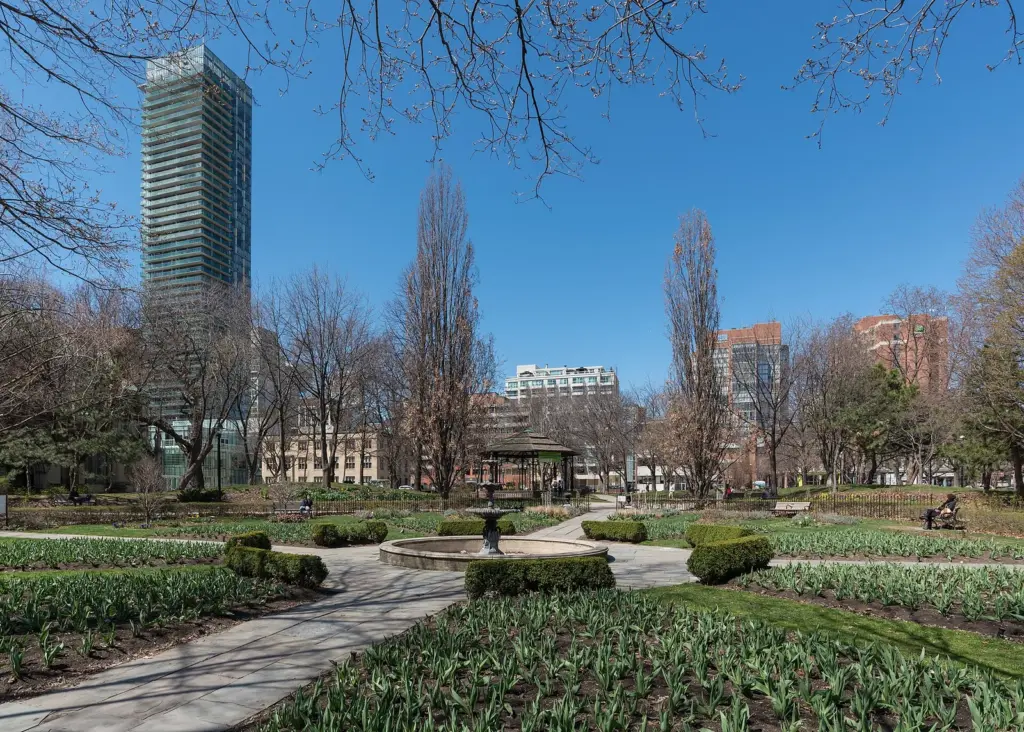
A small downtown park may be the only free outdoor living room for thousands of people. Long lunch-hour shadow can change its comfort, planting and use.
Our rule is clear: a proposal should make a serious design change when it creates long new shadow across a small, heavily used park during key hours. Move the tower, slim the floor plate, change the base or reduce part of the mass.
A church wall is not the same as a public park
A recent public debate about a proposed tower near a historic downtown church produced predictable arguments. One side treated the shadow as an attack on heritage. The other treated any concern as an excuse to stop housing.
Both shortcuts are weak. Heritage value can include a building's setting, grounds and public space. Direct sun on a stone wall does not automatically outrank housing.
Ask what is actually affected. Is it a public square used every day? A garden? Solar equipment? The visibility of a landmark? Or only the fact that the facade will be shaded for part of an hour?
Protect the meaningful public function, not an abstract right to sun on every old brick.
20 Toronto places where new shadow deserves careful review
This is not a list of sites where development is banned. It is an editorial checklist of public places whose size, use or importance makes sunlight worth studying carefully.
This map shows an approximate area. Open the full map.
- St. James Park, because it is a small central park beside major development pressure.
- Allan Gardens, because greenhouse, garden and public uses depend on a comfortable setting.
- Moss Park, because a major public renewal should not inherit avoidable new shade.
- David Pecaut Square, because events and lunch-hour use rely on comfort.
- Nathan Phillips Square, because it is Toronto's main civic gathering space.
- Queen's Park, because lawns, paths and large trees serve citywide users.
- Grange Park, because it is a heavily used downtown family and cultural park.
- Clarence Square, because a small park can be overwhelmed by nearby massing.
- Canoe Landing Park, because dense CityPlace residents rely on it for open space.
- Love Park, because its new planting and water features need long-term comfort.
- Barbara Hall Park, because community events and daily social use matter.
- Norman Jewison Park, because small downtown parks can lose useful midday sun quickly.
- George Hislop Park, for the same small-park and high-density reason.
- Ramsden Park, because recreation, lawns and winter use span seasons.
- Jesse Ketchum Park and schoolyard, because children need useful outdoor space.
- St. Andrew's Playground, because a compact park sits beside intense growth.
- Regent Park, because the central park carries recreation and community events.
- Wellesley-Magill Park, because dense housing gives residents few nearby alternatives.
- Corktown Common, because planting, play and flood-landscape functions all matter.
- New parks planned in growth areas, because Toronto should protect their sun before surrounding towers are fixed.
How tower shape changes the shadow
A slim tower
A slim tower often casts a narrower shadow that moves across the ground. It may reach farther, but shade one point for less time.
A slab building
A broad slab can cover more of a park or street for a longer period. Reducing height alone may leave the broad shadow problem in place.
A podium
The lower base shapes street comfort and sky view. Setbacks and step-backs can let more light reach the sidewalk.
Several towers
Each building may look acceptable alone while their combined shadows remove a large block of sunlight. The model should include approved future context for that reason.

Shade can also be useful
Toronto summers are hotter. Trees and buildings can provide relief from extreme heat. The City's Thermal Comfort Study looks at sunlight, shade, wind and future climate together.
The goal is not maximum sun on every pavement. A bare plaza that bakes in July is also poor public space.
Good design offers choice: sunny areas in cold seasons, shade in summer, and trees that provide cooling without turning a park into permanent darkness.
What about solar panels?
New shade can reduce solar energy production. The City advises property owners to review zoning and the Official Plan when assessing future construction risk.
A solar owner does not automatically control future development nearby. Site-specific rights, agreements and law matter. Anyone facing a major financial impact should get planning and legal advice, not rely on a general article.
From a policy view, Toronto should map major public solar systems and consider avoidable impacts during review. Private rooftop claims need case-by-case evidence.
How to read a developer's shadow study
- Find the north arrow and date.
- Confirm the time zone and listed test times.
- Separate existing shadow from new shadow.
- Look for approved but unbuilt towers in the model.
- Track one important place across every hour, not one dramatic frame.
- Compare March, June, September and December when available.
- Read the written conclusion and staff response.
- Check whether the design changed after the study.
A colourful diagram can still omit the question you care about. Ask the planner for the relevant test or model view.
What residents should ask for
Do not write only "the tower is too tall." Ask for a narrower floor plate, a different orientation, a setback, a moved tower, a lower podium or a test at the hour the park is busiest.
Name the public use being harmed. A school pickup area, community garden or lunch lawn is more persuasive than a general complaint about change.
Support housing while demanding better massing. Those positions can exist together.
What developers should stop saying
"The shadow moves" is not a complete answer. Every shadow moves. The duration and affected use still matter.
"The area is already urban" is also weak. High density increases the need for good public space.
Show the trade-off. If the design adds homes, state how many. If a slimmer tower costs units, quantify it. If a park loses 40 minutes of lunch sun, say so plainly.
Our decision rule
Protect the useful sun on public parks, schoolyards and civic spaces. Protect lower-scale homes from severe long-duration impacts where policy requires it. Do not protect a private skyline view as if it were public property.
Approve height when a slim, well-placed tower produces a manageable moving shadow. Redesign broad massing that covers a valuable small park for the hours people need it.
This is not anti-housing. It is how a dense city keeps density livable.
Keep exploring Toronto
- Five public gardens in Toronto
- A clear look at Olivia Chow's record as mayor
- Our honest review of the temporary Ontario Science Centre
Official pages to check
Prices, rules, hours and project details can change. Check these primary pages before you spend money or make a special trip:
- City application support material Terms of Reference
- Toronto Official Plan Chapter 4
- Toronto Thermal Comfort Study
- Toronto design guidelines
Frequently asked questions
Does Toronto require a shadow study for every condo tower?
Planning staff may require one for zoning applications over six storeys or 20 metres and for some shorter proposals near sensitive places. The scope depends on the site.
What dates does a Toronto shadow study use?
The standard terms use March 21 and September 21 at hourly intervals. June 21 and December 21 may be added when parks and open spaces need more review.
Can neighbours stop a tower because it shades their yard?
Shadow on a lower-scale residential property can matter under planning policy, but it is one part of the review. A new shadow does not automatically stop a proposal.
Does Toronto protect private views?
A private skyline view is generally not treated like owned property. Planning review focuses more on matters such as sunlight, sky view, privacy, wind, heritage and public space.
Is a taller tower always worse for shadows?
No. A taller slim tower may cast a narrow moving shadow. A shorter broad slab can shade a larger area for longer.
Can shade be good in Toronto?
Yes. Summer shade reduces heat stress. The goal is comfortable seasonal choice, not maximum sun on every surface.
Where can I find a proposed building's shadow study?
Check the City's development application portal or ask the assigned planner. Make sure you are reading the latest version, not an early submission.