


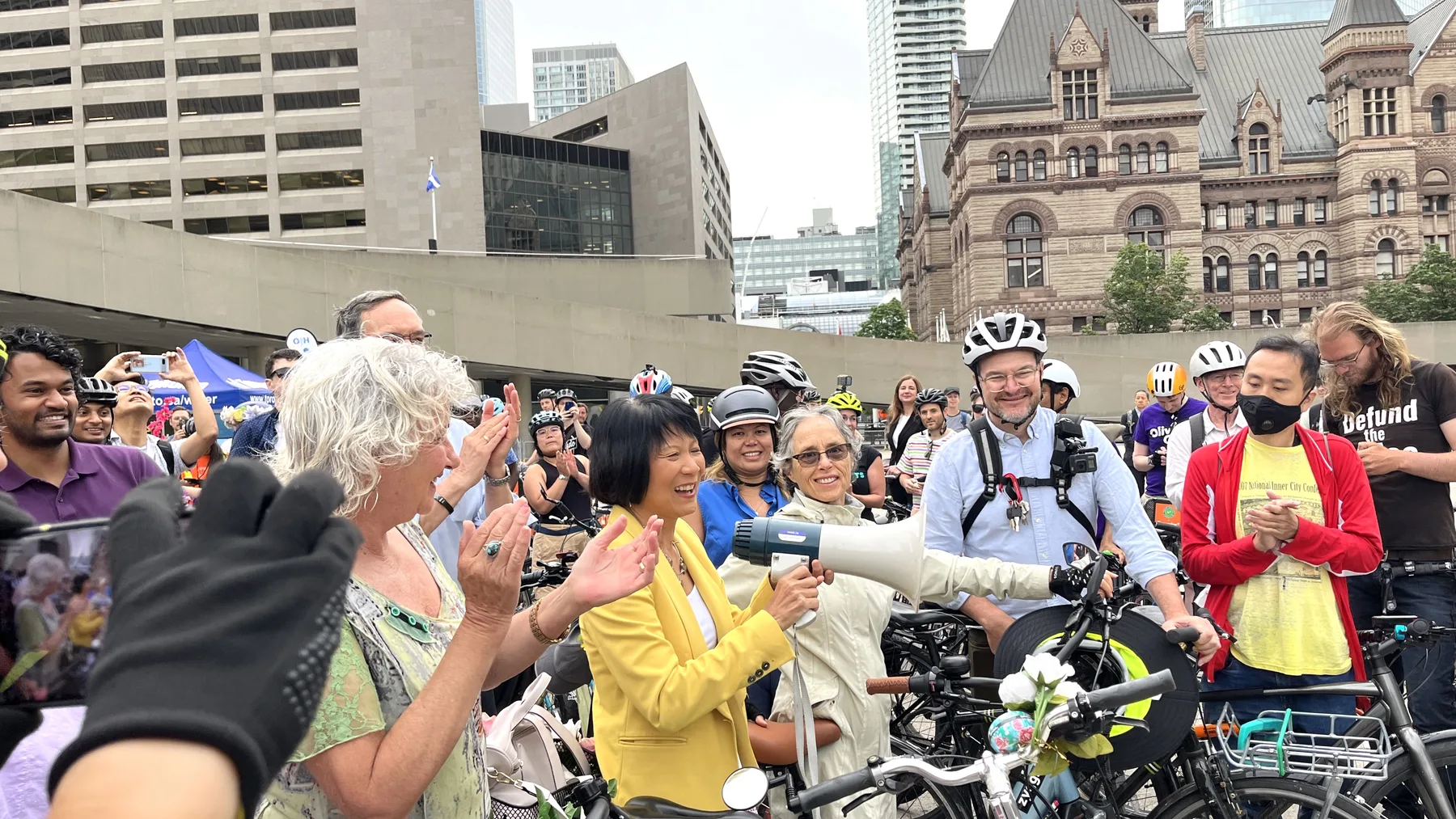
We think Olivia Chow is one of the best mayors Toronto has had in recent history. She has a real record at City Hall. Her clearest wins are a major funding deal with Ontario, better library and recreation access, stronger renter rules, more school food, a large traffic agent expansion, and three TTC fare freezes. City finances also look steadier than they did when she took office.
But this is not a clean victory story. Taxes rose sharply in her first two budgets. Homelessness is still severe. Housing approvals have not turned into finished homes fast enough. The TTC still feels slow and worn in many places. Several projects that opened during her term were started years before she became mayor.
This guide separates those things. It was fact-checked on August 25, 2026.
The quick answer
| Area | What changed during Chow's term | Our read |
|---|---|---|
| City finances | Toronto reached an Ontario funding deal, freed $1.9 billion for other capital work and received an AA+ credit rating | A major result, with shared credit and real provincial tradeoffs |
| TTC and traffic | Fares were frozen in three budgets, service hours rose, traffic agents expanded and a Scarborough Busway is due to open early | Useful progress, but riders still face slow and uneven service |
| Renters and housing | A renovictions bylaw began, Toronto Builds was approved and a $1.5 billion housing funding agreement lowered development charges | Stronger rules and a larger pipeline, but too few finished homes |
| Libraries and food | All 100 libraries gained Sunday service, seven-day service followed, and school food funding grew | Clear, practical wins that people can use now |
| Parks and washrooms | Council funded a $132 million washroom program and more year-round facilities | A good repair program, not a fast fix for every park |
| Safety and 911 | 911 answer times improved sharply, crime indicators fell in 2025 and the crisis response service went citywide | Real improvement, but no mayor can honestly claim sole credit |
| Taxes | Residential property taxes rose 9.5% in 2024, 6.9% in 2025 and 2.2% in 2026 | The price of rebuilding services was high, especially in the first two years |
| Homelessness | Known active encampments fell from their late 2024 peak, while the City moved thousands of shelter residents into housing | Progress in one measure, but the city still counted 12,196 people experiencing homelessness in October 2025 |
Our view is simple. Chow has been better at repairing government than transforming Toronto. The City does more useful work than it did three years ago. It still does not move, build or house people fast enough.
How we decided what counts as an accomplishment
Toronto's mayor is powerful, but not all-powerful. The mayor proposes a budget, sets priorities, appoints committee chairs and can use strong mayor powers. Council still votes. City staff deliver the work. The TTC, Toronto Police Service, Toronto Public Library and other agencies have their own leaders and boards.
The province and federal government control a lot too. Ontario owns Metrolinx and sets many housing and road rules. Ottawa controls immigration funding and major federal programs. Interest rates, construction costs and the private housing market are outside City Hall's control.
So we used four labels in this guide.
- Clear term achievement: The mayor made it a priority, found support and the result happened.
- Shared achievement: Chow played an important role, but Council, staff or another government also deserve direct credit.
- Inherited and expanded: The program already existed, then grew or changed during her term.
- Still underway: Money was approved or a plan was announced, but the reader cannot use the final result yet.
This matters. A housing approval is not a finished apartment. A construction start is not a move-in date. A new policy is not proof that enforcement works. An opening ceremony does not mean the mayor built the project.

The Ontario and Toronto New Deal is Chow's biggest result
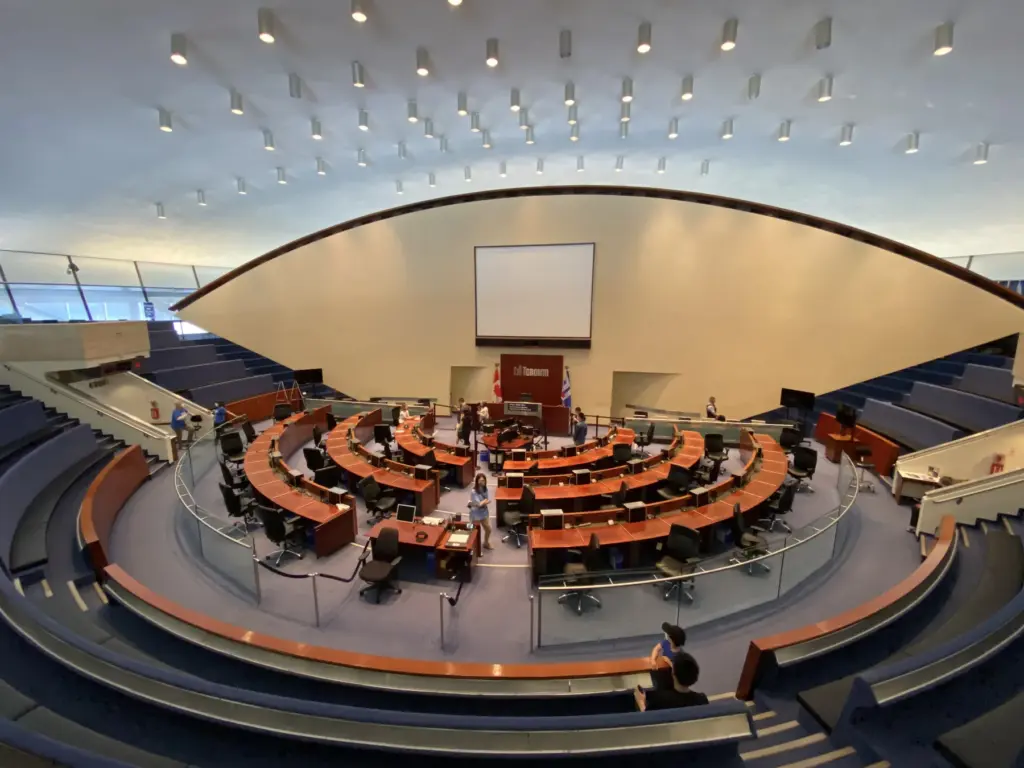
If we had to pick one accomplishment, it would be the Ontario and Toronto New Deal.
Toronto faced a deep, long-term budget problem when Chow took office in July 2023. The City had growing shelter costs, an aging transit system, expensive expressways and a tax base that could not cover every pressure. The pandemic made those gaps much harder to hide.
Chow and the City negotiated with Premier Doug Ford's government. Ontario agreed to take ownership of the Gardiner Expressway and Don Valley Parkway. The transfer is expected in fall 2027. Until then, the City still owns the roads.
The deal gave Toronto room to move about $1.9 billion to other capital needs. The published plan assigns:
| Use | Amount |
|---|---|
| TTC state of good repair and vehicles | $500 million |
| Parks and recreation facilities | $400 million |
| Other transportation work | $350 million |
| Housing | $300 million |
| Corporate facilities | $200 million |
| Flood protection | $100 million |
This is more than an announcement. Moving two very expensive highways off the City's books changes Toronto's future costs. It also gives the City more room to repair transit, parks and other assets.
Chow deserves major credit for making the deal a priority and finding a working relationship with Ford. But it was not a solo act. Provincial ministers, City staff and Toronto Council all had roles. Ontario also brought its own money and goals to the table.
The deal came with tradeoffs
The New Deal did not give Toronto free money with no conditions. It included City cooperation with provincial plans at Ontario Place. It also included commitments connected to the Ontario Science Centre site and transit-oriented development.
Many residents strongly oppose those provincial choices. That is a fair part of judging the deal. Our review of the temporary Ontario Science Centre explains what visitors have in the meantime.
We still think the deal was a net win for the City. Toronto needed another government to take on costs it could no longer carry well. But calling it a win does not require pretending the terms were painless.
City finances became more stable, but homeowners paid more
Toronto's financial position improved during Chow's term. The clearest outside sign came in October 2024, when S&P Global raised the City's credit rating to AA+. Toronto had not received that rating in 23 years.
S&P pointed to careful financial management, multi-year budgeting, reserves and agreements with other governments. This supports a fair claim that City finances became more credible.
It does not mean the mayor alone earned the rating. Finance staff, Council, previous reserve decisions and the New Deal all helped. A credit rating also does not tell a renter or homeowner that life became affordable.
Property taxes rose sharply at first
Chow's first full budget produced a combined residential property tax increase of 9.5% in 2024. The 2025 combined increase was 6.9%. In 2026 it fell to 2.2%.
The three increases compound to about 19.6%. That is a real increase. It should not be hidden behind talk about Toronto having a low tax rate.
Some online calculations add the 2023 budget and call the total four years under Chow. That is not fair. The 2023 increase was 7% when the City Building Fund is included, but Council passed that budget before Chow took office.
Property tax rates are also hard to compare across cities. Home values and assessment systems differ. A low rate on a high assessed value can still produce a large bill.
In 2025, the City said the average home paid about $210 more for the main tax increase and $58 more for the City Building Fund. That is useful context. It is still an average. A particular bill depends on assessment and property type.
What did the tax increases buy?
The added money supported more transit service, shelter and housing work, libraries, emergency staffing, recreation and maintenance. Chow's political choice was to raise more money rather than keep cutting or stretching services.
That choice has a clear upside. Sunday libraries, more traffic agents and faster 911 answering do not happen without staff. It also has a clear downside. Owners pay more, and landlords may try to pass allowed costs to tenants.
Our judgement is that the first two increases were painful but more honest than pretending Toronto could repair services for free. The lower 2026 increase made the pattern easier to defend. It did not erase the earlier cost.
The budget is steadier, not problem-free
The 2026 TTC budget still used $35 million from a stabilization reserve. Toronto still faces large repair bills. Water and wastewater rates also rise to pay for aging systems.
An annual surplus or favourable budget variance is not the same as solving the structural gap. A City can spend less than expected in one year and still face a long-term problem.
So the fair conclusion is not that Chow fixed Toronto's finances. It is that the City is in a better position than it was in 2023.
Traffic agents work, but only where and when they are present
The traffic agent expansion is one of the easiest Chow-era policies to measure.
These are City special constables who stand in busy intersections. They stop drivers from blocking the box, direct turns and help pedestrians, cyclists and streetcars move safely.
The program was not invented by Chow. Toronto piloted it in 2016. In April 2023, before she took office, 30 positions were already budgeted.
Her 2025 budget funded a much larger expansion toward 100 agents. Further growth is planned. That makes this an inherited program that her administration turned into a much bigger service.
The City's 2024 observations found that agents stopped 96% of intersection blocking while present. Travel times at observed locations fell by up to 33%.
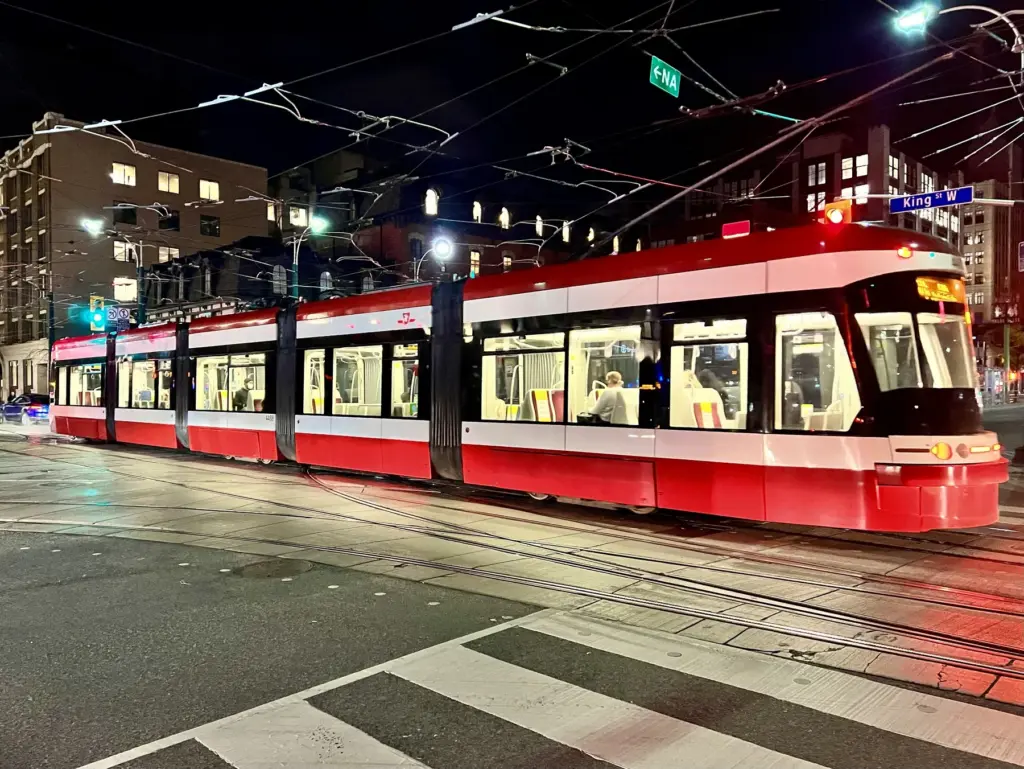
On King Street, the City reported streetcar trips that were 28 to 44 minutes faster during agent deployments. That is a large result for a fairly simple tool.
.jpg)
There is an important limit. Agents do not fix the intersection when they leave. They cannot stand at every corner all day. Construction, turning cars, weak signal priority and poor route management can still slow a streetcar.
The honest claim is this: Chow expanded a program that works well at the exact places where it is deployed. She did not solve Toronto traffic.
If you are trying to move around the core during construction, our four-hour Financial District plans are built around realistic walking and transit times.
TTC fares stayed flat while service grew
TTC fares were frozen in the 2024, 2025 and 2026 budgets. For riders, that is a clear affordability measure.
The 2025 budget added roughly 500,000 service hours. The 2026 plan added another 2% in service hours. It also continued major vehicle and repair spending.
The City's 2026 budget letter says a family with two children could save about $1,200 through combined transit and school food measures. That is a City estimate. It will not match every family. A person who rarely uses the TTC will not receive the same transit saving.
The TTC still feels worse than these numbers suggest
Freezing fares is not the same as making every ride good.
Streetcars still bunch and crawl. Slow zones and repairs can add time. Elevators, station ceilings and other projects can take years. Cleanliness varies. Signal priority remains weak on some surface routes.
The TTC budget also relies on reserves and support from the City. That is not automatically reckless. Reserves exist for hard years and planned stabilization. But it shows that a fare freeze has a cost somewhere else in the system.
Our read is that Chow protected riders from higher prices and paid for more scheduled service. She has not yet created a TTC that feels reliable enough to call a turnaround.
The Scarborough Busway is a useful near-term win
The TTC says the Scarborough Busway is on track to open September 30, 2026. That is more than six months earlier than its revised schedule.
The four-kilometre route uses part of the old Line 3 corridor between Kennedy and Ellesmere stations. Buses will then use priority measures to reach Scarborough Town Centre.
The TTC expects a trip between Kennedy and Scarborough Centre to take about 15 minutes. Riders could save up to seven minutes.
This matters because the Scarborough subway extension is still years away. People need a better connection now.
Chow, the TTC Board and TTC management pushed to accelerate the project. Construction staff and other agencies did the actual delivery. We count it as a shared term achievement, assuming the line opens and works as planned.
This is also an interim solution. A busway does not erase the disruption caused by the early closure of Line 3.
Lines 5 and 6 opened during her term, but they are not Chow projects
Line 6 Finch West opened on December 7, 2025. Line 5 Eglinton began introductory service on February 8, 2026 and later extended its hours.
Both are important changes. Both opened while Chow was mayor. Neither was planned or built mainly by her administration.
Ontario and Metrolinx led the projects over many years. Private project companies built and maintain much of the infrastructure. The TTC operates the lines and worked on testing, staffing and integration.
Chow can fairly take credit for City and TTC readiness, pressure to open safely, and the network changes around the lines. She cannot fairly say she built them.
This distinction also applies to the Lower Don Trail, East Don Trail and much of Biidaasige Park. A project can improve Toronto during a mayor's term without becoming that mayor's personal accomplishment.
The renovictions bylaw is one of the strongest renter protections
Toronto's renovictions bylaw took effect on July 31, 2025.
A renoviction happens when a landlord says a tenant must leave for repairs or renovations, then blocks the tenant from returning or replaces the unit at a much higher rent.
Under the new City rules, a landlord needs a renovation licence. The landlord must give tenants information and a plan. Depending on the situation, the landlord may have to provide temporary accommodation, cover the gap between old and temporary rent, and pay moving expenses.
If a tenant does not return after the work, the rules include another three months of rent-gap support in certain cases.
The province still controls the main landlord and tenant law. Toronto cannot rewrite the Residential Tenancies Act. The City bylaw adds a local licence and enforcement layer around work permits.
That makes it a meaningful protection, not a complete answer. Its value will depend on inspections, tenant awareness and enforcement when landlords break the rules.
Toronto Builds is a better housing framework, but delivery is the real test
Council approved the Toronto Builds framework in 2025. It brings City land and housing delivery work into a clearer public program.
The strongest rule is that public land stays public. Across the portfolio, at least 30% of homes are intended to be affordable rental homes. A share of those affordable homes is meant to be rent-geared-to-income.
Keeping land in public ownership matters. It gives the City control over affordability for longer. It also avoids selling a one-time asset to cover a short-term problem.
Some headline projects were inherited
The program now includes sites such as 50 Wilson Heights Boulevard, 777 Victoria Park Avenue and the Bloor-Kipling development.
Those sites were already moving through Housing Now or other City processes before Chow became mayor. Toronto Builds may improve how they are managed. It did not create their history.
At Bloor-Kipling, the full community is expected to include about 2,700 homes across five blocks, with roughly 900 affordable homes. It is a major transit-oriented project. The first work started before the Toronto Builds label.
Housing approvals are not homes
The official HousingTO progress report shows real progress and a large gap.
By the end of 2024, Toronto had approved almost 30,000 rent-controlled homes toward its long-term target. In 2024, 999 net new affordable homes started construction and 632 were completed.
Those 632 completions matter. They are also far below the size of Toronto's need.
The City says its supported projects made up 65% of all Toronto housing starts from January to August 2025. That sounds strong, but the overall private market was weak. A large share of a small total can still be too small.
The official report says more federal and provincial funding is needed to move approved projects into construction. High interest rates, construction prices and a weak condo market also slow work.
Chow's housing record is strongest on policy, land and approvals. It is much weaker if the test is how many people moved into new affordable homes.
A $1.5 billion agreement lowered development charges
In 2026, Toronto announced up to $1.5 billion in federal and provincial support over ten years. The deal lets the City reduce development charges without losing all the money needed for roads, pipes and other growth costs.
The temporary reductions range from 40% to 60% from 2026 through 2029. The largest relief comes sooner, when the market needs help.
Purpose-built rental projects can also receive an indefinite deferral on 20% of development charges if they meet the affordability conditions.
This could help stalled projects. It does not guarantee construction. A builder still needs financing, land, approvals and a project that can work in the market.
One online claim put the agreement at $1.95 billion and tied it to exactly 44,000 homes. We could not confirm that wording in the current official deal. The reliable number is up to $1.5 billion. The outcome should be judged by starts and completions, not a promotional housing total.
The Vacant Home Tax grew, but Chow did not create it
Toronto Council created the Vacant Home Tax in 2021. That was before Chow's term.
During her term, Council increased the rate to 3% of a home's current value for the 2024 taxation year. The City also repaired a declaration process that caused confusion and incorrect notices.
The tax is meant to push empty homes back into use and raise money for housing. That goal is fair. Administration matters just as much. A tax that wrongly catches occupied homes loses public trust.
We count the higher rate and program repairs as an expansion of an inherited policy.
The 500 Dawes case showed a harder line on bad landlords
Residents at 500 Dawes Road reported pests, poor repairs and other serious problems. Chow publicly intervened. Council directed the City to use remedial action and recover costs where needed.
The case later produced $950,000 in total fines against Havcare Investments and related parties, according to the 2026 Ontario Court of Justice decision.
The mayor did not convict the landlord. Inspectors, prosecutors, tenants, Council and the court all had separate roles.
Still, the intervention matters. It showed that the mayor was willing to use the City's property standards tools against a large owner rather than only issue a statement.
Another case at 608 Dawes Road was discussed online. It involved a different owner and different penalties. Blending the two addresses makes both stories less accurate, so we have kept them separate.
Known encampments fell, but homelessness is still severe
The City recorded 539 known active encampments at the peak in November 2024. By December 2025, the count was 196. That is a 64% decrease in the current shelter budget report.
Some political material rounds this to about 70%. We prefer the number in the current City budget report.
This is a useful sign. Fewer tents in parks can mean people reached a shelter or home. The City also says more than 4,400 people moved from shelters into housing in 2025.
But an encampment count is a count of known active locations. It does not tell us what happened to every person. A tent can move. A person can enter a shelter, sleep somewhere less visible or leave the city.
The October 2025 Street Needs Assessment counted 12,196 people experiencing homelessness. It counted 1,446 outdoors. The total was lower than in October 2024, but still enormous.
So it would be wrong to say Chow solved encampments or homelessness. Her administration made measurable progress on visible encampments and housing moves while the wider crisis remained far from solved.
Refugee shelter funding was a real advocacy win
Soon after taking office in July 2023, Chow brought a motion calling for federal action on refugee claimant shelter costs. Toronto was carrying a national responsibility with a municipal tax base.
Ottawa later committed hundreds of millions of dollars toward those costs, including $200 million for 2023 and expected reimbursement for 2024 pressures.
Federal officials made the funding decision. City staff, community groups and other mayors also pushed. Chow was a visible and early advocate, so shared credit is fair.
Libraries are one of the clearest everyday improvements
In October 2025, all 100 Toronto Public Library branches began opening on Sundays. Thirty-three branches gained Sunday service for the first time. The other 67 received longer Sunday hours.
By July 2026, all branches were open seven days a week.
This is the kind of result residents can understand without a long budget document. A student can study. A parent can bring a child. A newcomer can use a computer. A person without a quiet home can sit somewhere safe.
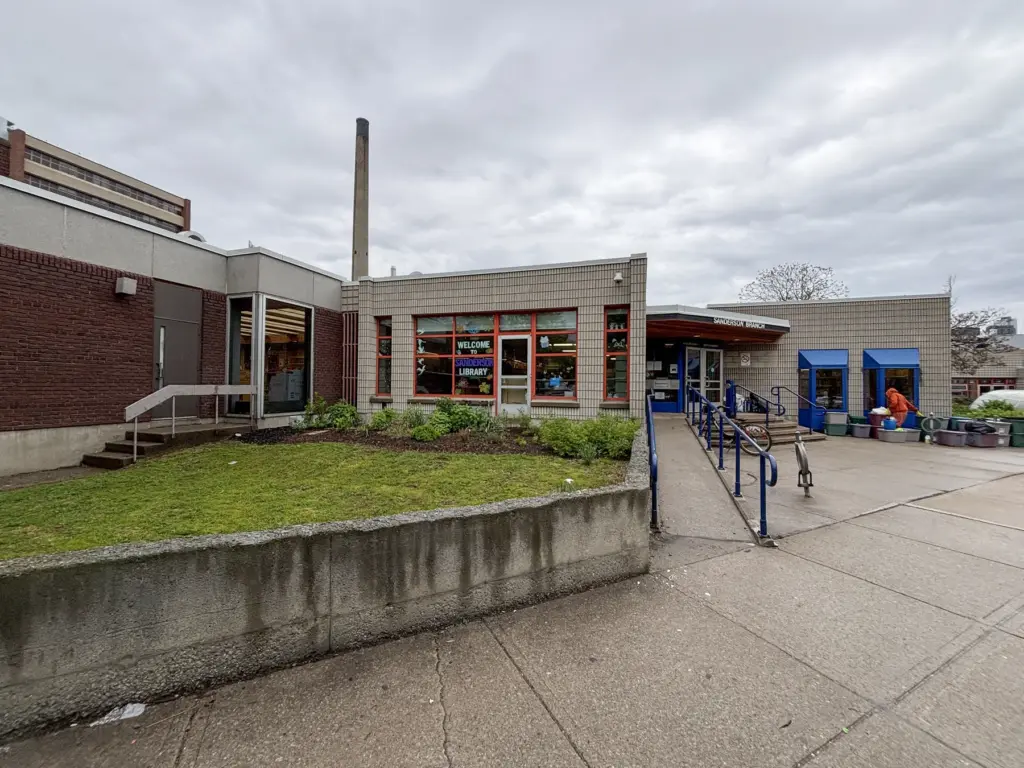

The idea that these branches are empty is not supported by the early data. Toronto Public Library says Sunday visits rose 50% from October to December 2025. Borrowed items rose 54% in the same period.
Libraries are not free to run. More hours require staff, heat, security and cleaning. In our view, this is still one of the best uses of a modest share of the City budget.
School food grew enough to affect family budgets
The City's base support for school food programs rose 80% from 2023 to 2026.
Toronto also won a $1.4 million Bloomberg Philanthropies challenge prize for its school food plan. The 2026 expansion is expected to reach 155 more schools and about 62,000 students.
The City estimates that a family with two children could save almost $900 a year through the expanded program. That amount will vary. The deeper value is that children can eat without a program sorting them into visibly poor and not poor groups.
School boards, community agencies, staff and other funders deliver the meals. Chow's budgets made the City contribution much larger. We count that as a clear term achievement with shared delivery.
Early local recreation registration fixed one unfair pattern
Popular free recreation programs can fill in minutes. Families living beside a community centre were sometimes shut out by people registering from across the city.
Toronto tested early local registration at six centres in summer 2025. The City is expanding it to all 37 free recreation centres for fall 2026 registration.
The test worked as intended. Local participation rose. The share of participants coming from outside the local area fell from 63% to 35% in the evaluation.
There is a tradeoff. Some families had learned to travel to another neighbourhood because their local centre lacked the right program. They may now have fewer free choices or need to wait for general registration.
The answer is not to abandon local access. It is to add more good programs in places with high demand.
The City also opened 15 outdoor pools and 16 wading pools early in June 2026. That is a nice service improvement. It is not a defining mayoral legacy.
Arts funding became more predictable
Toronto Arts Council reported a $10 million base funding increase spread over five years. It received another $2 million in 2025 and a 2.5% inflation adjustment.
Small arts groups need predictable money more than one-time praise. Rent, insurance and wages rise every year. Indexing helps a grant keep some of its value.
The arts sector remains under pressure. A funding formula does not save every venue or replace lost ticket sales. It does make City support less likely to shrink quietly through inflation.
911 answering improved sharply
Toronto Police reported an average 911 answer time of six seconds in June 2026. In June 2025, the average was 57 seconds.
That is an 89% month-to-month improvement. Across 2025, the mayor's budget material described a drop of more than 75%.
The improvement came from a multi-year effort. Toronto hired more operators, changed staffing, introduced new technology and completed Next Generation 911 work across emergency services. The 2026 budget continued a plan involving 90 new operator positions.
The system was not perfect. In June 2026, Toronto met the national answer standard on 17 of 30 days. One strong month does not prove every shift is fully staffed.
Operators and their union have also raised concerns about retention, pay and the way non-emergency calls are handled. Those concerns should be checked against future results, not waved away because one average looks good.
The fair result is still clear. People reached 911 much faster than they did a year earlier.
Crime fell in 2025, but credit is widely shared
Toronto Police reported that homicides fell 48% in 2025 compared with 2024. Shootings and firearm discharges fell 43%. Home invasions fell more than 35%. Car thefts fell more than 25%.
Those are important changes. They do not prove that one budget or one politician caused them.
Police operations matter. So do courts, border enforcement, federal gun work, provincial programs, youth services, community groups, economic conditions and plain year-to-year variation.
Chow supported multi-year hiring for police, paramedics, fire and 911. Her budgets also funded youth safety and community programs. It is reasonable to say her administration invested in work that supports safety.
It is not reasonable to say the mayor personally cut crime by 43%.
The Toronto Community Crisis Service went citywide
The Toronto Community Crisis Service sends trained civilian teams to some mental health crisis calls where police are not needed.
The pilot began in March 2022, before Chow was mayor. It expanded across the city in September 2024, ahead of the planned schedule.
This is another good example of inherited and expanded work. Chow did not create the pilot. Her administration helped make it a citywide service.
The program can reduce unnecessary police contact and connect people to follow-up support. It cannot replace emergency responders in violent or dangerous situations. It also cannot make up for a shortage of health care and supportive housing.
Park washrooms received a real long-term repair plan
Toronto approved a $132 million Park Washroom Enhancement Program for 2025 through 2031. It covers 125 upgraded washrooms and 16 new facilities.
Some buildings will be repaired. Some will be rebuilt. Others will use prefabricated designs. More locations are moving toward year-round use.
Allan Gardens, Biidaasige Park and Centennial Park are among the named project areas.
This is not glamorous. It is also the kind of basic city work people notice immediately when it fails. A locked, broken or inaccessible washroom can end a park visit for a child, older adult or person with a disability.
.jpg)
The program will take years. Listing 125 washrooms does not mean 125 are already finished. We count the funded program as a real achievement and the completed buildings as the final test.
If park access matters to you, our guides to underrated Toronto neighbourhoods, Toronto Island in winter and Toronto beaches without the ferry can help you plan a day outside.
The parks maintenance audit found a serious management problem
An Auditor General review compared crew reports with vehicle GPS records.
Crews reported spending just over four hours per shift at park locations. GPS data showed an average of two hours and 36 minutes at logged park locations during the sample.
Online summaries often shorten that to "parks staff worked only two hours." That is too blunt.
The GPS data also showed about two hours of driving, time at other City locations and time at non-City locations. GPS does not tell us everything a worker did. It does show that the reported locations and the vehicle records did not match well enough.
Council adopted nine audit recommendations. Better route planning, supervision, work records and follow-up are the right response.
This audit is not a pleasant accomplishment. Acting on it is part of competent government. We would judge success by cleaner parks and better future audit results, not by how forceful the press release sounds.
Snow clearing was a failure first, then a test of whether City Hall learned
Toronto's 2025 snow response was poor. Streets, sidewalks and bus stops stayed blocked too long. The province sent equipment to help. Residents had every right to be angry.
Chow inherited the main 2022 to 2029 winter maintenance contract. Council approved it in 2021.
That does not remove her responsibility. A mayor owns the response that happens on her watch, even when the contract is old.
The argument that the contract paid for plowing but no removal at all is too simple. A mayoral letter used that description. The 2021 Council record says the contracts include plowing and snow removal. The practical failure involved capacity, contract design, supervision, storm planning and service communication.
Afterward, the City adopted a major snow event plan. It added surge staff, up to 75 extra pieces of equipment, stronger audits and better route checks. Council also acted on GPS and work-control recommendations.
The City removed a 311 service-request blackout that had frustrated residents during storms.
A later Council direction asked staff to design a paid surge shovelling model for the 2026 to 2027 winter. That was still a plan on our check date. It should not be listed as a finished accomplishment yet.
The real test comes with the next major storm.
311 became easier to measure, though not always faster
Toronto now publishes a 311 service-standard dashboard. The Service Excellence work also uses 311 data to find recurring failures across divisions.
In 2025, 311 handled about 1.29 million interactions. It answered 82% of phone calls within 75 seconds.
Public targets matter. They let residents see when a division misses a standard instead of hearing only that a request is "in progress."
But a fast answer is not the same as a fixed pothole, cleared sidewalk or inspected apartment. The next step is showing how long the actual work takes and whether a closed ticket stayed fixed.
The noise bylaw did change after consultation
Some residents felt the long noise consultation produced nothing. Council did make changes in 2024.
Nighttime indoor amplified sound limits were lowered by three decibels. Drums and other instruments were added to the rules. The exemption permit process changed. The City also widened some 311 noise complaint options.
Waste collection noise and enforcement remain common complaints. A rule is only useful when an officer can measure the problem and act in time.
This is a modest policy improvement, not proof that Toronto became quiet.
What opened under Chow but should not be called her work alone
Mayors often stand at ribbon cuttings for projects that began long before them. That is normal. The problem comes when an opening date is used to rewrite who planned and paid for the work.
Biidaasige Park
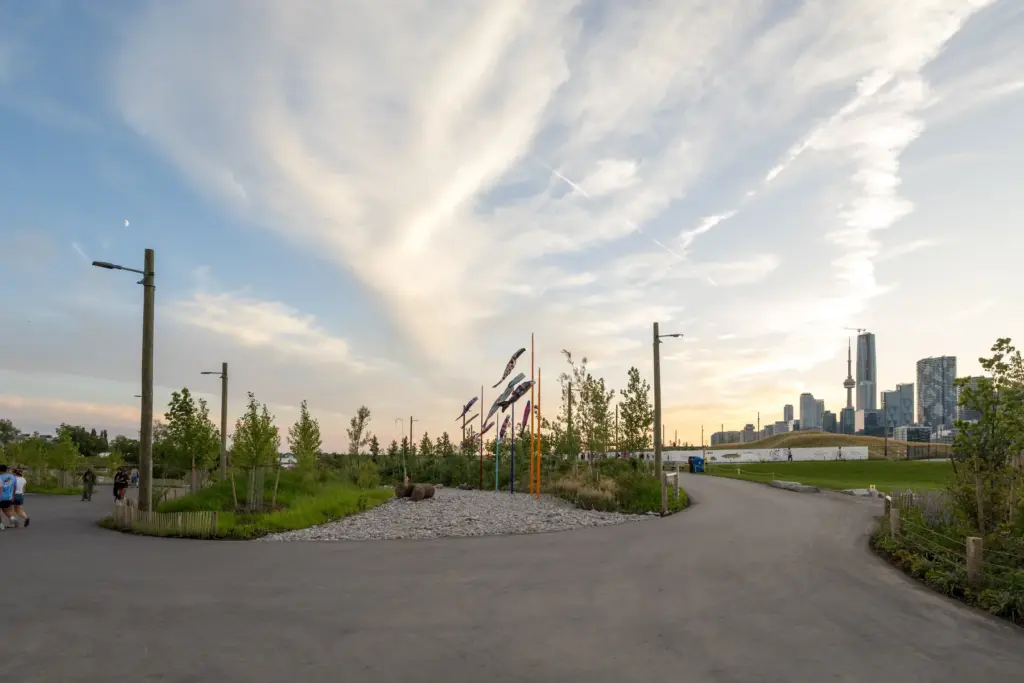
The new Port Lands park is a remarkable public space. It grew from the Don Mouth Naturalization and Port Lands flood protection work led by Waterfront Toronto with the City, Ontario and Canada over many years.
Chow supported the final work and was mayor when major areas opened. She did not start the project.
Line 5 Eglinton and Line 6 Finch West
These lines opened during her term. Ontario and Metrolinx owned the delivery. The TTC prepared to operate them. Chow's role was supportive and operational, not foundational.
The Lower Don and East Don trails
Trail openings are good news. Their planning, land work and construction crossed several administrations. They belong in a citywide record, not a personal scorecard.
Older Housing Now sites
Sites such as 50 Wilson Heights and 777 Victoria Park moved forward during Chow's term. They began under earlier Council plans. Toronto Builds is a new layer, not a time machine.
Recognizing inherited work does not make a mayor irrelevant. Keeping a difficult project moving can be valuable. It just calls for accurate language.
Claims about Chow's record that do not hold up
| Claim | What the evidence says |
|---|---|
| She personally created the traffic agent program | The pilot began in 2016 and a 2023 expansion came before her. Her budgets made it much larger. |
| She created the Vacant Home Tax | Council created it in 2021. The rate increased and administration changed during her term. |
| She cut homelessness by 70% | Known active encampment locations fell 64% from their late 2024 peak to December 2025. Homelessness remained severe. |
| She built Lines 5 and 6 | The province and Metrolinx led projects planned over many years. The TTC operates them. |
| She implemented paid snow shovel workers | Council directed staff to design a model for winter 2026 to 2027. It was not yet a delivered service. |
| Her four budgets raised taxes about 26% | She had three full budgets by August 2026. Their compounded residential increase was about 19.6%. The 2023 budget passed before she took office. |
| The housing funding deal guarantees 44,000 completed homes | The official agreement provides up to $1.5 billion and lower charges. Starts and completions are not guaranteed. |
| Fewer shootings prove her policies worked | Shootings fell, but many agencies and wider conditions affect crime. The mayor deserves only shared, limited credit. |
| The parks audit proved crews did nothing for six hours | GPS showed a large gap between reported and logged park time. It did not measure every task or prove all other time was idle. |
| The snow contract contained no removal work | Official descriptions conflict. The 2021 Council record says removal was included, while the 2025 mayoral letter described a plowing-focused contract. |
| The Gardiner and DVP already belong to Ontario | The transfer is expected in fall 2027. Toronto still owns them until it happens. |
| Sunday libraries were an unused expense | Early library data showed much higher Sunday visits and borrowing. |
Where critics are right
The strongest criticism is that daily life still feels harder than a list of budget items suggests.
Housing is the biggest example. Toronto can approve thousands of units while a renter still sees no affordable vacancy. The move from public land to financing, construction and move-in is too slow.
The TTC is another. Scheduled hours can rise while a rider waits through a gap, crawls behind traffic or walks around a long station repair.
Homelessness remains visible and painful. Fewer known encampments do not mean every person found a home.
Traffic agents produce excellent local numbers. They do not change the fact that construction and congestion can make a cross-city trip exhausting.
Chow's record can also feel like a collection of service fixes rather than one clear city-building idea. Better washrooms, libraries, food, traffic control and 911 all matter. They do not create the same public story as a new subway plan or a fast housing transformation.
That communications weakness is partly political style. It is also a result problem. A big vision becomes convincing when people can see it working.
Where critics go too far
It is not fair to say nothing changed.
All 100 libraries gained Sunday service. A renter licensing system for renovictions took effect. Traffic agents produce strong measured results where they work. The 911 average improved sharply. Toronto won a deal that changes who pays for two huge expressways. The City received its best credit rating in more than two decades.
It is also not fair to charge Chow for the 2023 tax increase or every delay on a provincial transit line.
Calling every shared result fake sets an impossible test. A mayor's job is often to assemble votes, money and institutions. Negotiation is part of delivery.
Our final verdict on Olivia Chow's record
Olivia Chow has accomplished more than her critics admit and less than her supporters sometimes claim.
Her strongest work has been practical. She rebuilt hours and staffing. She made the City spend more on basic services. She secured outside money. She added renter rules. She treated libraries, school food, public washrooms and recreation as infrastructure, not extras.
The cost was higher property taxes. The result is a City government that looks steadier and more active.
Her weak point is speed. Toronto still builds too slowly. Too many approved affordable homes remain on paper. Transit is not reliable enough. The homelessness count is still shocking. A city this expensive needs more than repair.
If the question is whether Chow has done anything, the answer is clearly yes.
If the question is whether she has transformed Toronto, the answer is not yet.
Even with those limits, our overall judgement is clear. Olivia Chow is one of the best mayors Toronto has had in recent history.
Frequently asked questions
What is Olivia Chow's biggest accomplishment as Toronto mayor?
The Ontario and Toronto New Deal is her biggest result. It moves the Gardiner Expressway and DVP toward provincial ownership and freed about $1.9 billion for transit, parks, roads, housing, facilities and flood protection. The transfer is expected in fall 2027, so it is not complete yet.
Did Olivia Chow raise Toronto property taxes?
Yes. The combined residential increase was 9.5% in 2024, 6.9% in 2025 and 2.2% in 2026. Those three increases compound to about 19.6%. The 2023 increase passed before she became mayor.
Did Olivia Chow freeze TTC fares?
TTC fares were frozen in the 2024, 2025 and 2026 budgets. Service hours also increased. Riders can still fairly criticize slow, crowded or unreliable trips because a fare freeze does not fix operations by itself.
Did Olivia Chow build more affordable housing?
More affordable homes were approved, started and completed during her term, and Toronto Builds created stronger rules for public land. But many projects came from older plans, and completions remain far below the need. Her record is stronger on the pipeline than on finished homes.
Did Olivia Chow reduce homelessness by 70%?
No. Known active encampment locations fell 64% from their November 2024 peak to December 2025. That is not the same as a 64% drop in homelessness. Toronto still counted 12,196 people experiencing homelessness in October 2025.
Are Toronto traffic agents actually working?
Yes, at the locations and times studied by the City. Their presence stopped 96% of intersection blocking and cut observed travel times by up to 33%. The benefit fades when an agent is not there, so it is a useful tool rather than a full congestion solution.
Did Olivia Chow create the Vacant Home Tax?
No. Toronto Council created it in 2021. During Chow's term, the rate rose to 3% for the 2024 taxation year and the City changed parts of the administration after declaration problems.
Has Olivia Chow fixed Toronto's services?
No, but several services improved. Libraries gained longer hours, 911 calls were answered faster, school food grew and park washrooms received a funded repair plan. Snow clearing, TTC reliability, housing delivery and homelessness remain major tests.