

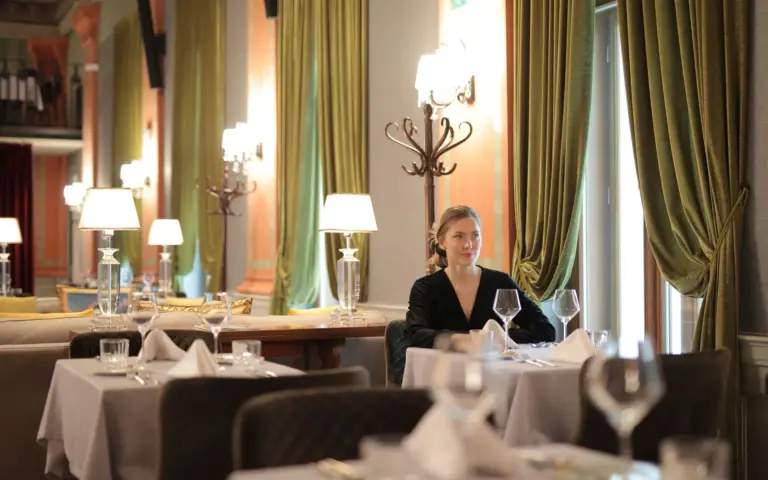

Eating alone in Toronto is normal. The hard part is not the restaurant. It is the few minutes before you sit down, when your brain imagines that everyone will notice.
Most diners are thinking about their own food and conversation. Staff serve solo guests every day. Start with a cafe, lunch counter or quiet early dinner. Ask for a counter seat, bring a book if it helps, and let the first outing be short.
A simple first plan
| If you feel | Try this |
|---|---|
| Watched | Sit at a counter or window seat where looking around feels natural |
| Unsure what to do | Read the menu before going and choose your order early |
| Afraid of a long meal | Start with coffee, ramen, a sandwich or one main dish |
| Nervous about booking | Reserve online for one, or call and ask what time is calm |
| Unsafe | Choose a bright, busy place near transit and arrange your trip home first |
Your first goal is not to feel perfectly confident. It is to finish one ordinary meal.
If that still feels too large, make the goal smaller. Walk in, order one drink and one item, and stay for 25 minutes. Success means you completed the plan. It does not mean you looked perfectly relaxed every second.
Why dining alone feels bigger than it is
A restaurant is built around tables, and many tables are shown with couples or groups. That can make a solo diner feel like they broke an unwritten rule.
They did not.
People eat alone because they travel for work, live alone, work different hours, want quiet, missed lunch, or simply want a certain dish. In a city as large as Toronto, a table for one is routine.
Anxiety also makes attention feel stronger than it is. You notice every glance because you are checking for glances. A person may look toward your table and forget you one second later.
Recent Toronto discussions included regular solo diners, business travellers and restaurant workers. Their reasons were ordinary: a partner was away, they wanted a meal before a movie, they were travelling for work or they simply liked their own company. A person eating alone does not send one clear message to the room.
The fear often comes from an unfinished story. You imagine that someone will see one chair and decide you are lonely, stood up or difficult. In reality, they do not know why you are there, and most do not spend time guessing.

Choose an easy first restaurant
The best first place has a low level of ceremony.
Good options include:
- a cafe with counter ordering
- a food hall
- a ramen or noodle counter
- a sushi bar
- a diner
- a hotel restaurant
- a casual neighbourhood place with bar seats
- a lunch spot near offices
Hotel restaurants and business-district lunch rooms see solo guests constantly. So do places around Union Station, Bay Street and major hospitals. Nobody needs an explanation.
A tasting menu on Saturday night can wait. Start where the meal has a clear shape and the bill arrives without a long evening.
Go when the room is calm
Try lunch after 1:30 p.m. or dinner around 5 p.m. on a weekday. You will have more seat choice, and staff will have more time to answer a question.
Avoid the busiest Friday or Saturday window for your first attempt. A packed room can raise the noise and pressure. Some small restaurants also need every table during the rush. That does not mean solo guests are unwelcome. It means off-peak timing is kinder to you and the restaurant.
Once solo dining feels normal, go whenever you like.
Counter seat or table?
Choose the seat that solves your main worry.
A counter is good if you do not want an empty chair across from you. You can watch the room, kitchen or bartender. It can also make a short conversation feel natural.
A table is better if you want privacy, need space for a mobility device, or do not want to balance a meal beside strangers. There is nothing wrong with asking for one.
Try: “A counter seat is great if you have one, but a small table is fine too.”
What should you bring?
A book, notebook or downloaded article can help during the first few meals. It gives your hands and eyes somewhere to go.
Do not turn the meal into an hour of worried scrolling. A bright phone can make you feel more cut off from the room. Put it down for part of the meal and notice the food.
Headphones are useful in a food court or cafe. They are awkward in a full-service restaurant when staff need to speak with you. If you wear them, remove one when ordering.
What do you say when you arrive?
You only need four words: “Table for one, please.”
Do not apologize. Do not invent a person who cancelled. Do not say, “I know this is weird.” The host is trying to find a seat, not judge your social life.
If the restaurant does not take online reservations for one, call. Ask: “Do you have space for one person around 6?” Some booking systems hide single seats even when a counter has room.
Ask about the counter directly. “Do you have a counter seat for one around 6:30?” is easier to answer than asking whether solo dining is allowed.
You can also tell the server what pace you want. Try, “I have about an hour,” or, “I am happy to take my time.” This prevents the two common frustrations: feeling rushed or waiting too long between courses.
Pick a first meal that matches your anxiety
| Anxiety level | Best first format | Length to plan | Why it works |
|---|---|---|---|
| Very high | Coffee, bakery counter or food hall | 20 to 35 minutes | Ordering is clear and leaving is easy |
| Medium | Ramen, sushi counter, diner or early dinner at a bar seat | 40 to 60 minutes | Solo seating looks normal and the meal has a simple rhythm |
| Lower | Full-service restaurant at an off-peak time | 60 to 90 minutes | You can practise ordering, pacing and enjoying the room |
| Ready for a treat | Chef's counter or tasting menu | 90 minutes or more | The food and kitchen activity provide a focus |
Do not use the hardest option as a test of character. Confidence grows faster when the first few outings are manageable.
A five-step confidence ladder
Anxiety usually becomes smaller through repeated safe experiences. Make the steps easy enough that you will actually do them.
- Have a drink or snack alone at a cafe for 15 minutes.
- Eat at a food hall or counter-service restaurant.
- Have a weekday lunch at a full-service restaurant.
- Book an early dinner at a place you already know.
- Choose one restaurant you are excited about and go at the time you really want.
Repeat a step if you need to. Progress is not a race.
How to enjoy the meal instead of surviving it
Order something you genuinely want. If you choose a dull meal only because it feels fast, the outing becomes an anxiety exercise instead of a reward.
Ask one useful question about the menu. Notice the room. Take your time with the first few bites. If you want dessert, order it.
Solo dining has real advantages. You can choose the cuisine, price and time. You do not have to share. You can leave when you are done. The meal can be quiet in a city that rarely is.
Will a restaurant dislike one person taking a table?
Most restaurants welcome a paying guest. At the busiest time, a tiny room may prefer to use a two-top for two people. That is a business limit, not a personal rejection.
You can help by reserving, arriving on time and not using a busy dinner table as a three-hour office. Tip for the service you received, not for the size of your party.
If a restaurant treats you poorly because you came alone, leave that place out of your future plans. Toronto has too many other options.
Is it different for women dining alone?
The meal itself should not be different. The trip around it can need more planning.
Choose a seat where you feel comfortable. Keep your drink with you. Do not share your hotel, home address or detailed plans with a stranger. If someone will not leave you alone, tell staff clearly: “I do not know this person and I need help.”
Plan the walk, TTC ride, taxi or rideshare home before you order a second drink. Confidence does not mean ignoring a bad feeling.
You do not need to tell a new person that nobody knows where you are. A simple “I am meeting someone later” can close a question without starting an argument. If the conversation feels wrong, pay at the bar or ask staff to help you wait for a ride.
Being cautious does not mean a woman should avoid solo dining. It means the restaurant, seat, time and way home are part of the choice.
What if somebody asks why you are alone?
You do not owe a personal story.
Try “I felt like taking myself out,” “I am having a quiet night,” or simply “I wanted to eat here.” Then return to your meal.
Most comments are clumsy curiosity, not an attack. A person who keeps pushing has made the interaction rude. You can stop answering.
When anxiety needs more support
If eating alone causes panic, stops you from leaving home or affects many parts of daily life, the problem may be larger than restaurant practice.
A family doctor or mental-health professional can help you understand the anxiety and make a plan. In Ontario, ConnexOntario provides free information about mental-health and addiction services. If you are in immediate danger or may hurt yourself, call 911 or call or text 988.
This article offers practical ideas. It is not a medical diagnosis.
Good Toronto formats for a first solo meal
St. Lawrence Market
Choose food from a counter and eat at a shared table. The visit has a purpose beyond sitting in one dining room. Check St. Lawrence Market's current hours because not every vendor is open every day.
St. Lawrence Market map
93 Front Street East, Toronto, ON M5E 1C3
Open St. Lawrence Market in Google Maps. See the St. Lawrence Market Place page.
The Well and other food halls
The Well's dining area and other food halls give you many price and cuisine choices. People arrive and leave at different times, so a solo guest blends in easily.
The Well map
486 Front Street West, Toronto, ON M5V 0V2
Chinatown noodle and dumpling shops
Fast service, compact tables and a clear food focus can make the meal feel simple. Read the current menu and payment rules before going.
Sushi bars and ramen counters
Counter seating gives you a natural direction to face. Some popular rooms have lines, so go early if waiting makes you more nervous.
Hotel restaurants
Hotels regularly serve business travellers and guests on their own. They can cost more, but staff are unlikely to treat a solo diner as unusual.
The Senator for an old-school counter meal
The Senator at 249 Victoria Street works when you want a real restaurant without a huge, formal room. Its current schedule includes weekend brunch and dinner from Tuesday to Saturday. The counter and diner layout give one person somewhere natural to sit.
This is a better second or third solo meal than a first coffee. Reserve when the room may be busy, then ask whether counter seating is available. Check the current hours because its service windows are narrower than an all-day diner.
The Senator map
249 Victoria Street, Toronto, ON M5B 1T8
Richmond Station for a solo meal that feels intentional
Richmond Station at 1 Richmond Street West is a stronger pick when you want to turn solo dining into the main event. Its counter faces the kitchen, which gives you something interesting to watch without hiding behind a screen.
The restaurant uses hospitality-included pricing, so service is built into the listed menu price. Confirm the current menu and reservation format before booking. A chef's counter can still be expensive, but it often feels less socially awkward than sitting alone at a large table.
Richmond Station map
1 Richmond Street West, Toronto, ON M5H 3W4
These are examples, not the only restaurants where one person is welcome. The useful features are the counter, visible activity, clear service and a location that makes the trip home easy.
What restaurant staff usually need from a solo diner
One guest is not a problem. Unclear pacing can be.
Order in a normal way, keep belongings off other seats and let the server know if you are waiting for someone. During a busy dinner, the host may offer the bar instead of a two-person table. That is an operational choice, not an insult.
If you occupy a table through a long peak period, order enough for the time you stay and tip according to the service and local custom. You do not need to rush through a meal, but a laptop and one coffee for three hours may fit a cafe better than a small dinner room.
Servers in Toronto discussions often described solo guests as easy or enjoyable to serve. That is personal experience, not a rule about every worker. The practical lesson is that calm, clear guests are routine.
Fine dining alone is not a strange exception
Fine dining can work very well alone because the meal already has structure. The menu, wine or non-alcoholic pairing, kitchen view and service create a sequence. You do not have to manufacture conversation for two hours.
Check three details before booking:
- whether the tasting menu accepts one guest
- whether the whole table must order the same menu
- whether service is included or a tip is expected
Tell the restaurant about allergies when booking, not after the first course arrives. If you do not want staff to chat much, a polite short answer is enough. If you are curious, ask one focused question when the room is not rushing.
Frequently asked questions
Is it weird to eat alone in Toronto?
No. Solo diners are common in cafes, food halls, hotel restaurants, counters and full-service rooms. The feeling is usually much stronger for the diner than for anyone watching.
What is the easiest first solo meal?
Try a weekday cafe visit, food hall lunch or ramen counter. Pick a place with counter ordering or bar seats and keep the first visit short.
Should I bring a book to a restaurant?
Yes, if it helps you settle. Put it down when staff speak to you and leave enough space for the food. You may find that you need it less after a few outings.
Can I reserve a table for one in Toronto?
Many restaurants accept bookings for one. If the online system does not show that option, call and ask about a counter or quiet time. The software may be more limited than the restaurant.
Do solo diners need to tip more?
No. Tip based on the service and local custom, not because you occupied a small table alone. Be considerate about very long stays during a busy service.
How do I stay safe when dining alone?
Choose a well-lit place near a safe route home, watch your drink and tell staff if someone is bothering you. Plan your TTC, taxi or rideshare trip before drinking alcohol.
What if I have a panic attack in the restaurant?
Tell staff you need air, step to a safe quiet place and contact someone you trust. If this happens often, speak with a qualified health professional about support and treatment.
The bottom line
A table for one is not a public failure. It is a seat and a meal. Start small, go off-peak, choose a counter if it helps, and order something worth leaving home for.