



The best place to start is a small activity you can attend each week, on a day you're already on campus. For U of T students, our first pick is Hart House's free Tuesday afternoon Social Stop. For TMU students, try Workout Buddies before its September 10 sign-up deadline.
If your trip home is long, build a second social circle near home. Don't spend your whole budget chasing late parties downtown. The main limit is the last part of your trip, including the bus after your GO train.
This guide has 20 ways to meet people, from a ten-minute chat after class to a weekly choir. Dates and programme details were checked September 5, 2026. Our verdicts judge cost, repeat visits and how easily a commuter can join. They aren't friendship success rates, and we haven't personally tested these groups.
Choose an option that fits your week

| Option | Our verdict | Cost and access | The catch |
|---|---|---|---|
| Same-class study group | Best first step anywhere | No extra activity fee | Someone has to make a clear plan |
| Hart House Social Stop | Best ready-made daytime social | Free; student-focused, general admission listed | Tuesdays 3 to 5 p.m. won't fit every timetable |
| Hart House Hubs | Best study-and-social mix | Free for U of T undergrads and graduate students | Starts September 22 |
| TMU Workout Buddies | Best help finding activity partners | Free for TMU students | First cohort registration ends September 10 |
| UC Commuter Student Centre | Best home base for UC commuters | Campus lounge; lockers cost extra | Ask about access if you're from another college |
| Hart House Singers | Best recurring non-sport option here | Paid term membership after free open rehearsal | Regular Monday rehearsals run to 10 p.m. |
| A book club near home | Best way to avoid another downtown trip | Check the specific library event | A monthly meeting takes longer to build momentum |
Don't sign up for all seven. Choose one repeat activity and one simple habit with classmates. Keep enough free time to accept an invitation when it comes.
1. Sit near the same people in class
Start with a small question before the lecture begins. Ask about the reading, an upcoming lab or the route to the next room. Introduce yourself when the conversation has room for it.
Then sit nearby next time. Remembering a name and saying hello is more useful than collecting twenty social media accounts you never contact.
Good: You already share a subject and a schedule. There is no extra trip or entry fee. Hard part: A large lecture can still feel cold, and someone wearing headphones may want quiet.
Try: "I'm Sam. I think we're in the same Tuesday tutorial. How are you finding it?" Keep it light. Choose the person who responds with interest, rather than trying to win over someone who gives short answers.
2. Turn a study group into a real appointment
"We should study sometime" is easy to forget. Offer a place, a time and a short task instead. Three or four people is enough to start.
Try: "Want to compare our notes for half an hour after Thursday's class? We can each bring two questions." Follow your course's rules about shared work. Working together does not mean sharing answers to an individual assignment.
Good: The meeting helps with something you already need to do. Hard part: Some people only want a study partner. That's still useful, but it isn't the same as a close friend.
After a couple of meetings, invite someone to something small outside the course. Let the friendship move beyond homework if both of you want that.
3. Make lunch the invitation

Bring your own lunch and ask a classmate to sit with you. A social plan doesn't need a restaurant bill. Give a clear end time if one of you has a class or a train to catch.
Try: "I've got lunch with me and forty minutes free. Want to find a table?" If you're buying food, name a budget before choosing a place.
Good: Lunch fits between classes and gives you something to do while talking. Hard part: Busy food courts are loud, and dietary needs can make a last-minute restaurant plan awkward.
Agree on a space where eating and conversation are allowed. A silent library floor is a poor choice. Start with one shared lunch a week, and keep it easy to repeat.
Find a campus home base

A smaller room can make a large university feel less anonymous. Use the lounge for its intended purpose. A person resting or studying doesn't owe anyone a conversation.
4. Visit University College's Commuter Student Centre

Address: 79 St. George Street, first floor of the University College Union. Published hours: Monday to Thursday, 8 a.m. to 9 p.m.; Friday, 8 a.m. to 5 p.m. Holiday and reading-week hours can differ.
The Commuter Student Centre has lounge and study space, a shared fridge and kitchenette, peer support and lockers for rent. That makes it useful even on a day when you don't meet anyone new.
Good: The room is built around off-campus student life. Hard part: A lounge is not a guaranteed hosted event. Ask the team what is running this week.
UC commuters should start here. Students from other colleges should ask UC Student Life about access and specific events before making a special trip. The college links to its official commuter Instagram account for updates. Check the post date, room and audience.
5. Use the Innis Commuter Lounge for an agreed lunch or break

Address: Innis College, 2 Sussex Avenue. The college lists its Commuter Lounge as IN105, in a back corner of the building.
The Innis quiet-spaces guide lists a kitchen with a toaster, microwave, coffee maker and kettle. Meet an Innis classmate here if access is available and the room's current rules allow your plan.
Good: A useful place to pause between classes without buying another drink. Hard part: Innis is changing during its building project. The same guide says the library will reopen in late 2026. Don't assume every listed room is operating as usual today.
Ask the college about current lounge access and hours. Keep your voice down when others are studying. Choose it as a comfortable meeting point, rather than a room to work your way around introducing yourself to everyone.
Try a hosted activity at Hart House

Hart House is at 7 Hart House Circle on U of T's St. George campus. The activities below use different rooms in the same building. Check the visitor and accessibility information before your first visit. Ask about the room's accessible route, rather than relying only on the map pin.
6. Start with the Tuesday Social Stop
The Weekly Social Stop runs Tuesdays, 3 to 5 p.m., in the Map Room, 1039. The fall listing runs September 8 to December 8, 2026. It is free, and you can come for part of the session.
September's published activities are board games on September 8, friendship bracelets on September 15, button making on September 22 and colouring on September 29. Student ambassadors greet visitors and help them join in.
Good: You don't have to invent a reason to talk. Hard part: The afternoon slot clashes with some classes. The programme is aimed at students, though the event lists general admission as free.
This is our first pick for a shy student near St. George campus. Arrive with a small goal: learn one name and join one activity. Check the live recurrence before travelling during reading week or a holiday.
7. Combine study time and a break at Hart House Hubs

Hart House Hubs starts September 22, 2026, with Tuesday sessions from 1 to 3 p.m. in the Reading Room, 1002. The listed fall run ends December 8.
It is free for U of T undergraduate and graduate students. Students work on study goals with support, then take part in a short drop-in activity. You can register through Folio or drop in on the day.
Good: You can protect study time and still meet people. The Social Stop follows at 3 p.m. in the Map Room if you have time. Hard part: This is partly a guided study session. It is a poor fit if you only want to talk for two hours.
Choose Hubs if guilt about unfinished work keeps sending you straight home. Bring a task small enough to finish, then use the break to learn who else comes regularly.
8. Learn mahjong at the beginning of the evening

Mahjong Mondays starts September 14, 2026. Sessions run 6 to 10 p.m. in the Reading Room, 1002 and are free for U of T students only.
The first hour is for beginner instruction. Coordinators also help new players through the evening. You don't need to arrive knowing the rules.
Good: A shared game gives conversation a natural start. Hard part: Four hours is a long evening if you have a long commute. Tell the table when you need to leave and ask how to leave between rounds.
Try the early part of a session if your route allows it. Skip the late finish if it risks your final bus. Beginner mahjong is a clearer first step than signing up for a competitive card or chess tournament you aren't ready for.
9. Try the Hart House Singers open rehearsal

The Hart House Singers is a choir that doesn't require an audition. It is different from the auditioned Hart House Chorus. Open rehearsals are listed for September 14 and 21, 2026.
The September 14 open rehearsal is free, in the Great Hall, 1022, from 7:45 to 8:45 p.m. Regular Monday rehearsals run 7:45 to 10 p.m.
The club's fall fee table lists $10 for the student/member category, $130 for non-members, and $100 for the under-29/over-65 category. Confirm which category applies to you before paying. Don't assume any Toronto student card gets the lowest rate.
Good: Rehearsals give you a shared goal and familiar faces. Hard part: A 10 p.m. finish is a real problem for some commuters.
Go to an open rehearsal before committing. Choose the choir if you enjoy singing and can manage the weekly journey. Don't choose it only because you feel you ought to join something.
Use TMU's help finding activity partners

TMU's recreation options are campus services with their own eligibility rules. They aren't automatically free for students at another school. Check the RAC and MAC directions and your activity's actual room before setting off.
10. Register for TMU Workout Buddies

The Workout Buddies programme is free for all TMU students. The current fall version matches you with two or three other students for the gym, pool, classes or drop-in sports.
First-cohort registration runs August 24 to September 10. Matching is on September 11, followed by an orientation where the group can make a plan.
Good: Someone helps with the first introduction. You can be new to exercise. Hard part: Matching doesn't guarantee that every schedule will line up. Agree on an actual weekly time after the introduction.
This is our strongest TMU pick for someone who dislikes walking into a gym alone. Use the official form linked from the programme page. If the deadline has passed, ask Recreation about another cohort; don't assume enrolment stays open all term.
11. Return to the same group fitness class
TMU lists 28-plus weekly drop-in classes for its fall schedule, September 8 to December 18, 2026. They are free for TMU students, graduate students and people with an active membership. No advance registration is required for these listed group classes.
Use the current group fitness timetable to find a class between lectures. It includes different levels, women-only options and Rainbow classes for the 2SLGBTQIA+ community and allies.
Good: Repeating one time slot gives you a chance to recognize people. Hard part: During the class, people are there to exercise. Save conversation for before or after, and respect someone who wants to leave.
Choose a class you would still enjoy if nobody became a close friend. Arrive early if you need equipment set-up help. Keep enough time afterward to change and reach your next class.
12. Pick drop-in sport before paying for a full league
TMU's Recreation 101 guide explains the difference between drop-in activities, intramural leagues, clubs and Learn To classes. Start there if you don't know which level fits you.
Good: A drop-in can help you learn whether you enjoy the activity and the trip. Hard part: A league gives a more stable group, while a drop-in can have different people each time. Neither guarantees a place on a particular team.
Check the live sport schedule, equipment rules and entry requirements. Ask staff how a beginner or an individual without a team can join. Don't buy a full term of something with a weekly start time you cannot reach.
For students elsewhere, ask your own recreation office the same questions. A campus name on a club directory is not proof that a fall session has space today.
Build a smaller group around an interest
13. Ask a club for its next ordinary meeting
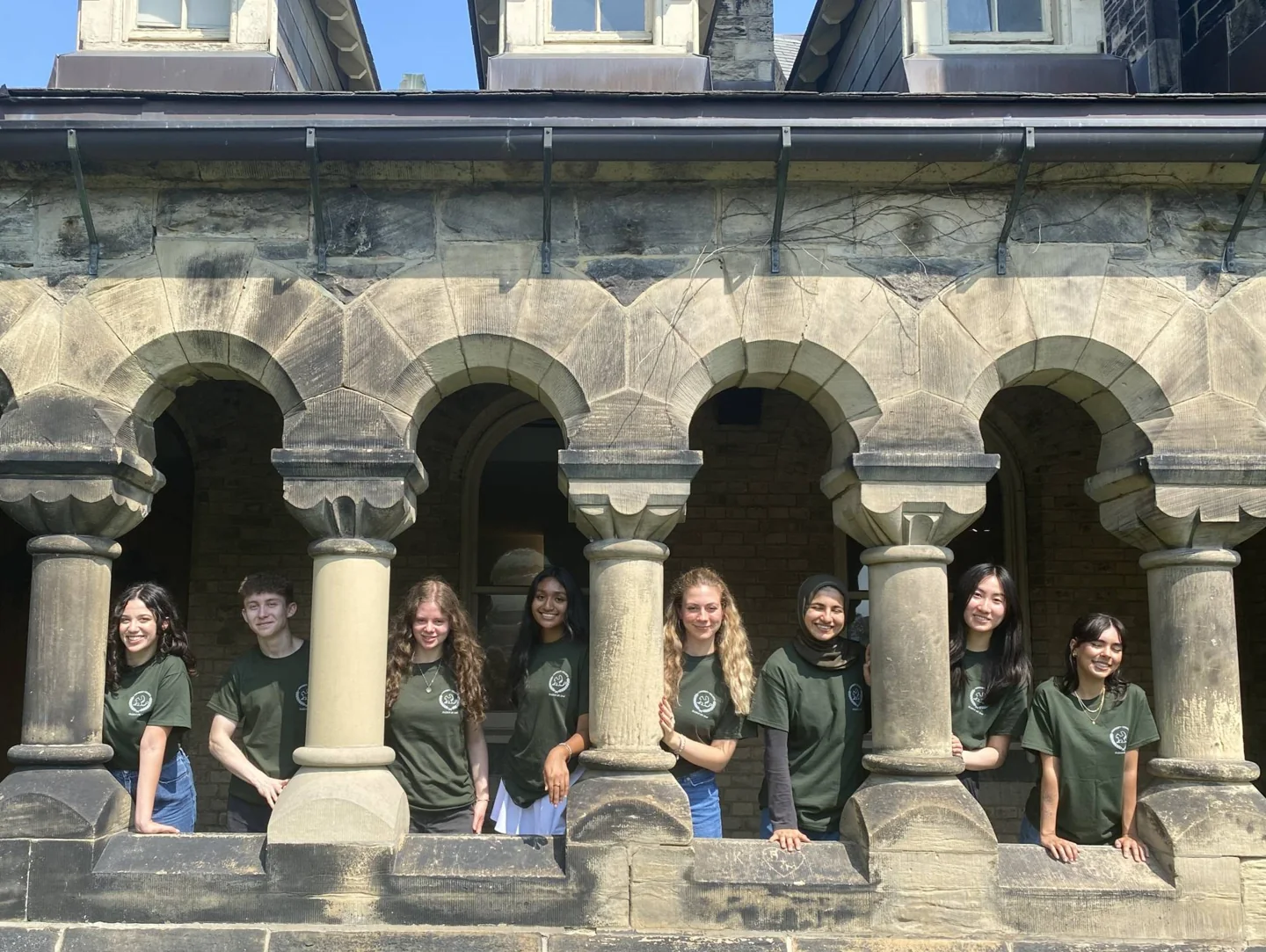
Club fairs can be useful. The next normal meeting tells you more. Ask: "Can a new commuter come alone? When do you meet, and what happens in the first half hour?"
York students can use the YU Connect club directory. Glendon also has a clubs portal. Check the club's current registration and latest event before travelling.
Good: Shared interests provide a start beyond small talk. Hard part: Some listings are inactive, and some clubs mainly run large events. A club-registration deadline is not necessarily a deadline for students to join.
Choose a group that can name its next meeting. We would pass over a silent account with only last year's posters until an organizer replies. A specific answer beats a long list of impressive club names.
14. Volunteer for one small, shared task
Offer to help set up a club event, welcome people at a table or pack away equipment. Choose a task with another person and a clear finish time.
Good: It is easier to talk while working on something together. Hard part: An executive role can become a large unpaid job. Don't take on a semester of duties before you understand the hours.
Ask who will work with you, what training is needed and whether there is an application or screening step. Let the organizer confirm the role. Don't turn up to a community service expecting an instant volunteer shift.
Start with one agreed job. If you enjoy the team and they respect your time, offer to return. If you only hear from them when they need free labour, choose a better group.
15. Find a group where your own interests are enough
An art, language, faith, cultural, disability or queer student group can be a better fit than the most popular social club. You don't need to change your tastes to seem more outgoing.
Good: A smaller shared interest can make introductions easier. Hard part: A group title doesn't tell you how welcoming a specific meeting feels, or who can attend.
Read the group's audience and event rules. Ask about a quiet space, physical access, food needs or the format if those details affect you. You don't have to share personal information with a stranger to explain why you prefer an early or quiet event.
Try: "I'm new and commuting. Is this a good first session, and can I leave at seven?" A helpful answer is a good sign. Choose groups that respect the answer when you say no to something.
16. Make one connection near home
If you live in Scarborough, Etobicoke or beyond Toronto, your whole social life doesn't need to sit beside your downtown campus. Look for a repeat activity near home or along your route.
Toronto Public Library's book-club guide links to in-person and online library groups. Pick a current event for your age group and language. Check the book, date and registration rules. A book club is a real reading commitment, not just a room to hang out in.
Good: You avoid another long trip and can keep seeing people through school breaks. Hard part: A monthly meeting gives fewer chances to connect, and other members may be much older.
Choose the actual activity over an imagined perfect age group. For more low-cost reading options, see our guide to cheap books in Toronto.
Make the friendship possible outside the event

17. Invite someone along the route you already take
Ask a classmate if they're heading toward the same station. A short walk is a simple way to carry on a conversation after class.
Good: There is little extra cost or planning. Hard part: The same subway line doesn't mean the same destination or travel time. Ask rather than following someone or expecting them to miss a train.
You can say, "I'm heading to the subway. Want to walk together?" Respect a no. If you both enjoy it, the walk can become a small routine.
For later plans, work backwards from your last useful connection. Check the GO trip planner and your local bus operator. Our guide to TTC service after the subway closes explains another part of the journey. It doesn't mean your suburban bus also runs all night.
18. Send one clear follow-up
If you exchanged contact details, send a short message tied to what you actually discussed. Avoid a long introduction or a demand for a reply.
Try: "Good meeting you at mahjong. I'm going again Monday at six if you fancy joining." Or: "That film you mentioned sounds good. Want to choose a matinee next week?"
Good: The next step is clear. Hard part: Someone may like you but have no time, or may simply not want to become closer friends.
One follow-up is enough to open the door. If there is no reply, leave room and keep meeting other people. Don't keep messaging across different apps. Friendship needs interest from both sides.
19. Set a social budget before buying tickets
Count the activity, food and travel. For example, a $15 ticket and a $12 meal cost $27 before transport or any added charges. Four evenings at that price are $108. That is a planning example, not a price quote for a Toronto venue.
Good: A limit makes it easier to suggest a cheaper plan without shame. Hard part: Friends may have very different budgets.
Try: "I'd like to come, but my limit is twenty dollars. Can we eat first or choose something free?" Bring an alternative. A walk, a shared lunch or a free gallery visit can still be a proper plan.
Our rainy-day Toronto guide can help when weather changes the plan. Check each venue's current hours and admission before promising a free outing.
20. Give a decent group a few visits, then make a decision
Try a suitable recurring activity a few times if you can. Our practical suggestion is three visits, not a rule or a scientifically proven deadline. The first night can be awkward for many reasons.
Afterward, ask whether anyone greets you, whether you enjoy the activity and whether the trip is manageable. One person you want to see again is a good result. You don't need a huge group.
Good: Repeat visits give people a chance to recognize you. Hard part: Persistence is wasted in a group that treats you badly or keeps ignoring your limits.
Stay if the activity is enjoyable and the contact feels mutual. Change groups if it feels closed, costly or exhausting. If loneliness is affecting daily life, your school's student support team can help you find support beyond another event listing.
Frequently asked questions
Can I make friends if I missed orientation?
Yes. Classes, clubs and recurring programmes continue after orientation. Start with a classmate or a current drop-in event, then make a small plan to meet again. Missing frosh does not mean you missed your only chance.
What is the best free option for a shy U of T commuter?
Our first pick is Hart House's Tuesday Social Stop. It has a host and a simple activity, so you don't have to start every conversation yourself. For a study-focused option, Hart House Hubs starts September 22, 2026.
Is TMU Workout Buddies only for experienced gym users?
No. The programme welcomes beginners and experienced students. The current fall programme is free for TMU students and matches small groups for different activities. First-cohort registration closes September 10, 2026.
Can students from any Toronto school use every campus programme?
No. Access varies by programme. Hart House Hubs and Mahjong Mondays list U of T eligibility, while TMU Workout Buddies is for TMU students. Check the individual event rather than assuming a student card from another school is enough.
Do I need to drink alcohol or go to clubs?
No. Study groups, daytime socials, games, singing and exercise can all give you ways to meet people. Choose something you enjoy and can afford to repeat. A late party is a poor fit when it leaves you stranded or tired for class.
What should I do if a club meets after my last bus?
Ask whether there is an earlier session or a role you can do during the day. If the meeting only works with an expensive ride home, choose another activity. Check the last local connection as well as the train or subway.
How do I turn a study partner into a friend?
Make a small invitation outside studying, such as lunch after your usual session. Keep it specific and easy to decline. If they only want to study, respect that and look for social contact elsewhere too.
What if I already tried clubs and still feel lonely?
Try changing the size, time or type of group rather than simply attending more events. A smaller recurring activity can be easier than a large party. If the feeling is affecting your day-to-day life, contact your school's student support service as well.