

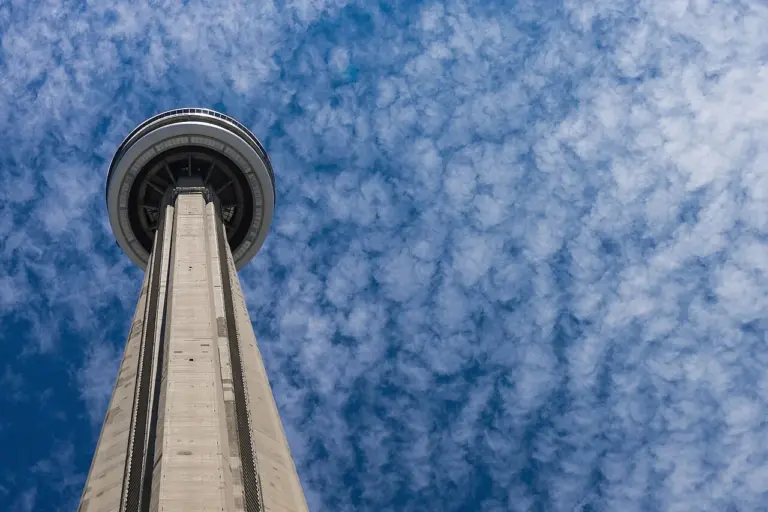

Toronto has tourist traps, but the CN Tower is not the main one. It is expensive. It is also a view you cannot get anywhere else in the city. Go once on a clear day. The weaker buys are short immersive attractions that charge almost as much, food festivals where you pay to enter and then pay again to eat, and restaurants that sell location before food.
Our top pick for a first visit is the CN Tower followed by a walk through the waterfront or St. Lawrence Market area. The best cheaper alternative is a free Toronto History Museum plus a good neighbourhood meal. The biggest deal-breaker is weather. A paid skyline view on a cloudy day is a bad purchase.
The quick verdict
| Toronto attraction | Our verdict | Best for | Main catch |
|---|---|---|---|
| CN Tower | Do it once | First visit and a clear day | General admission starts at $47 before tax |
| Casa Loma | Choose carefully | Architecture, history and themed events | Adult admission is $45 before extras |
| Arcadia Earth | Skip for most people | Families who want an indoor digital activity | Adult admission is $39 plus tax and fees |
| Ripley's Aquarium | Good, but avoid peak crowds | Families and a bad-weather day | A family can spend well over $100 before food |
| Little Canada | Better than it sounds | Detail lovers, children and rainy days | Timed adult admission is roughly $36 to $39 plus tax |
| Museum of Illusions | Weak value | Groups mainly interested in photos | Adult admission is $28.50 plus tax and fees |
| Toronto CityPASS | Buy only with a five-stop plan | First visitors doing major attractions | $134.96 plus tax and expires after nine days |
| Toronto Railway Museum | Good niche pick | Train fans and families | Small compared with a major museum |
| Free Toronto History Museums | Best value | Curious visitors on a budget | Hours and programming vary by site |
| Food festivals with admission | Usually skip | A specific vendor or event you already want | Entry rarely includes a full meal |
| Harbourfront pedicabs | Get the price first | A short novelty ride | The final cost can be unclear |
Prices and rules were checked on August 31, 2026. Recheck the official page before paying.
This map shows an approximate area. Open the full map.
Is the CN Tower a tourist trap?
No. The CN Tower is a costly landmark, not a fake attraction. Adult timed general admission is $47. A ticket with the Top level is $59. Tax is extra. That is a serious bill for a family, so the visit needs a plan.
Buy a timed ticket for a clear day. Go close to sunset only if you accept bigger crowds and a higher chance of waiting. If the sky is grey and the lake disappears into cloud, move the visit. The view is the product.
Do not add every upgrade because the booking page offers one. General admission is enough for most people. EdgeWalk is a separate adventure, not a better version of the observation deck.
The verdict: go once if this is your first Toronto trip. Skip it on a cloudy day or if heights make you miserable.
Arcadia Earth is the clearest weak-value attraction
Arcadia Earth is an indoor digital experience about the planet. The current plan-your-visit page lists adult admission at $39, youth and seniors at $29, and children at $24. Tax and fees are extra.
That is too much for most visitors. It can work when a child wants screens, the weather is awful and the family has already done Toronto's stronger museums. It is not where we would send a visitor with one free afternoon.
The problem is not that every immersive room is bad. The problem is value. A short sequence of projection rooms often gives you less Toronto, less depth and less reason to return than a real museum, neighbourhood or live performance.
If your group wants contemporary art, check the Museum of Contemporary Art on Sterling Road. If you want a broad indoor attraction, choose the Art Gallery of Ontario, Royal Ontario Museum or Ontario Science Centre temporary location based on the current exhibits. Our honest review of the temporary Ontario Science Centre explains its limits before you buy.
The verdict: skip Arcadia Earth unless the exact format suits your group. Do not book it only because social photos look bright.
Ripley's Aquarium is good, but the crowd can ruin it
Ripley's Aquarium of Canada is a real, large attraction. The shark tunnel, Canadian Waters gallery and jellyfish displays can hold a child's attention for hours. It is not a cheap room built only for photographs.
The problem is timing. The moving walkway and narrow viewing areas become frustrating when school groups, weekend visitors and game-day crowds arrive together. A technically impressive aquarium can feel like a slow line when you cannot stop in front of anything.
Buy a timed ticket directly from the aquarium. Choose the first slot of the day or a later weekday entry. Avoid a Saturday afternoon, March Break and the hour before a Blue Jays game unless crowds do not bother you.
Do not add Ripley's only because it sits below the CN Tower. Doing both on the same day can cost an adult about $79 through the current Sea the Sky bundle, before tax, food or parking. That can be good value for a first visit. It is a bad impulse purchase for someone who does not care about aquariums.
The Toronto Public Library's tpl:map programme sometimes includes aquarium access, but passes are limited and change. Check the current tpl:map attraction list rather than relying on an old social post.
The verdict: go with children or a genuine aquarium fan. Book off-peak. Skip it when the room will be packed or marine life is not your thing.
Little Canada is expensive and still worth defending
Little Canada at 10 Dundas Street East is easy to dismiss as another paid indoor novelty. That would be unfair. It is a 45,000-square-foot miniature attraction with detailed scenes, moving parts and active model-making work.
Current timed admission is roughly $36 to $39 for an adult, depending on the booking page and date. A flexible walk-up ticket can cost more. The attraction recommends about two hours, although people who inspect every scene can stay longer.
This is a strong rainy-day pick for a child who notices tiny details, a model-train person or a visitor who wants a playful look at more of Canada than Toronto. It is weaker for someone who moves quickly through exhibits or expects rides.
Do not pay extra to have a miniature figure made unless that souvenir is part of the fun. It is not needed to enjoy the main attraction.
The verdict: Little Canada is not a trap. It is a specific, carefully made attraction. Buy a timed ticket, not the more expensive flexible ticket.
Museum of Illusions is too short for the price
Museum of Illusions Toronto charges $28.50 for an adult, $26.50 for a senior and $22.50 for a child, plus tax and fees. It is at 132 Front Street East near St. Lawrence Market.
The rooms are designed around optical tricks and photographs. That works for a birthday group or teenagers who want images together. It is a weak use of money for a solo visitor, a history fan or anyone who expects a normal museum.
The accessibility page also warns that some exhibits use slanted floors, projections and changing lights. Some interactive areas may not work for every mobility or sensory need. Read that warning before paying.
St. Lawrence Market, the waterfront and Toronto's free history museums offer more local substance nearby. The comparison is harsh: a family can spend around $100 on a short illusion visit before lunch.
The verdict: skip it unless taking funny group photos is the whole goal.
Toronto CityPASS saves money only when you use all five admissions
The 2026 Toronto CityPASS costs $134.96 for an adult and $99.96 for a child age four to 12, plus tax. It includes the CN Tower and Ripley's Aquarium, then lets you choose three of the Royal Ontario Museum, City Cruises Toronto, Casa Loma, Toronto Zoo and Art Gallery of Ontario.
The pass is valid for nine consecutive days. Reservations can still be required. City Cruises is seasonal. The Toronto Zoo is far from the downtown attractions and can consume most of a day.
Before buying, write down the five attractions you would pay for without a pass. Add their current individual prices. Include transport to the zoo and any attraction upgrades the pass does not cover.
Do not count an attraction you only added to create a saving. The pass becomes work when you spend a trip chasing admissions instead of seeing Toronto.
The strongest use is a first-time visitor staying at least four days who already wants the CN Tower, Ripley's and three major institutions. The weakest use is a weekend visitor who prefers food and neighbourhoods.
The verdict: buy it with a five-stop schedule. Otherwise, buy one landmark ticket and explore the city for free.
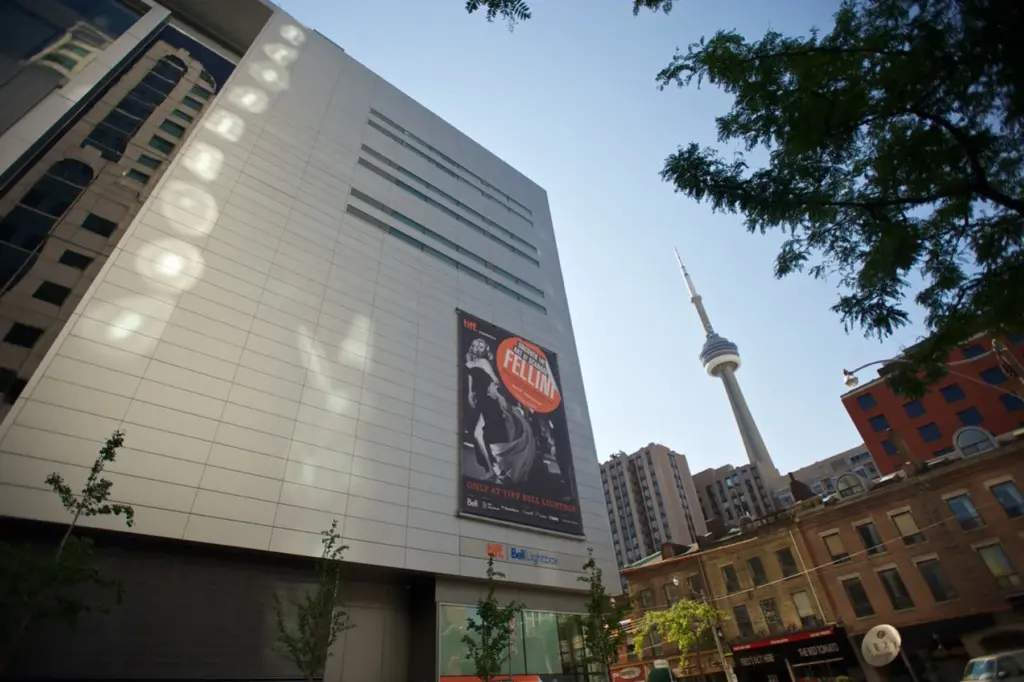
Casa Loma is not a trap, but it is easy to overpay
Casa Loma charges $45 for an adult, $40 for seniors and youth, and $30 for children. That price makes sense only if the building is the reason you are going.
Go if you like architecture, Toronto history, old rooms, staircases and city views. A themed night event can also justify the trip when the event itself matters to you. Do not treat it as a required Toronto box to tick.
The castle can feel crowded. Some areas involve stairs. Special programming may change which rooms are open and may cost more. Read the event and access details before you arrive.
For history at a far lower price, Toronto operates ten history museums with free general admission. Fort York National Historic Site is our strongest central alternative. It has real Toronto history, open grounds and current free tours during operating hours.
The verdict: choose Casa Loma for the castle. If you only want Toronto history, choose Fort York and spend the saved money on lunch.
Paid food festivals are usually a bad dinner plan
A food festival can be fun. It is often a poor way to eat well.
The bad version charges admission, sells small portions at event prices, adds long lines and gives you nowhere comfortable to sit. A couple can spend more than a normal restaurant meal and still leave hungry. Weather makes the gamble worse.
Buy a festival ticket only when at least one of these is true:
- A performer, competition or cultural programme is worth the admission by itself.
- Several vendors are difficult to find anywhere else.
- The ticket includes useful food credit or substantial samples.
- You are going for the party, not expecting a cheap meal.
Skip any event that hides the vendor list, sample size or extra token system. Do not confuse a busy Instagram reel with good value.
For a simpler food day, go to St. Lawrence Market, Kensington Market, Chinatown or a neighbourhood strip. You choose the seller, see the price and can leave when you are full. Our guide to must-try foods at St. Lawrence Market is old, so confirm every vendor, but the market remains a better basic idea than paying to enter a parking-lot food event.
The verdict: food festivals are entertainment. If you mainly want dinner, book dinner.
Restaurant Row and waterfront patios sell convenience
A restaurant beside a theatre, arena or major attraction is not automatically bad. It is also rarely the best meal you can buy for the price.
The Old Spaghetti Factory is a useful example. The room is playful and many Toronto families have real memories there. Go for that atmosphere with children or for nostalgia. Do not go because you think it represents the best Italian food in Toronto.
The same rule applies around tourist-heavy waterfront patios. The view and location are part of the bill. Amsterdam Brewhouse can make sense for a sunny group drink beside the lake. It is a weaker choice when food quality is your main question.
Before sitting down, walk one block away from the attraction. Read the current menu. Check whether the kitchen specializes in anything beyond serving a crowd. If the answer is no, keep walking.
The verdict: pay for the view only when you actually want the view.
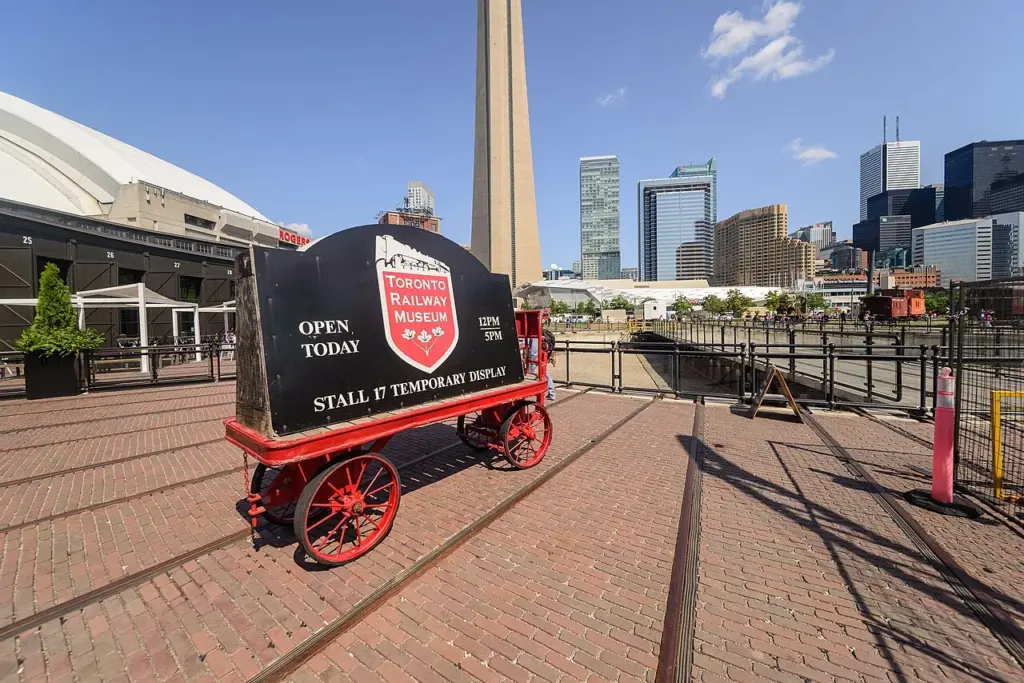

The Toronto Railway Museum is a better small attraction
The Toronto Railway Museum is beside the Roundhouse near the CN Tower. Adult admission is $18 including HST. Senior and student admission is $14. Youth admission is $8. Summer museum hours currently run noon to 5:30 p.m. through September 7, 2026. The miniature train is an extra $10.
This is not a giant national museum. That is why it works. The subject is clear. The historic equipment is tied to the site. Train fans can slow down, while everyone else can make it a shorter stop without feeling they wasted $45.
Pair it with the nearby waterfront, a Blue Jays game or the CN Tower. Do not build the whole day around it unless someone in the group loves trains.
The verdict: choose it as a focused two-hour stop. It offers more local character per dollar than most temporary projection shows.
Free Toronto History Museums are the best overlooked deal
The City of Toronto offers free general admission at its ten history museums. That includes Fort York, Spadina Museum, Gibson House, Mackenzie House, Montgomery's Inn, Colborne Lodge and others. The City museum directory has the current list and hours.
These museums are not interchangeable. Pick one near the rest of your day. Fort York works with the waterfront. Spadina Museum works with Casa Loma and The Annex. Colborne Lodge works with High Park. Montgomery's Inn works for west-end visitors.
Free does not mean always open. Many City museums close on Monday or Tuesday, and special programmes can have separate registration. Check the exact site before travelling.
The verdict: this is Toronto's best attraction value. Start here when the budget is tight.
Hop-on hop-off buses are useful for one narrow kind of visitor
A sightseeing bus solves a real problem when a first-time visitor wants an overview, has limited walking energy and does not want to learn the TTC on day one. The recorded or live commentary can also give the ride some value.
The weakness is Toronto traffic. A bus caught on Front Street, University Avenue or near a major event is an expensive chair. Waiting for the next bus can also take longer than walking to the subway.
Check the exact route, operating dates, first departure, final departure and claimed frequency. Then place your hotel and top three stops on that route. Do not buy a two-day ticket if you will spend the second day in one neighbourhood.
Most able-bodied visitors staying near a subway station should use TTC and walk. Toronto's best details are often between the official tour stops.
The verdict: buy one day for an easy overview or a mobility need. Everyone else should spend the money on a good attraction.
The Distillery District is free more often than people think
The Distillery District itself is a public place to walk through. Its brick lanes, galleries and shops do not normally require general admission. Certain festivals, performances and peak holiday periods can use tickets or controlled entry.
The Winter Village looks best after dark and is also most crowded then. Weekend evening admission, long drink lines and packed photo spots can turn a pleasant walk into bad value.
Go on a weekday afternoon or during a free entry period. Look at the current event calendar before travelling. Buy one thing you actually want instead of treating every decorated stall as a required Toronto experience.
The verdict: visit the district. Avoid paying for the busiest possible version of the same walk.
Sankofa Square is a photo stop, not a destination
Sankofa Square at Yonge and Dundas is busy, bright and central. It is also mostly signs, traffic, hard paving and event infrastructure. Toronto's attempt at Times Square is not where the city becomes most interesting.
Stop for a photo if you are already using Dundas Station or visiting Little Canada. Do not schedule an hour there. Walk to Toronto City Hall, the Art Gallery of Ontario, Cabbagetown or the St. Lawrence area instead.
The verdict: five minutes is enough when no event is running.
Souvenir shops around major attractions sell convenience
A Toronto shirt beside the CN Tower costs more because the seller has the exact customer at the exact moment. That does not make the item fraudulent. It makes comparison sensible.
Check the label. A maple leaf does not mean the product was made in Canada. Decide whether you want a Toronto memory, a Canadian-made product or the cheapest gift. Those are different purchases.
Museum and gallery shops usually have more distinctive local books, prints and design objects. Chinatown and neighbourhood shops can be better for inexpensive gifts, but quality still varies.
The verdict: buy a souvenir you can name and use. Skip generic clutter with no Toronto connection beyond the printed word.
Be careful with pedicabs and novelty rides
A pedicab can be fun for a tired group after a waterfront event. The danger is an unclear price.
Ask for the total price before anyone sits down. Say the destination. Confirm whether the number is per person, per minute or for the whole ride. If the driver will not give a plain answer, walk away. A normal taxi or transit trip is easier to compare.
Do not assume a vehicle beside a major event has a City-set taxi meter. Pedicabs are a different service. Photograph or note the posted terms if the price is large.
The verdict: only ride after the full cost is clear.
Pearson Airport is not a tourist trap, but the wrong arrival plan wastes money
Pearson is far from downtown. That does not make it a trap. It makes transport planning important.
The UP Express is usually the cleanest downtown connection when service is running normally and Union Station is useful to you. A taxi or rideshare may be better for several people, heavy bags or a destination far from the train. Compare the whole trip, not only the first fare.
Billy Bishop is easier for some central trips, but it serves fewer routes. Do not pay a much higher flight price only to save a ground trip without doing the full math.
The verdict: choose the flight first, then price the door-to-door trip.
A better first-time Toronto day
If you have one clear day, start with the CN Tower. Walk through the Roundhouse area. Continue to the waterfront, St. Lawrence Market or the Islands based on time and ferry lines. Eat in a place chosen for food, not because it faces the attraction exit.
If the weather is bad, use a real museum, TIFF Lightbox screening, the PATH or a neighbourhood food crawl. Our guide to non-touristy fun in Toronto has more local ideas, though you should confirm older listings before visiting.
Do not try to complete Toronto in one day. The city is better in neighbourhood pieces.
Frequently asked questions
What is the biggest tourist trap in Toronto?
Short immersive attractions are the weakest value for most visitors because the adult price can approach a major museum or landmark. Arcadia Earth is our clearest current example at $39 plus tax and fees.
Is the CN Tower worth the money?
Yes, once, on a clear day. General admission is enough for most people. Skip it when cloud hides the lake and skyline because the view is what you are buying.
Is Casa Loma overrated?
It is overrated as a required Toronto stop. It is a good choice for people who truly enjoy architecture, history or a specific themed event. Everyone else can get better value at a free City history museum.
What can tourists do for free in Toronto?
Visit a Toronto History Museum, walk the waterfront, explore Kensington Market or Chinatown, use a public beach, or visit many galleries on their free-admission days. Check current hours before leaving.
Should I buy Toronto CityPASS?
Only if the included attractions match plans you already made. Add the current individual prices and compare them with the pass. A pass is not a saving if it pushes you into attractions you did not want.
Is Little Canada worth the ticket price?
Yes for children, model lovers and people who enjoy slow visual detail. It is better made and more substantial than most short immersive attractions. Buy the cheaper timed ticket and allow about two hours.
Are Toronto food festivals worth it?
They are worth it for a specific programme, rare vendor or social event. They are usually poor value when your only goal is a full meal. Admission, small portions and lines add up quickly.
What should a first-time visitor skip?
Skip generic immersive rooms, unclear pedicab prices and restaurants chosen only because they sit beside an attraction. Spend that money on one strong landmark, a neighbourhood and a meal you actually want.