


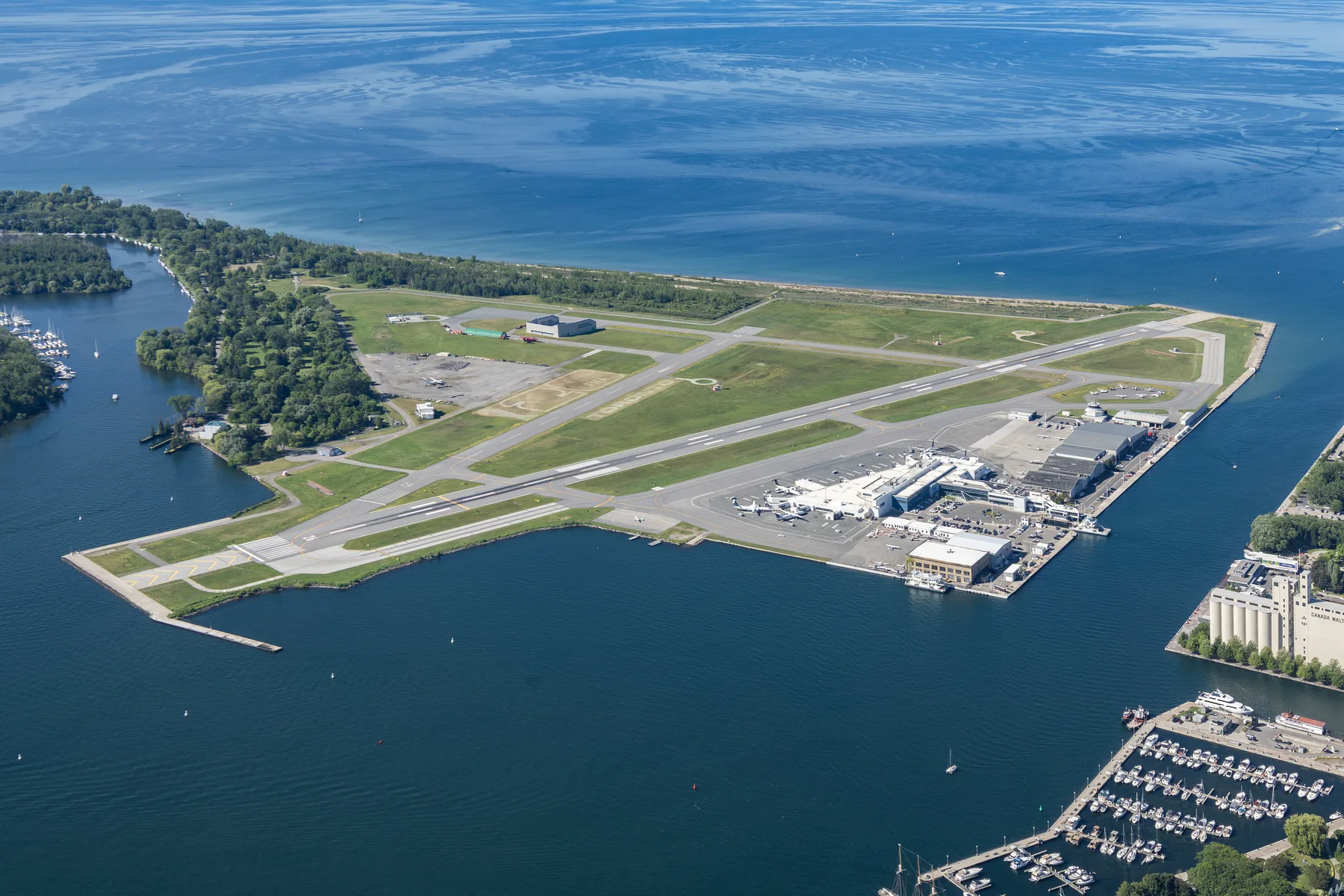
Yes. The federal government grounded Ontario's plan for a longer runway and regular jet service at Billy Bishop Airport on July 24, 2026.
The airport is not closing. One construction project is still moving ahead. It is the approved Runway End Safety Area project, known as RESA. Transport Canada says this safety work will not lengthen the usable runway or allow new aircraft types.
Ontario still says it wants to expand the airport. Its new airport law also remains in place. But the province does not have the federal agreement needed to build the plan it promoted. A very different proposal could return one day, but the Ford government's current runway and jet idea has been stopped.
The quick answer
| Question | Direct answer as of August 27, 2026 |
|---|---|
| Was the Billy Bishop Airport expansion approved? | No. Ottawa said it would not proceed with Ontario's longer-runway and jet plan. |
| Are regular jets coming to Billy Bishop? | No new jet service has been approved. The current airport agreement still limits aircraft types. |
| Is airport construction still happening? | Yes. The separate RESA safety project continues and is expected to be completed by July 2027. |
| Does RESA make the usable runway longer? | No. Transport Canada says it does not extend the runway or change permitted aircraft types. |
| Is Ontario still pushing for expansion? | Yes. The province says it still supports the idea, and Bill 110 remains law. That political position is not an approval. |
| Is expansion impossible forever? | No one can promise that. A new proposal could appear later, but it would need a different plan and the required agreements and approvals. |
Our view is that the federal decision settles the main question for now. Toronto should treat the proposed jet and runway expansion as grounded, while watching what Ontario does with the land and legal powers it took through Bill 110.
What is Billy Bishop Airport today?
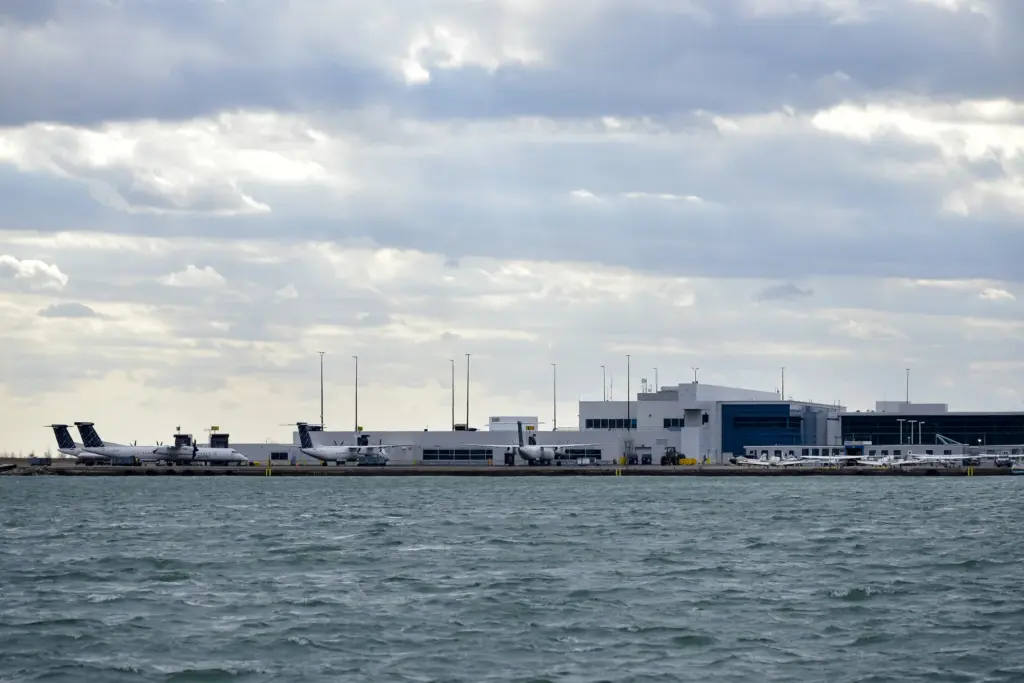

Billy Bishop Toronto City Airport is on the Toronto Islands, just south of downtown. Travellers reach the terminal through a pedestrian tunnel or by taking a very short ferry trip.
The Toronto Port Authority, commonly called PortsToronto, owns and operates the airport. The airport land has three owners. Transport Canada lists the shares as 78.5 per cent for the Toronto Port Authority, 20 per cent for the City of Toronto and 1.5 per cent for Transport Canada.
Those parties signed the Tripartite Agreement in 1983. This agreement is the main operating rule book for the airport. It restricts noise, limits aircraft types and prohibits runway and landmass extensions.
Any change to that agreement needs all three parties to agree. This point is important because the federal government is still one of those parties. Ontario can take over Toronto's position, but it cannot turn one vote into three.
What did the federal government stop?
Transport Minister Steven MacKinnon announced the decision on July 24, 2026, when the federal consultation closed.
Ottawa said it would not pursue plans that would harm important public spaces such as Little Norway Park or Hanlan's Point Beach. It also named higher noise, major environmental harm and interference with housing as reasons it would not move forward.
The decision stopped the main parts of Ontario's expansion idea:
- a longer operational runway
- regular service by larger jet aircraft
- an expansion that would take or harm important waterfront public space
- a plan that would create unacceptable noise or environmental effects
- a plan that would interfere with Toronto housing
This was not a minor delay for another study. The federal government said it would not proceed with the plan Ontario had been promoting.
At the same time, no complete engineering design had been made public. There was no final runway drawing, aircraft list, flight schedule or public construction plan to approve. Ottawa rejected the direction of the proposal before it became a finished project.
That is why two statements can be true at once. No final expansion plan was ever approved, and the federal government still grounded the expansion idea that Ontario had put forward.
A short timeline of what happened
The story moved quickly in 2026.
Ontario announced its airport push
The province said it wanted to modernize and expand Billy Bishop. Its public case included more routes, more competition, jobs and less pressure on Toronto Pearson International Airport.
Ontario also supported a longer runway and regular jet service. Those changes would have required new agreements and a much more detailed proposal.
Bill 110 became law on June 2
Ontario passed the Building Billy Bishop Airport Act, 2026. The law gives the province a way to acquire listed City-owned airport land. It also lets Ontario take over the City's rights and duties under the Tripartite Agreement on a date set by provincial regulation.
The law shifted power away from Toronto. It did not approve a runway or make the federal government disappear from the agreement.
Ottawa opened a public consultation on June 8
Transport Canada asked people about noise, the environment, parks, housing, transportation and possible economic benefits. The consultation was open from June 8 to July 24.
More than 87,000 responses were received, according to the federal minister's announcement reported on the day of the decision. That was a very large response for a short consultation.
Ottawa rejected the plan on July 24
The federal government said it would not pursue the longer-runway and jet expansion put forward by Ontario. It said its focus would remain on the already-approved safety work.
Toronto City Council responded on July 29 and 30
City Council voted 25 to 1 to demand that Ontario repeal Bill 110 and give back the City-owned land at Toronto Islands and Little Norway Park. Council also demanded that Ontario return Toronto to its place in the Tripartite Agreement.
The federal decision stopped the airport plan. It did not automatically undo Ontario's law or return the land. That fight is still open.
The RESA safety project is still happening
This is the part that can look confusing from the shoreline.
Billy Bishop must build Runway End Safety Areas by July 12, 2027. A RESA is a protected area beyond the end of a runway. It is meant to reduce harm if an aircraft stops too late or lands short.
The airport's island setting makes this work difficult. The approved design requires a minimum amount of new land at the runway ends. In January 2025, the three Tripartite Agreement parties approved a limited amendment so the safety project could proceed.
This means some landmass work can happen even though the regular agreement prohibits airport landmass expansion. The exception is narrow and tied to the safety requirement.
Transport Canada is direct about the result. The RESA project will not extend the operational runway and will not change which aircraft types can use Billy Bishop.
So, if people see construction near the runway, that does not mean the rejected jet plan has returned. Ask whether the work is part of RESA or part of a new proposal. Right now, the approved work is RESA.
Are jets coming to Billy Bishop Airport?
No regular new jet service has been approved.
The Tripartite Agreement still limits the aircraft that may operate at the airport. An amendment needs agreement from all three parties. Transport Canada says any decision about the airport's future operating environment also requires proper consultation with affected communities and Indigenous groups.
Ontario can keep arguing that newer jets would be useful. It can ask for a new discussion. It cannot announce regular jet service by itself.
Claims that one jet is quieter than one turboprop also do not answer the whole noise question. The result depends on the exact aircraft, takeoff conditions, flight path, time of day and total number of flights.
A quieter plane can still produce more total disturbance if the airport adds many flights. Any future proposal would need to name the aircraft and show the full daily schedule before making a fair noise claim.
Is the runway being extended into Lake Ontario?
The usable runway is not being extended under the approved RESA project.
Ontario had discussed a longer runway and more land for a larger airport. That proposal has been grounded. No final public design showed the exact new shoreline or runway dimensions.
This matters because not all construction near a runway has the same effect. A safety area sits beyond the operational runway. A runway extension gives aircraft more usable distance for takeoff or landing. They are not the same thing.
If another plan appears, it should include clear drawings that place the current shoreline beside the proposed shoreline. It should also identify construction zones, boating routes, habitat work and every piece of parkland that could be affected.
Until that happens, there is no approved longer runway to measure.
Why did public space matter so much?
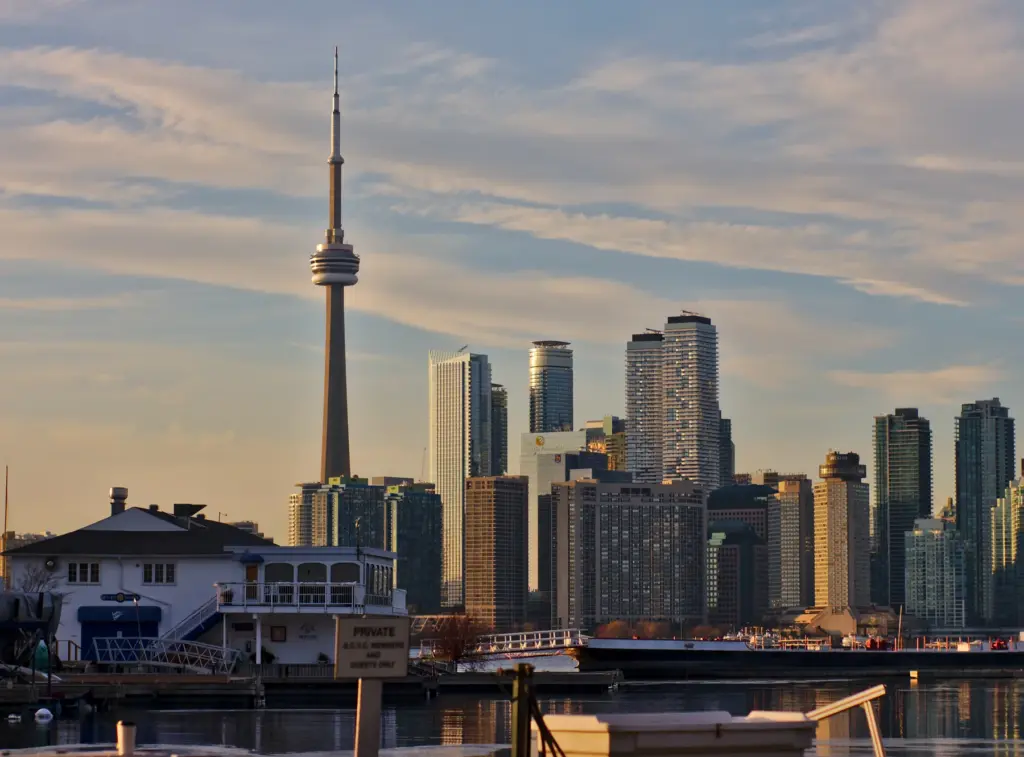

Toronto Islands are not empty land beside an airport. They include parks, beaches, habitat, ferry routes, homes and some of the city's most loved public waterfront space.
Little Norway Park is on the mainland beside the airport entrance. Hanlan's Point Beach is on the island near the airport. Both places were named in the federal government's reasons for rejecting the expansion direction.
Airport growth could affect public space in several ways. It could take land. It could add noise. Construction could change access, water traffic and the shoreline. A larger operation could also bring more vehicles to already tight streets around Eireann Quay.
The size of each effect would depend on the design. But Ottawa did not wait for a detailed plan that crossed its stated limits. It drew a line around public space, noise, the environment and housing.
That was the sensible choice. Once part of a waterfront park or lake edge is committed to a major project, it can be hard to get it back.
What would expansion have meant for noise?
Noise was one of the biggest concerns in the federal consultation.
Airport noise is not measured fairly by listening to one aircraft for a few seconds. The number of flights matters. So do operating hours, weather, direction and the route used after takeoff.
The airport is close to homes and parks. More homes are planned around the waterfront. A plan that looks small on an airport map can affect many people if it changes the daily flight pattern.
A fair study would need to show:
- every aircraft type being requested
- the expected number of flights on normal and busy days
- early morning and evening operations
- neighbourhood noise maps for several weather conditions
- the number of residents and park users affected
- enforceable limits and a clear complaint process
None of that complete proposal-level evidence was released before Ottawa rejected the idea. This is one reason broad promises about quiet new jets should be treated as predictions, not facts.
What about air pollution and health?
Aircraft, service vehicles and passenger traffic can all add local air pollution. The amount depends on the aircraft, fuel, operating pattern, vehicle trips and wind.
Some public comments raised concerns about ultrafine particles. These are very small airborne particles linked to combustion. The concern deserves proper study, but no complete expansion design was available for a proposal-specific health calculation.
It would be wrong to promise no health effect. It would also be wrong to attach an exact health result to an airport plan that had no final aircraft list or flight schedule.
If a future proposal returns, it should include current baseline air testing, projected emissions and monitoring locations in nearby neighbourhoods and parks. Results should be public and easy to compare over time.
Could expansion have blocked housing?
The federal government named housing as one of its limits. It said it would not pursue a plan that hindered Toronto's ability to build needed homes.
Airport operations can affect housing through noise contours, safety rules, building height limits, traffic and land use. The effect is not the same on every property.
City staff said earlier in 2026 that they did not have enough detail to calculate a specific housing effect. That remains an important warning against using a dramatic housing number without a map and method.
But a missing exact number did not make the issue unimportant. Toronto is planning major growth around the waterfront. Ottawa decided that an airport proposal should not get priority if it would materially block that work.
Any future plan should show affected parcels, planned homes, noise levels and possible design changes. It should also explain who bears the cost if buildings need expensive sound protection.
Would expansion have lowered airfares?
Possibly on some routes, but there was no guarantee.
Ontario argued that more service could improve competition and connections. That is a reasonable idea to test. A second airport option can be useful for travellers who begin or end their trip downtown.
Still, ticket prices depend on demand, airline competition, fuel, airport fees and the cost of building and operating the project. A low sale fare does not prove that normal fares would fall.
A useful business case would need to show likely routes, committed airlines, passenger fees, public costs and the normal total ticket price after fees. It would also need to separate passengers moved from Pearson from entirely new air travel.
Those possible benefits were not enough to overcome the federal government's concerns about the actual location and likely effects of the plan.
Would Billy Bishop expansion have helped Pearson?
It might have shifted a small share of passengers, but Billy Bishop and Pearson operate at very different scales.
Transport Canada says Billy Bishop handled about 1.9 million passengers in 2024. Pearson handles a far larger mix of domestic, United States and international traffic.
A flight moved from Pearson to Billy Bishop could reduce some demand at Pearson. A brand-new trip would not. The province would need route-level forecasts to prove the size of any benefit.
Pearson's distance from downtown is a real frustration for some travellers. That does not mean every airport expansion beside downtown is worth its effects. Better rail and bus access to Pearson can also improve the trip without expanding the island airport.
Why can Ontario not simply override Ottawa?
Ontario has major power over cities. Bill 110 shows how quickly the province can change Toronto's role and take control of City land.
But Billy Bishop also sits on federal land and is operated by a federal port authority. Transport Canada regulates aviation safety. Most important, the Tripartite Agreement requires unanimous consent for amendments.
If Ontario takes Toronto's place in the agreement, it may control one side of the table. PortsToronto and the federal government remain at the table too.
That gives Ottawa an effective veto over the runway and aircraft changes Ontario wanted. The federal decision is why the specific plan cannot proceed as proposed.
Ontario could challenge the politics, introduce another proposal or ask for different terms. It cannot treat the July 24 decision as if it never happened.
What happens to Bill 110 and the airport land now?
The federal rejection did not repeal Ontario's law.
Bill 110 remains important because it can transfer City-owned airport land and Toronto's place in the Tripartite Agreement to the province. The law gave Ontario tools for an expansion that Ottawa later rejected.
Toronto City Council has demanded that the province repeal the law, return the City land at Toronto Islands and Little Norway Park, and restore Toronto's agreement role.
That demand is not the same as a completed return. Readers should watch for provincial regulations, land records, a formal repeal or amendment, and any new agreement among the parties.
For now, the airport plan is grounded but the fight over control is not fully settled.
Could a different expansion proposal come back?
Yes, in theory. The July 24 announcement did not create a permanent legal ban on every possible change at Billy Bishop.
Ottawa set clear limits. It said it would not pursue a plan that harms named public spaces, raises noise, causes major environmental damage or blocks housing.
A future government could also change policy. The Tripartite parties could negotiate a different airport agreement. Those are possibilities, not current plans.
Any new proposal would need to be meaningfully different from the rejected idea. It would also need detailed studies, public and Indigenous consultation, required permits and agreement from the parties with legal authority.
The honest description is this: the Ford government's current jet and longer-runway plan is dead, but no one can promise that the airport debate is over forever.
What should Toronto watch next?
The biggest immediate question is no longer whether Ottawa approved the expansion. It did not.
The useful things to watch are:
- Whether Ontario repeals or changes Bill 110.
- Whether the province returns Toronto's land and agreement role.
- Whether Transport Canada publishes its promised What We Heard report.
- Whether PortsToronto releases a new airport master plan.
- Whether Ontario or another party presents a redesigned proposal.
- Whether the RESA safety work remains on schedule for July 2027.
- Whether a new proposal contains exact aircraft, runway, noise, housing and environmental details.
Do not let photos of RESA construction become proof of a secret runway extension. At the same time, do not assume the land and governance fight vanished when the federal decision arrived. They are separate questions.
Our take
Ottawa made the right call on the proposal it was given.
Billy Bishop is useful. Its downtown location saves time for some travellers, and the airport supports jobs and connections. Those benefits do not give any government a blank cheque to reshape public waterfront land.
Ontario asked Toronto to accept a longer runway and jets before the public had a complete design, aircraft list, noise map, transportation plan or environmental case. That is backwards. The province also weakened the City's role before it had federal support for the project.
The approved safety work should be completed properly. It serves a clear purpose and does not change the usable runway or aircraft rules.
Any future airport proposal should begin with hard facts and clear public limits. Toronto should not have to discover the real footprint after political decisions have already been made.
Frequently asked questions
Was the Billy Bishop Airport expansion rejected?
Yes. On July 24, 2026, the federal government said it would not proceed with Ontario's plan for a longer runway and regular jet service. The specific Ford government proposal is grounded.
Are jets coming to Billy Bishop Airport?
No new regular jet service has been approved. The current Tripartite Agreement still limits aircraft types, and changing it requires unanimous agreement among the parties.
Is Billy Bishop Airport still doing runway construction?
The airport is doing required Runway End Safety Area work. Transport Canada says this project does not extend the operational runway and does not allow new aircraft types.
Can Ontario expand Billy Bishop without federal approval?
Not under the current agreement and federal role. Ontario can take over Toronto's position, but amendments to the Tripartite Agreement require all three parties to consent. Transport Canada also has federal aviation responsibilities.
Is Billy Bishop Airport closing?
No. The federal decision rejected the proposed expansion, not the airport's current operation. Billy Bishop remains open, and its required safety project is continuing.
What happened to Bill 110 and the City-owned land?
Ontario's Building Billy Bishop Airport Act remains law. Toronto City Council has demanded that the province repeal it, return the City land and restore Toronto's role in the airport agreement. That return had not been completed when this article was checked.
Could another Billy Bishop expansion plan return later?
Yes, in theory. It would need a different design, required approvals and agreement from the parties with legal authority. There is no approved replacement proposal now.
Where is Billy Bishop Airport?
Billy Bishop Toronto City Airport is at 2 Eireann Quay, beside Toronto's downtown waterfront. Passengers reach the island terminal through the pedestrian tunnel or by ferry.
The bottom line
The government did ground the Billy Bishop expansion idea.
Ontario's longer-runway and regular-jet plan is not moving forward. Billy Bishop remains open, and the separate RESA safety work continues. Ontario can keep promoting expansion, but it does not have the federal consent needed to build the plan it announced.
That is the clearest answer today. The expansion is grounded. The airport is not.