


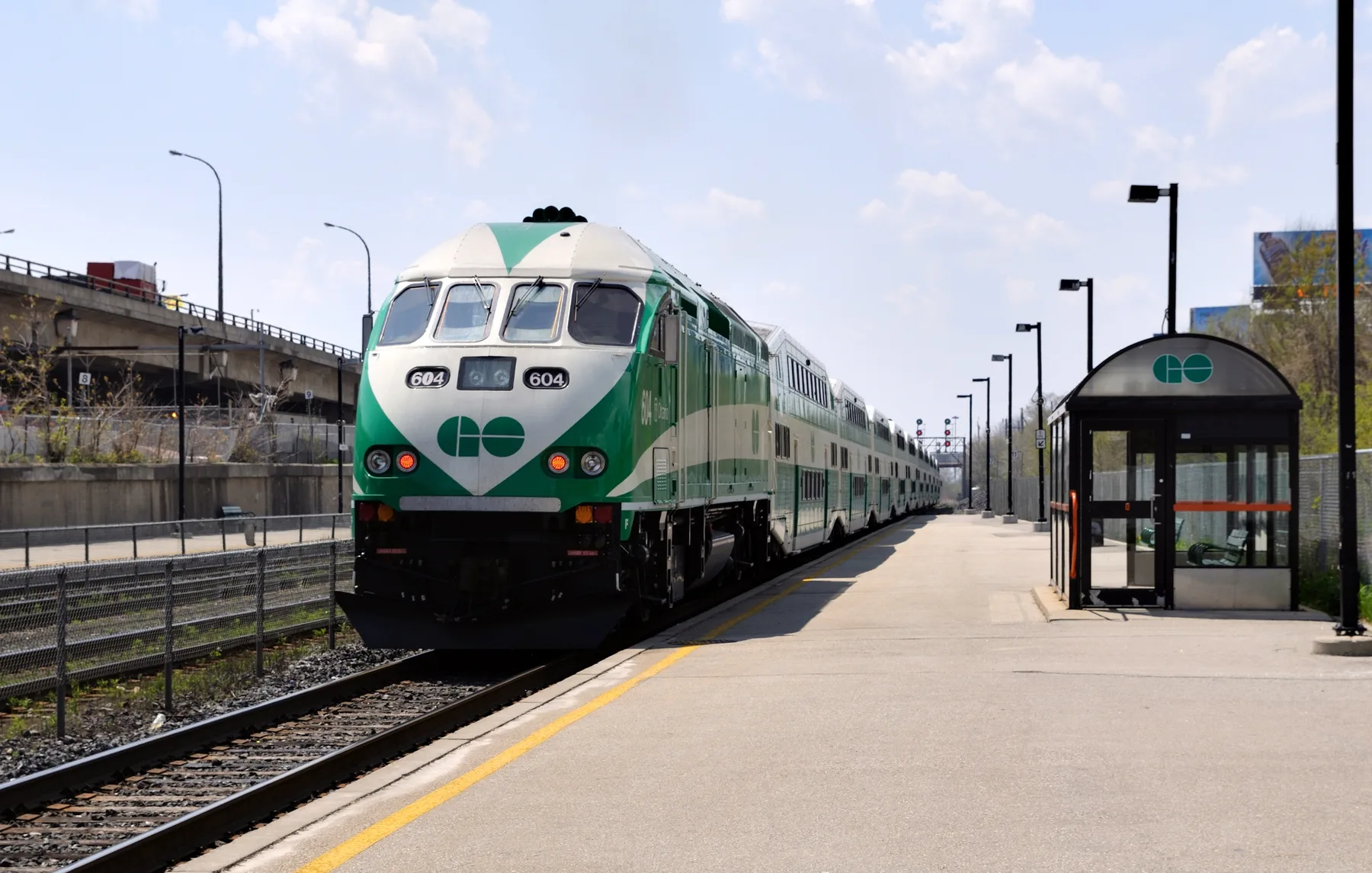
A five-day GO Train commute can cost less than the price of ten single fares every week because GO loyalty discounts build during the calendar month. The exact amount depends on your stations, fare type and whether you use one payment method every time.
For a current example, an adult PRESTO trip between Oakville GO and Union Station is listed at $8.16 one way. A rider making the same trip can reach the high GO loyalty discounts after 35 trips and free eligible trips after 40. In a simple 20-workday month, that example comes to about $290.37, not $326.40.
The train fare is only part of the budget. Station parking, the trip to the station, lunch and the value of your time can change the answer.
Quick monthly calculator
Use this order:
- Find your one-way adult PRESTO fare in the official GO trip planner.
- Count one-way trips, not workdays.
- Apply the loyalty discount for the calendar month.
- Add only the local transit fares not removed by One Fare.
- Add station access, parking and workday spending.
- Compare with the full cost of driving, not gas alone.
Do the calculation again whenever your office schedule or payment method changes.
Why $20 a day does not always become $440 a month
The quick calculation is easy:
$20 per workday × 22 workdays = $440
That is a useful warning. It is not the final PRESTO bill for a frequent rider taking the same trip.
GO applies loyalty discounts based on the number and value of trips made in one calendar month. GO says frequent customers receive an 88.3 per cent discount after 35 trips and a 100 per cent discount after 40 trips.
Two trips per workday means a five-day commuter reaches trip 40 after 20 workdays. Eligible trips after that point can be free for the rest of the month.
The discount is automatic when the trip and payment history qualify. You do not need to buy an old-style monthly GO pass.
Worked example: Oakville GO to Union Station
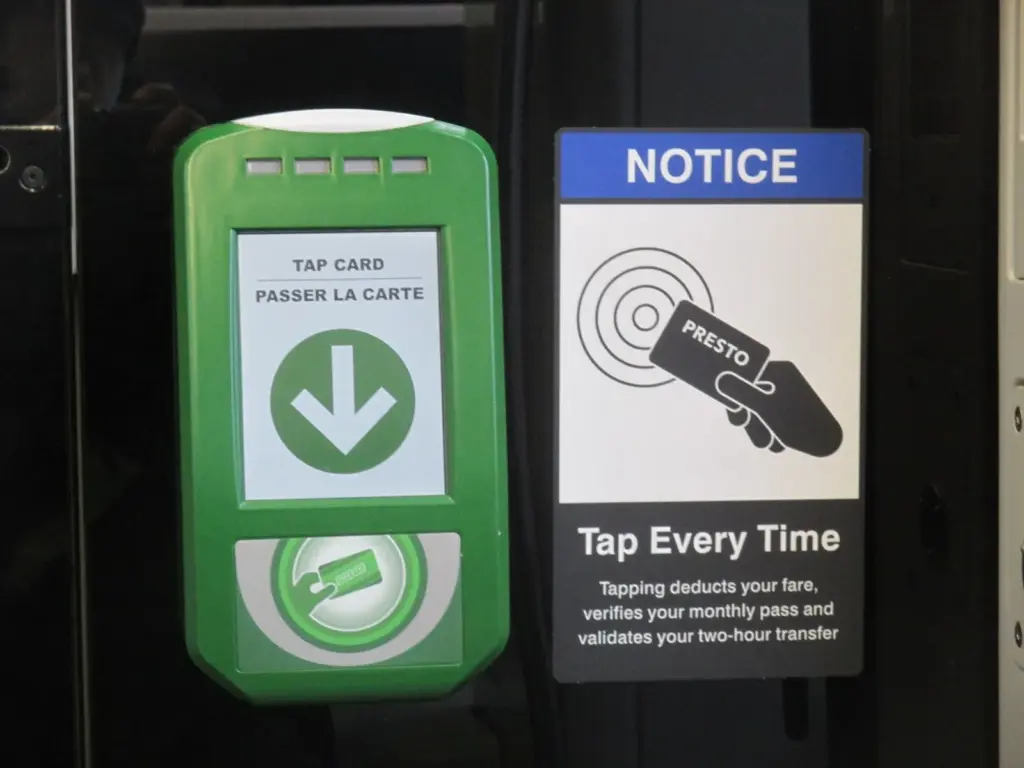

GO's current student information page lists the adult PRESTO fare between Oakville GO and Union Station at $8.16 one way. We are using the adult fare, not the student fare, for this example.
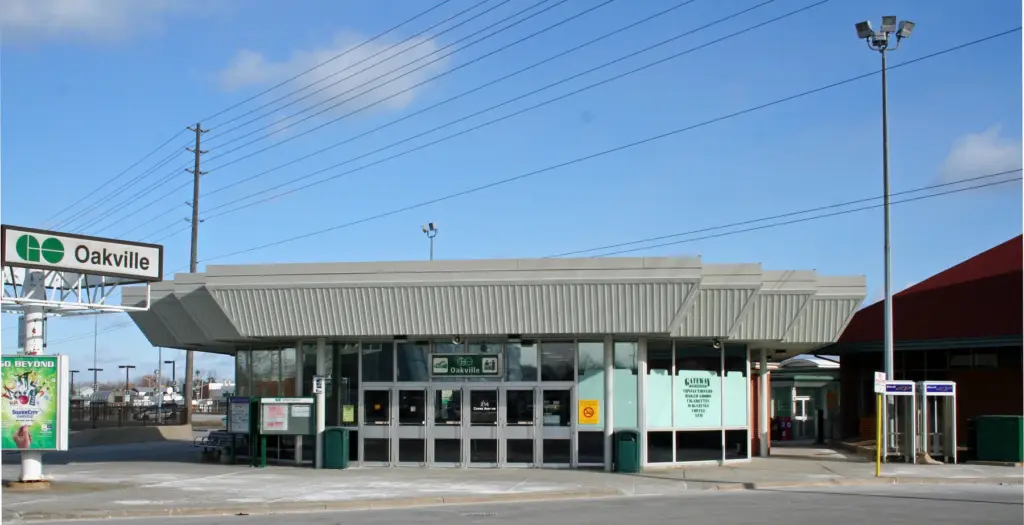
Oakville GO Station

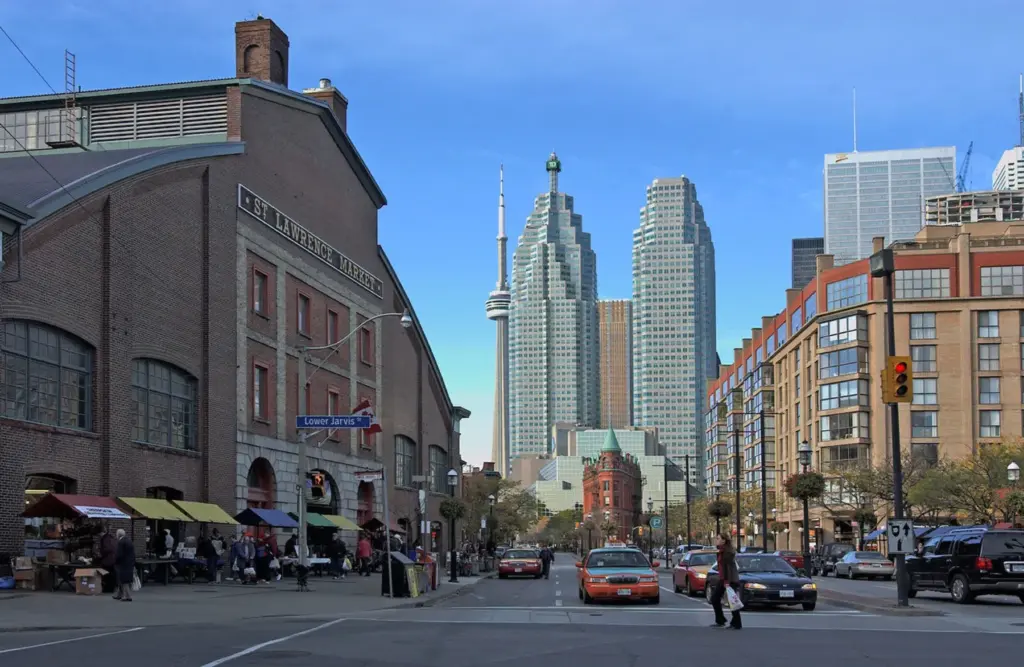
Union Station

.jpg)
Here is the simplified monthly math when every trip is between those same two stations and the rider uses the same payment method.
| Office days in the calendar month | One-way trips | Approximate GO fare |
|---|---|---|
| 12 days | 24 trips | $195.84 |
| 16 days | 32 trips | $261.12 |
| 18 days | 36 trips | About $286.55 |
| 20 days | 40 trips | About $290.37 |
| 22 days | 44 trips | About $290.37 if the later trips qualify for the full discount |
The first 35 trips cost $285.60. Trips 36 to 40 cost about 95 cents each because the rider pays 11.7 per cent of the normal fare. That adds about $4.77.
This is an editorial calculation, not a GO quote. Fares are distance-based and rules change. Confirm your real amount in the official planner.
Four office days can cost almost as much as five
This is the strange part of the loyalty curve.
Four days a week often produces 32 to 36 one-way trips in a calendar month. A long month can put the rider just into the steep discount. Five days a week reaches the free-trip level earlier.
The extra office day is not free in a full sense. It still adds travel time, food, clothing, child care and other workday costs. But the extra GO fare can become very small after trip 40.
Compare by calendar month, not by a neat four-week block. Some months have 20 workdays. Others have 22 or 23. Holidays and vacation also matter.
Use one payment method all month
Your trips need to stay together in the fare system.
If you tap a physical PRESTO card for one week, a credit card the next week and a phone after that, the histories do not combine into one loyalty count.
Even a physical credit card and the same card inside a mobile wallet are treated as different payment methods.
Pick one of these and keep using it:
- one physical PRESTO card
- one digital PRESTO card
- one physical credit or debit card
- one specific card on one phone
- one specific card on one watch
Use that exact method to tap on and tap off.
One Fare can remove the TTC connection cost
Many commuters do not end at Union Station. They need the TTC or another local system.
Ontario's One Fare program makes eligible connections between GO and the TTC, Brampton Transit, MiWay, Durham Region Transit and York Region Transit free when the rider follows the transfer rules. GO also has arrangements with other local systems.
Use the same accepted payment method for the full connected trip. Tap where each system requires it. On GO, that normally means tapping on and off.
GO e-tickets are not eligible for One Fare. A cheap e-ticket can become the more expensive choice when it causes you to pay a second local fare twice a day.
Check the current agency list. The program is not identical for every transit system in the region.
Do not lose the savings with a missed tap-off
GO fares are based on distance. The system needs to know where the trip ended.
If you forget to tap off and do not have a valid default trip, GO can charge a missed-tap amount based on the end of the line. A repeated mistake can destroy the monthly saving you worked out.
A default trip can help a regular train commuter. It tells the system the usual pair of stations, so the rider normally taps on without tapping off for that exact trip.
You still need to override or follow the current instructions when you travel somewhere different. Default-trip rules can differ for buses and trains. Read the official page before setting one.
If an incorrect missed-tap charge appears, GO provides a contact route for a refund request. Do not assume it will fix itself.
Add the cost of reaching the station
The train may be $290 a month while the station trip quietly adds much more.
List each item:
- local bus fare not covered by a transfer program
- fuel for driving to the station
- paid station or reserved parking
- bicycle maintenance or secure storage
- ride-hail trips on bad-weather days
- a second household car needed only because of the commute
- extra child-care time caused by the station connection
Free parking is not the same as guaranteed parking. A lot may fill before your train. A backup lot or later train can add both money and time.
Walkability matters. A home four minutes from a GO platform has a different budget from a home that needs a 20-minute drive.
Add the quiet return-to-office spending
The commute can restart habits that disappeared at home.
A coffee, lunch and snack can cost more than the train on some days. Work clothes, dry cleaning, after-school care and dog walking can become regular costs too.
Make a separate workday budget:
| Item | Cost per office day | Monthly office days | Monthly total |
|---|---|---|---|
| Coffee | Your amount | Your days | Multiply |
| Lunch | Your amount | Your days | Multiply |
| Child or pet care | Your amount | Your days | Multiply |
| Other | Your amount | Your days | Multiply |
Do not pretend every cost can be removed by packing lunch. Food is one easy line. Care and time are harder.
Is driving actually cheaper?
Sometimes. It depends on which cost you are comparing.
If you already own a car and would pay the insurance and loan either way, the short-term cost of one more commute may look like fuel, parking and added maintenance. That is the marginal cost.
If the commute forces the household to buy or keep another car, use the full ownership cost. Include:
- payment or purchase cost
- depreciation
- insurance
- fuel or electricity
- tires and seasonal changes
- maintenance and repair
- registration
- tolls
- downtown parking
- collision risk and deductibles
CAA's Driving Costs Calculator lets you choose a vehicle and change the annual distance. It is more useful than comparing a GO fare with one tank of gas.
The CRA's 2026 reasonable employer allowance rate is 73 cents per kilometre for the first 5,000 business kilometres in the provinces. That is not a personal commute price and it does not mean your car costs exactly 73 cents per kilometre. It is a reminder that real vehicle cost includes much more than fuel.
Compare stress and usable time

Money does not settle the decision.
A one-hour train trip and a one-hour drive use the same clock time. They may not feel the same. On the train, some people can read, answer messages or rest. In traffic, the driver must keep watching the road.
The train can also be crowded, delayed or noisy. A seat is not guaranteed. Laptop work is not always comfortable or private.
Run a two-week test if you can. Record:
- time leaving home
- time reaching the desk
- time leaving the office
- time entering home
- dollars spent
- delay time
- stress from 1 to 5
- whether any travel time was useful
Door-to-door evidence is better than a map estimate.
Is moving closer worth it?
Do not compare rent or mortgage alone.
Add housing, property tax, utilities, insurance, transport, parking and the number of cars the household needs. Then add time.
A suburban home can offer space, schools or a quieter setting that the household values. A Toronto home can reduce car dependence and make errands easier. Neither is automatically cheaper.
Moving has transaction costs. A renter may lose a protected rent. An owner may pay selling, legal, moving and land-transfer costs. A lower monthly commute does not erase a costly move quickly.
Calculate the break-even period before treating relocation as a fare solution.
How to ask for more hybrid days
A manager may not change policy because a train is expensive. A stronger request connects flexibility to the work.
Prepare:
- the office tasks that truly need you present
- the tasks done better without a commute
- a proposed schedule, not only a complaint
- a way to measure output and availability
- a trial period and review date
- a plan for team meetings and urgent in-person work
You can mention cost and time honestly. Lead with how the arrangement helps the role and team.
If a written employment agreement promised remote or hybrid work, the legal question may be different. Consider advice before assuming either side can change it freely.
Other discounts and special cases
Youth and post-secondary students can receive reduced fares after the correct PRESTO fare type is set. Seniors have a separate discount. Children 12 and under ride GO free.
Veterans and Canadian Armed Forces members with eligible identification can ride GO free under the current program. A special PRESTO fare type can help with One Fare connections.
Employers, unions and schools may also offer benefits. Check the exact terms. A normal home-to-work commute is not automatically reimbursed just because the office schedule changed.
Our take
A frequent GO commute is expensive enough to deserve real math. It is often not as high as ten full single fares every week.
The loyalty discount can put a ceiling on a steady monthly trip. One Fare can remove the TTC connection. Those are meaningful savings.
The harder problem is everything around the train. A car to the station, a long walk at the other end and two lost hours can make a lower fare feel like poor value.
Start with the official fare. Then price the full day.
Frequently asked questions
How many GO trips do I need before the loyalty discount grows?
GO says frequent customers receive an 88.3 per cent discount after 35 trips and a 100 per cent discount after 40 trips in the calendar month. Use the same payment method so the trips count together.
Does a credit card earn the GO loyalty discount?
GO says contactless credit and debit payments can receive automatic fare discounts. Use the same physical card, phone or watch all month. A physical card and its mobile-wallet version have separate histories.
Is the TTC free when I transfer from GO?
An eligible GO and TTC connection can be free through One Fare when you use the same accepted payment method and follow the transfer rules. GO e-tickets are not eligible.
What happens if I forget to tap off GO Transit?
Without a valid default trip, GO may charge a missed-tap fare based on the far end of the route. Check your transaction history and use GO's refund contact if the charge is wrong.
Is a four-day GO commute much cheaper than five days?
Not always. Four days a week may put you near trip 35, while five days reaches the deepest loyalty discount earlier. The total workday cost is still higher when food, care and time are included.
Is driving cheaper than GO Transit?
It can be for some routes and households. Compare parking, fuel, maintenance, insurance, depreciation and the need for an extra car. CAA's calculator can help with the vehicle side.
Can I set a default GO trip?
Regular train riders can set a default trip on eligible payment methods. It can prevent missed tap-offs on the usual route, but you must follow the override instructions when travelling somewhere else.
The bottom line
Do not decide that a GO commute costs $440 a month until you run it through the current fare rules.
Find the exact one-way fare. Count trips by calendar month. Keep one payment method. Add One Fare, station access and workday costs.
Then compare the result with the complete cost and stress of driving. The cheapest ride is not always the cheapest day.