


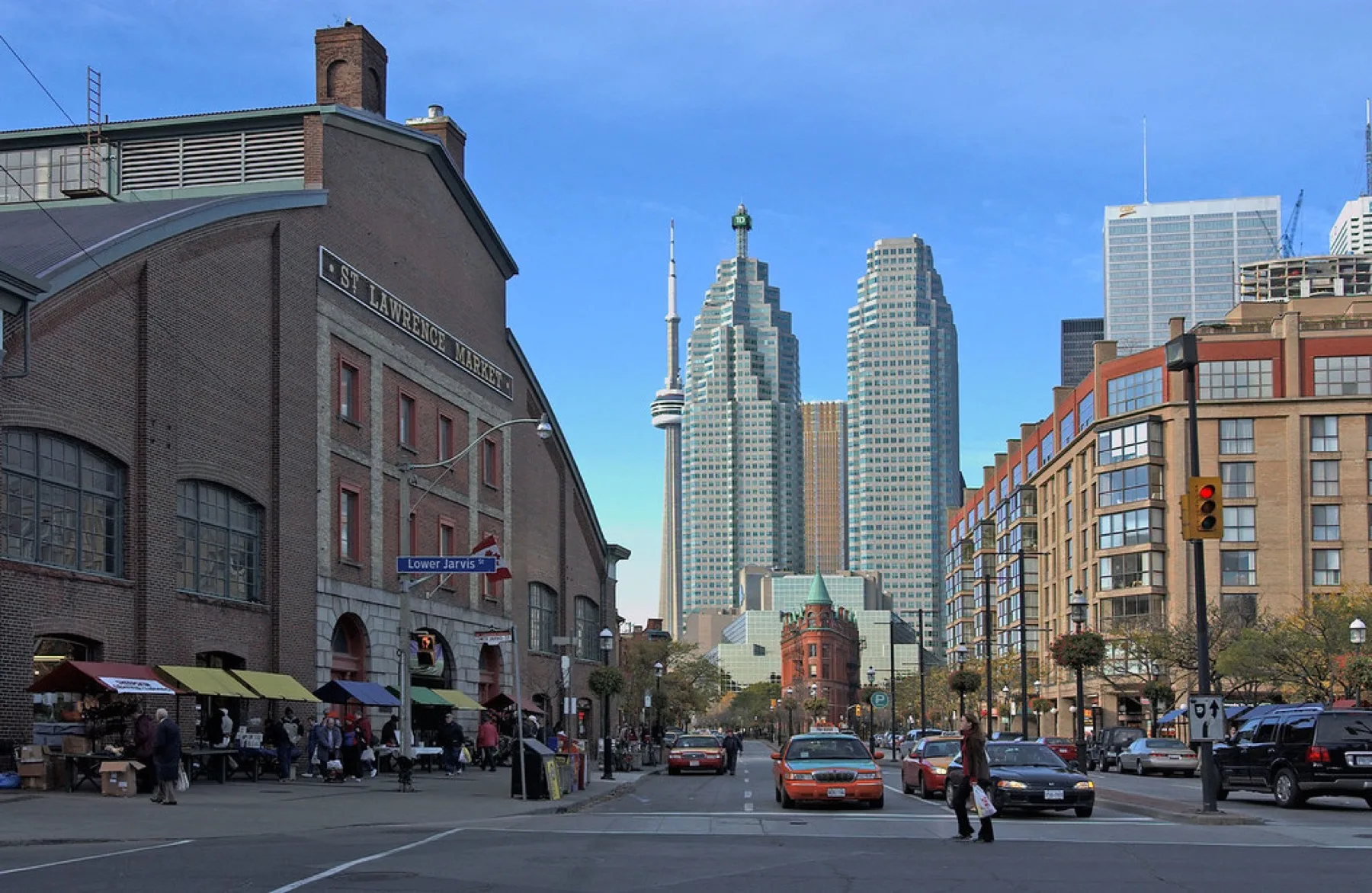
Toronto has real driving rules. Bad local habits do not replace them. A driver can still be ticketed for blocking an intersection, waiting in a no-parking area, speeding, cutting across a reserved lane or changing lanes without enough space.
The best Toronto driving style is calm and predictable. Read every sign. Expect people walking and cycling beside you. Stop for open streetcar doors. Do not let a horn push you into an unsafe turn.
This guide was checked on August 27, 2026. Ontario law controls most driving rules. Toronto bylaws control much of the parking, stopping and local street use.
It is a practical guide, not legal advice. Use the current Highway Traffic Act, official Ontario Driver's Handbook and City of Toronto parking rules when the exact wording matters.
The first thing to know: Toronto driving is not a contest
Toronto traffic can feel impatient. A driver may honk when you wait for a cyclist. Another may squeeze into a small gap or run a late yellow light.
You do not have to copy them.
A horn is a warning device. It is not an instruction to break a rule. If you cannot see that a turn or lane change is safe, wait.
Being predictable is more useful than being aggressive. Signal early. Hold your lane. Leave a safe gap. Make the move smoothly when the path is clear.
Quick rule table
| Situation | What to do |
|---|---|
| Right turn on red | Stop fully, check signs, yield to people and traffic, then turn only if clear |
| Left turn on red | Allowed only from a one-way road to a one-way road, after a full stop, unless a sign forbids it |
| Yellow light | Stop if you can do so safely. It is not a signal to speed up |
| Blocked intersection | Wait before the line unless you can clear the intersection |
| Lane change | Signal, check mirrors and blind spot, yield to traffic already in the lane |
| Stopped streetcar with passengers entering the road | Stop at least two metres behind its rear doors |
| Passing a cyclist | Leave at least one metre where practical and change lanes when possible |
| Pedestrian crossover | Stop and wait until the person has completely crossed and reached the sidewalk |
| No Parking | Only active passenger or merchandise loading and unloading is allowed |
| No Standing | Only receiving or dropping off passengers is allowed |
| No Stopping | Do not stop except for traffic, a signal or an officer's direction |
| Unsigned Toronto street | A three-hour maximum normally applies |
| Hand-held phone at a red light | Illegal, even while stopped in traffic |
| Emergency vehicle approaching | Clear the intersection, pull toward the nearest safe edge and stop |
1. Can you make a U-turn over a double yellow line in Toronto?
A double yellow line does not, by itself, answer the whole U-turn question in Ontario.
Section 143 of the Highway Traffic Act prohibits U-turns in several places. You cannot turn where traffic cannot see you for 150 metres on a curve. You cannot do it on or within 30 metres of a railway crossing. You cannot do it near the crest of a hill when visibility is blocked. You also cannot do it within 150 metres of a bridge, viaduct or tunnel when the view is obstructed.
A posted no-U-turn sign also controls the move.
That leaves some ordinary road locations where a U-turn can be legal. This surprises drivers from places where a double solid line creates a direct prohibition.
But “not automatically forbidden” does not mean “safe anywhere.” Other rules still apply. You must not interfere with traffic, make a careless movement, cross a protected lane buffer or ignore a sign. A collision can lead to fault, charges and higher insurance costs.
Our advice is simple. Do not make a U-turn on a busy Toronto main street merely because you found a technical opening in one section of the law. Turn onto a side street or go around the block. It is slower by a minute and easier for everyone to read.
Are yellow and white lines only suggestions?
No. That sentence is too loose to be useful.
Yellow lines generally separate traffic moving in opposite directions. White lines separate lanes moving in the same direction. Broken and solid patterns tell drivers where crossing is expected or discouraged.
The legal result can depend on more than paint. A sign, reserved-lane rule, HOV buffer, intersection rule or unsafe movement can create the offence.
Treat every solid line as a strong warning not to cross. Never use an online argument about the legal force of paint as a reason to make a risky move.
2. Does sitting in the car mean you are not parked?
No. Staying in the driver's seat does not create a free parking pass.
Toronto uses three different levels of restriction.
No Parking
You may actively load or unload passengers or merchandise. Waiting while a friend shops is not active loading. The engine, transmission and hazard lights do not change that.
No Standing
You may receive or discharge passengers. You cannot wait for a person who is still inside a building. Merchandise loading is not allowed.
No Stopping
You generally cannot stop at all. The exceptions are when traffic, a traffic signal or an officer requires you to stop.
A parking officer may tell a driver to move instead of issuing a notice. That is discretion, not a rule. The officer may also begin the ticket and mail it if the car leaves.
What do hazard lights do?
Hazard lights warn other road users that your vehicle is stopped or has a problem. They do not cancel a sign, create a loading zone or make a bike-lane stop legal.
If the spot is illegal without the blinking lights, it is still illegal with them.
3. Toronto has an unsigned three-hour parking limit
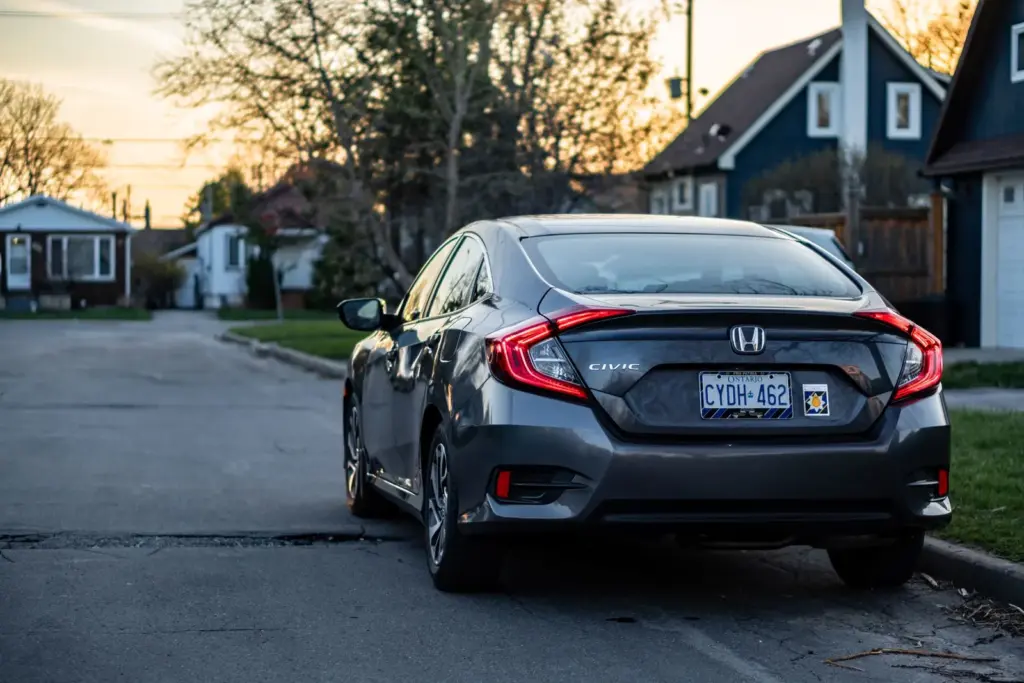
This catches visitors and residents.
On a Toronto public road, an unsigned maximum of three hours normally applies unless a sign creates another rule. A quiet street with no pay machine and no time-limit sign is not automatic all-day parking.
Signs can add tighter rules, including permit-only hours, rush-hour clearways, paid parking and shorter limits.
Read the entire pole. One sign may apply only from 7 a.m. to 9 a.m. Another may allow paid parking later. An arrow can show which side of the pole the rule covers.
Park at least three metres from a fire hydrant. Toronto measures from the point on the roadway directly in front of the hydrant, even when the hydrant is set back from the curb.
Residential parking permits can provide overnight access and exemptions from some time limits. They do not override no-stopping signs, hydrant space, sidewalks, fire routes or other safety rules.
Take a photo of the sign and your car's position. It can help you remember the rule and respond accurately if a ticket appears.
4. Do not block the intersection
If traffic on the other side is stopped and your vehicle will sit in the intersection, wait behind the stop line.
A green light gives permission to proceed only when there is room. It does not reserve a piece of the cross street for you.
Blocking the box harms several groups at once. Cross traffic cannot move. People walking lose a clear path. A streetcar or bus may be trapped through another light cycle. Emergency vehicles lose space.
Toronto's grid can make the choice hard. The lane ahead may look as if it will move, then stop. Leave a full vehicle space before entering.
The driver behind may honk. Ignore the horn. That driver will not pay your ticket or repair the collision.
What if you are turning?
Ontario's blocking-intersection provision allows municipalities to regulate the movement and contains a turning exception in its provincial wording. That is not permission to occupy a crosswalk or force through people.
Enter a left turn only when the movement is lawful and you can finish safely. Do not follow several other cars into a packed intersection just because the first car entered.
5. A yellow light means stop if you safely can
A yellow light warns that red is coming. Stop if you can do so safely. If you are too close to stop safely, continue with care.
It does not mean accelerate so three more cars can pass.
Running a late light is especially dangerous in Toronto because a person may begin crossing, a cyclist may enter from a bike signal or an opposing driver may complete a left turn.
Do not brake so violently that the car behind is certain to hit you when you are already at the line. The rule is based on whether a safe stop is possible.
6. Right turns on red are optional, not required
Unless a sign forbids it, Ontario allows a right turn on red after a complete stop and after the driver yields to every person and vehicle with the right of way.
The safe order is:
- Stop behind the marked line or crosswalk.
- Check for a no-right-on-red sign and its hours.
- Look for people crossing from both sides.
- Check the right mirror and blind spot for a cyclist.
- Look left for traffic.
- Turn into the correct lane only when the full path is clear.
You do not have to turn. If a truck blocks your view or people are still crossing, wait for green.
Do not roll through the crosswalk while looking only left. That movement is one of the easiest ways to hit a person approaching from the right.
Can you turn left on red?
Yes, but only in a narrow situation. You may turn left from a one-way road onto another one-way road after a complete stop, if no sign forbids the turn and the path is clear.
At an ordinary two-way intersection, a red light does not permit a left turn.
7. Pedestrians have priority in your turning path
A driver turning left or right must yield to people crossing the road the driver is entering.
Not every crosswalk has painted stripes. The path connecting sidewalks across an intersection can still be a crosswalk.
Never use the car to hurry a person. Stay out of the crosswalk and give slower walkers time.
At a pedestrian crossover, the rule is stronger and very clear. Drivers and cyclists must stop and wait until the pedestrian has completely crossed and is safely on the sidewalk. Do not pass another vehicle within 30 metres of the crossover.
A crossing guard controls the whole roadway. Wait until the guard and pedestrians are safely off the road.
If another driver honks while you wait, keep waiting.
8. How to drive beside Toronto cyclists
Cyclists may use more of a lane when the curb is unsafe, the lane is too narrow to share, a door may open or streetcar tracks create danger.
Do not treat the edge of the lane as a command that traps a cyclist there.
When passing, Ontario requires at least one metre between the motor vehicle and cyclist where practical. Change lanes when possible. Do not squeeze through because oncoming traffic makes a full pass inconvenient.
Turning across a bike lane
Signal early. Check the mirror. Then check the blind spot over your right shoulder.
A cyclist travelling straight beside you may have the right of way. Wait for the cyclist to pass before crossing the bike lane.
Some intersections use dashed bike-lane markings through the turning area. Others have bike signals, protected corners or no-right-on-red signs. Follow the exact design in front of you.
Bike boxes
A bike box is the marked space ahead of the motor-vehicle stop line. Stop behind it. Do not fill it while waiting for the light.
Opening a car door
Check the mirror and blind spot before opening a door into traffic. Use your far hand to open the driver's door. This turns your body toward approaching cyclists and is often called the Dutch reach.
Passengers need the same reminder. A stopped ride-hail car can still door someone.
9. Streetcars create one Toronto rule visitors cannot miss
.jpg)
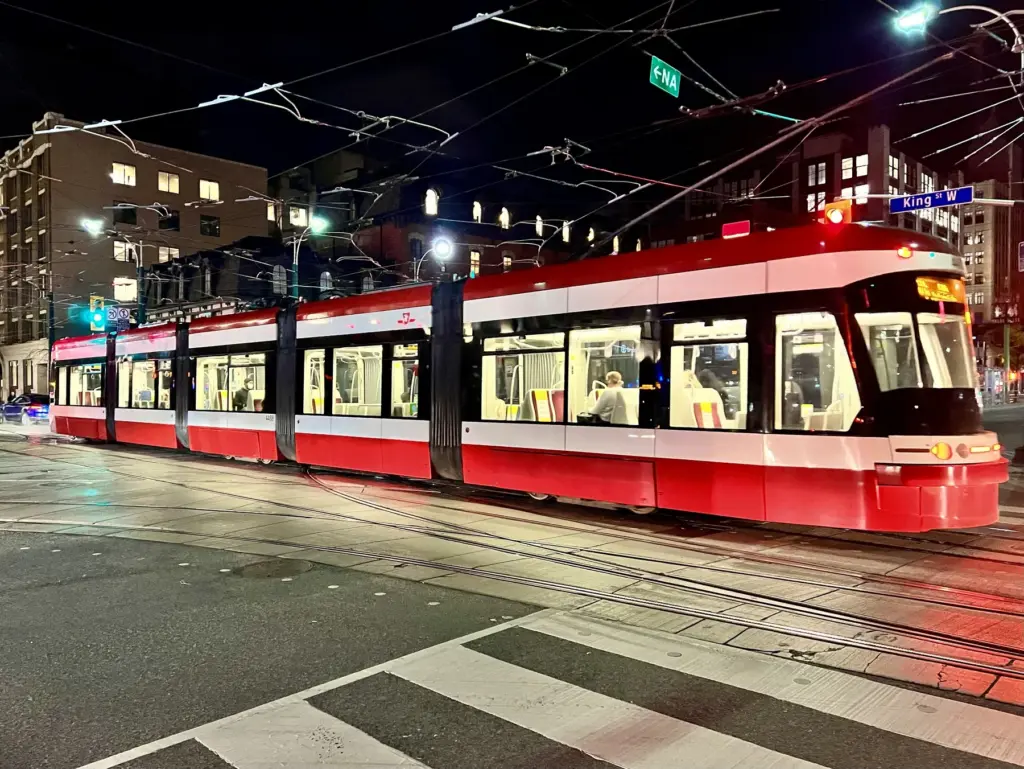
Many Toronto streetcar stops require passengers to step directly into a traffic lane.
When a streetcar stops and opens doors for passengers, stop at least two metres behind the rear doors. Wait until passengers have boarded or reached the sidewalk and the doors close.
The rule is different when the stop has a protected safety island. In that case, passengers have a dedicated area. Pass slowly and watch for unexpected movement.
You normally pass a streetcar on the right. A one-way road can create an exception.
The simple visual cue is the door. If it opens into your lane, stop. Do not race past a person stepping down.
10. Transit and reserved lanes are controlled by signs
Toronto has several kinds of reserved lanes. Their rules are not identical.
A lane may be reserved for buses and streetcars all day. Another may be restricted only during the morning and afternoon rush. A curb lane may allow a driver to enter shortly before a right turn. Some provincial HOV lanes require two people or an eligible vehicle and allow entry only at marked gaps.
Read the sign before entering. Look for:
- permitted vehicles
- active days and hours
- minimum number of occupants
- whether right turns are allowed
- where the solid or striped buffer opens
Do not assume a nearly empty lane is free to use. Its emptiness is often the point.
On provincial HOV lanes, qualifying vehicles normally need at least two people, including the driver. Some vehicle types have exemptions. Enter and exit only at designated broken-line openings. Crossing the striped buffer is illegal and unsafe.
11. A turn signal does not give you the lane
The driver changing lanes must make sure the movement can be completed safely.
Use this order:
- Check mirrors.
- Find a real gap.
- Signal early enough to be understood.
- Check the blind spot.
- Match the new lane's speed without exceeding the limit.
- Move smoothly.
- Cancel the signal.
A signal communicates intent. It does not force the other driver to brake hard.
The driver already in the lane should not speed up to close a reasonable gap. Leave space when it is safe. Courtesy makes traffic work.
But do not make a dangerous stop to be polite. A sudden wave can also hide a cyclist or a second lane of traffic. Follow right-of-way rules instead of inventing a private one.
What should happen when a lane ends?
Use both lanes while they are open. Merge near the end when safe, one vehicle at a time. This is commonly called a zipper merge.
Do not block the open lane to police other drivers. Do not force into a gap that is not there.
12. Weaving at high speed can become stunt driving
The posted speed limit is the maximum in good conditions. It is not a target in snow, heavy rain or stopped traffic.
Drivers who repeatedly change lanes at high speed and weave through traffic can meet Ontario's definition of stunt driving or street racing. The roadside consequences can include an immediate 30-day licence suspension and 14-day vehicle impoundment. A conviction can bring larger fines, demerit points and a longer suspension.
Driving 150 kilometres per hour or more can trigger stunt-driving charges anywhere in Ontario. Other speed thresholds and aggressive acts can also qualify.
Do not assume the flow of traffic cancels the limit. If surrounding cars are speeding, move safely to a suitable lane and hold a legal speed. Do not camp in a passing lane when you can move right safely, but do not speed because another driver tailgates you.
The 401 is a provincial 400-series highway, not a Toronto street. Ontario Provincial Police handle collisions and enforcement there. City roads and the municipal expressways have different responsible authorities, but the posted signs still control your speed.
13. Stop signs require an actual stop
Stop behind the line. If there is no line, stop at the crosswalk. If there is no crosswalk, stop at the edge of the intersection.
At an all-way stop, the first vehicle to stop is usually the first to go. When two arrive together, the driver on the left yields to the driver on the right.
A left-turning driver also yields to an opposing vehicle going straight or turning right.
Eye contact can help, but it does not change right of way. If the order becomes unclear, slow down. Do not race to prove that your interpretation was correct.
14. School buses and crossing guards need a full stop
When a school bus has red overhead lights flashing or its stop arm extended, traffic in both directions must stop. On a road with a median strip, only traffic approaching from behind the bus must stop.
If you are behind the bus, stop at least 20 metres away. Do not move until the bus starts moving, the red lights stop and the arm closes.
Amber bus lights mean the bus is preparing to stop. Slow down and prepare.
At a school crossing, wait until the crossing guard and everyone crossing have reached the sidewalk.
15. Move for emergency vehicles, but do it calmly
When an emergency vehicle approaches with red or red-and-blue lights, a siren or bell, clear the way and stop.
Move as near as practical to the right edge on a normal two-way road. On a one-way road or a divided road with more than two lanes, move to the nearest safe edge.
If you are already in an intersection, continue straight through when safe. Then pull over. Do not make the turn that could put you into the emergency vehicle's path.
Do not stop on a highway shoulder when an approaching emergency vehicle may need it.
For a stopped emergency vehicle or tow truck with warning lights, slow down. Move over one lane when it is safe and possible.
16. A hand-held phone is illegal at a red light
Ontario's distracted-driving rule still applies when you are stopped in traffic or at a red light.
Do not hold a phone, type a message, choose a playlist or program a hand-held GPS. Set the route before moving.
A secure mounted device and hands-free functions have limited permitted uses. The safest plan is voice control or pulling into a legal parking spot.
Eating, drinking or grooming is not named in the hand-held-device rule. It can still lead to careless or dangerous driving if it affects control.
17. What visitors need before driving in Toronto
A visitor staying in Ontario for less than three months may drive with a valid licence from their home province, state or country.
You must be at least 16. You also need proper insurance and the vehicle ownership permit.
If visiting from another country for more than three months, Ontario says you need an International Driving Permit from your home country together with your valid licence.
Before taking a rental car, check:
- whether your licence is accepted by the rental company
- insurance and deductible details
- toll-road charges and the rental company's admin fee
- who may drive the vehicle
- winter tire type
- fuel or charging return rules
- where the vehicle can legally park overnight
Ontario drives on the right. Speed signs use kilometres per hour. Fuel is sold by the litre. Distances are shown in kilometres.
18. What to do after a collision in Toronto
First, check for injuries. Call 911 for a serious injury, immediate danger, suspected impaired driving or other evidence of a crime.
If the vehicles can move safely, clear the live lane. Moving a drivable vehicle does not automatically destroy the investigation.
Exchange:
- full names and contact information
- driver's licence details
- licence plate and vehicle description
- insurance company and policy details
- vehicle ownership information
Take wide scene photos, close damage photos and pictures of signs or signals. Record witness contact details.
Toronto Police says a collision must be reported when someone is injured, combined damage appears to exceed $5,000 or public or private property is damaged. A collision on a 400-series highway goes to the Ontario Provincial Police.
For a reportable collision that does not need an officer at the scene, use a Collision Reporting Centre as soon as possible. Start with the current Toronto Police instructions because locations and hours can change.
Call your insurer promptly. Ontario consumer guidance says to report to the insurer within seven days, or as soon as possible after that.
Does breaking a rule automatically cancel insurance?
No. That is too broad.
Police charges, insurance fault and policy coverage are related but separate questions. Ontario insurers use fault-determination rules for many collision patterns. Coverage also depends on the policy.
A traffic violation can hurt the driver and affect premiums. It does not mean every claim is automatically denied. Give the insurer accurate facts and ask how the policy applies.
19. Road habits you should never copy
You may see all of these in Toronto. None is a reason to join in.
- entering a full intersection on green
- rolling through a red before turning
- crossing a bike lane without a shoulder check
- stopping in a bike or transit lane with hazard lights
- passing open streetcar doors
- weaving because another car is below your preferred speed
- driving into a small lane-change gap and expecting others to fix it
- following a fire truck closely
- using a phone while stopped at a light
- honking at a driver who is yielding to a person
Enforcement is not what makes a rule valid. A collision, automated camera, parking officer or insurance review can arrive after years of getting away with the habit.
A calmer way to drive downtown
The hardest part of Toronto driving is the number of decisions packed into a short distance.
A single block can include a streetcar stop, delivery truck, bike lane, ride-hail pickup, construction sign and person crossing late.
Reduce the load:
- set navigation before moving
- choose the lane early
- read signs from top to bottom
- leave a larger gap than the impatient driver behind wants
- expect the curb lane to change purpose by time of day
- look over your shoulder before every turn across a bike lane
- go around the block instead of forcing a missed turn
- use a legal garage when street parking feels confusing
Missing a turn costs a few minutes. A rushed correction can cost far more.
Frequently asked questions
Can you turn right on a red light in Toronto?
Yes, unless a sign forbids it. Come to a complete stop first, then yield to pedestrians, cyclists and traffic before turning. You are never required to turn on red.
Are U-turns legal in Toronto?
Some are. Ontario prohibits U-turns near obstructed curves, hill crests, railway crossings, bridges, viaducts and tunnels, and signs can ban them. A double yellow line alone is not the only test, but the move must still be safe and lawful.
Can I wait in a no-parking area if I stay in the car?
No. In a no-parking area, only active loading or unloading of passengers or merchandise is allowed. Sitting in the car or using hazard lights does not create an exception.
How long can I park on an unsigned Toronto street?
The normal unsigned maximum is three hours. Signs, permits, meters, rush-hour rules and other restrictions can create a shorter or different limit.
What do I do when a Toronto streetcar opens its doors?
If passengers step into the traffic lane, stop at least two metres behind the streetcar's rear doors. Wait until everyone has boarded or reached the sidewalk and the doors have closed.
Who has the right of way when a car changes lanes?
Traffic already in the lane has the right of way. The changing driver must signal, check the blind spot and wait for a safe gap. A turn signal does not give ownership of the lane.
Can I use my phone while stopped at a red light in Ontario?
No. Ontario's hand-held-device law applies while stopped in traffic and at a red light. Pull into a legal parking spot before holding or programming the phone.
When must I report a Toronto car collision?
Report it when someone is injured, combined damage appears higher than $5,000 or property is damaged. Call 911 for serious injuries or criminal concerns. Use current Toronto Police instructions for other reportable collisions.
The bottom line
Toronto's rules are not mysterious. The street is crowded, so the cost of a selfish shortcut is high.
Stop fully. Leave the crosswalk clear. Wait behind streetcar doors. Check twice for cyclists. Let a missed turn go. The best Toronto driver is not the person who wins one car length. It is the person everyone else can safely predict.