


Sometimes, but not always. Toronto does not have a blanket rule that bans an individual from filming people who are visible in public. That does not make every smart-glasses recording lawful.
The place, audio, focus, purpose and later use all matter. A wide street scene is different from secretly following one woman. A family video in a park is different from filming inside a washroom. A private memory is different from using a worker's face to promote a paid account.
This guide explains the practical boundaries. It also tells you what to do if a camera in someone's glasses makes you feel unsafe.
<div class="lit-quick-picks">
The quick answer
- On a public sidewalk: Ordinary personal filming is often allowed, but targeted conduct can still create legal problems.
- In a washroom or change room: Treat recording as a serious privacy and safety concern. Leave the area and tell staff.
- Inside a store, gym or theatre: The operator can set a no-recording rule and can direct a person to stop or leave.
- During a private conversation: Canada's “one-party consent” rule is not permission for a stranger to record other people's private talk.
- At work or school: Policy, confidentiality, privacy duties and professional rules can be stricter than the general rule on a sidewalk.
- If someone follows or threatens you: Move to safety, ask for help and document the pattern. Recording does not excuse harassment.
- If an intimate or voyeuristic video is posted: Save the link and report it quickly. Police and legal help may be appropriate.
</div>
Why smart glasses feel different from a phone
A phone usually gives a clear clue. The person lifts it, points a lens and looks at a screen.
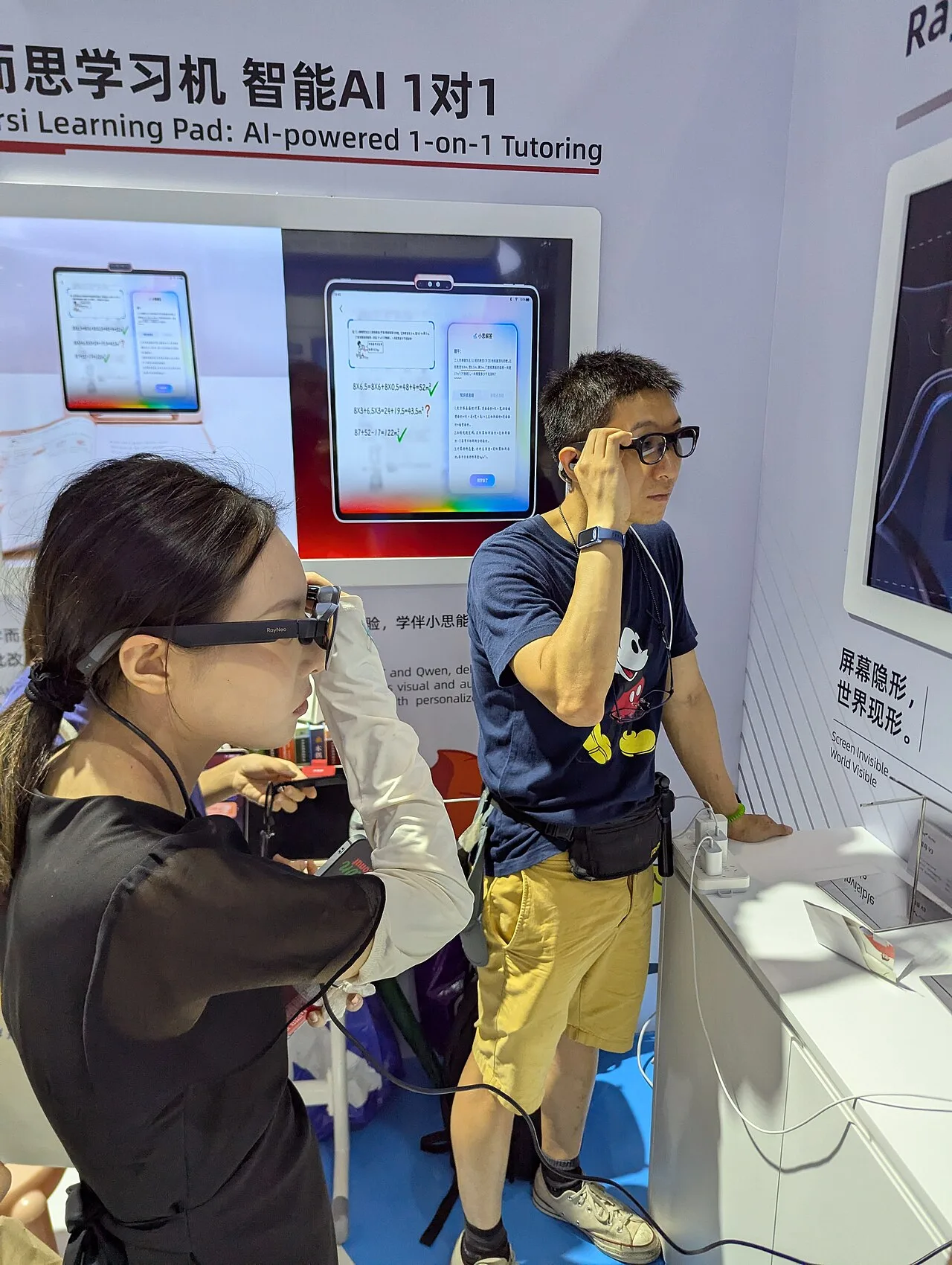
Smart glasses can look like normal eyewear. The wearer can face you while keeping both hands free. You may not know where the camera points or whether it is saving video, streaming or using an AI feature.
Some current devices use a recording light. Meta says its AI glasses turn on notification and capture LEDs when taking a photo, recording or streaming. It also says the glasses stop capture if the outside light is covered.
That helps, but it does not solve the social problem.
The light is small. A person may not recognize it. Bright sun, distance or a busy room can make it easy to miss. Other brands may work differently. A modified device may not follow the maker's design.
Most important, a light is not consent. It only signals that the device may be capturing something.
Is it legal to film people in public in Toronto?

There is no simple yes or no.
An individual taking an ordinary personal photo or video in a public place is not automatically breaking a law because another person appears in it. Toronto streets, parks and transit can be photographed.
But “in public” is only one fact. Ask six more questions:
- Is the person a background figure or the chosen target?
- Is the recording wide and ordinary, or focused on a body area or private act?
- Does it capture a private conversation?
- Is the wearer following, threatening or provoking someone?
- Is the place privately owned and subject to a no-recording rule?
- Will the recording be used by a business, employer or monetized creator?
The answers can move the situation from normal photography to a policy breach, privacy complaint, civil dispute or criminal investigation.
Public does not mean “no privacy at all”
Canada's Supreme Court has rejected the idea that privacy disappears as soon as other people can see you.
In the 2019 case R. v. Jarvis, a teacher secretly recorded female high school students with a concealed camera. The students were in common school areas, not private bedrooms or locked stalls. The recordings focused on their faces, upper bodies and breasts.
The Court said a reasonable expectation of privacy depends on the full context. Relevant facts can include:
- the location
- whether recording was open or secret
- what the camera focused on
- how long it recorded
- whether the person knew
- rules governing the space
- the relationship between the people
- the purpose of the recording
- the person's age and other personal traits
The Court also recognized a normal difference. People expect that they may appear by chance in a tourist photo, a city scene, news coverage or visible security footage. They do not therefore agree to secret, targeted recording of intimate body areas.
That difference is one of the best ways to think about smart glasses.
When can smart-glasses recording become a crime?
An unwanted recording is not automatically criminal. These are the serious lines to know.
Voyeurism
Section 162 of the Criminal Code deals with secret observation or visual recording when a person has a reasonable expectation of privacy and one of the law's added conditions is met.
Those conditions cover situations where a person could reasonably be expected to be nude, expose intimate areas or engage in explicit sexual activity. The section also covers certain recordings of a person who is nude or engaged in that activity, and secret recording done for a sexual purpose.
This can apply to a camera hidden in glasses. The device shape does not create an exception.
Washroom stalls, showers, changing areas and intimate care settings demand special caution. Even near a sink or entrance, the exact angle, focus, purpose and nearby private areas matter. Do not try to decide the full legal case while standing there. Leave, tell the operator and preserve the details.
The Criminal Code also addresses publishing, copying or distributing a recording when the person knows it came from the voyeurism offence.
Non-consensual intimate images
Section 162.1 deals with knowingly sharing or making an intimate image available without consent, or being reckless about consent, when the image meets the legal definition.
The fact that an image began as a consensual recording does not mean it can always be posted. Consent to make an intimate image and consent to share it are different.
If this happens, save the post URL, account name, date and screenshots. Do not forward the image to curious friends. Re-sharing can increase the harm.
Criminal harassment
A person cannot turn repeated following or threatening behaviour into harmless conduct by holding a camera.
Criminal harassment can include repeatedly following someone, repeatedly communicating, watching a person's home or workplace, or threatening conduct. Other legal conditions must also be met, including the safety impact set by the current law.
One rude clip on a sidewalk is not automatically criminal harassment. A repeated pattern can be very different.
The Criminal Code changed in 2026 and some amendments have their own in-force dates. Get current advice if the conduct is serious.
What does “one-party consent” really mean in Canada?
It does not mean one random person in the room can consent for everyone.
The Criminal Code generally prohibits knowingly intercepting a private communication with a device. An exception can apply when the originator or an intended recipient consents. Section 183.1 says one originator or intended recipient can provide sufficient consent for this part of the law.
In plain words, a person taking part in a private conversation can often record that conversation without telling the other participant. A stranger at the next table is not automatically a party to your private talk.
Audio from smart glasses can make the issue harder because the microphones may collect more than the wearer intended.
Do not rely on the phrase “one-party consent” alone. Ask:
- Was this a private communication?
- Who started it?
- Who was meant to receive it?
- Was the recorder one of those people?
- Was consent express or implied?
- Did a workplace, school, professional or court rule also apply?
Video and audio can raise different questions in the same file. A person may have a Criminal Code argument for recording their own conversation, yet still breach an employment policy, confidentiality promise or privacy duty by saving or sharing the video.
A simple location guide
| Place or situation | Practical starting point | What can change the answer |
|---|---|---|
| Public sidewalk or park | Incidental personal filming is often allowed | Targeting, audio, harassment, intimate focus or commercial use |
| TTC public area | Personal non-commercial filming is generally welcomed if safe | Commercial purpose, rush hour, equipment, interference and staff direction |
| Store or cafe | Ask the business to enforce its policy | Private-property rules, staff safety, commercial use and refusal to leave |
| Gym floor | Follow the gym's recording policy | Other members in frame, changing areas, membership contract and harassment |
| Washroom, shower or change room | Do not record | Strong privacy expectations, voyeurism risk and operator policy |
| Classroom or school activity | Permission and school rules matter | Minors, staff duties, education privacy law and board policy |
| Workplace | Employer policy and the reason for recording matter | Confidentiality, customer data, audio, employment duties and privacy law |
| Medical visit or care setting | Ask before recording | Personal health information, other patients, professional rules and safety |
| Private home | The resident can set conditions for entry | Audio consent, secret recording, intimate areas and civil privacy claims |
This table is a starting point. It is not a verdict on a specific event.
Can a store, cafe or gym ban camera glasses?
Yes, a private property operator can set reasonable rules about recording and access.
A place can allow customers in while still banning photography, live streaming or camera use. Staff can tell a person to stop. An occupier can also direct a person to leave. Refusing to follow a lawful direction can create a trespass issue.
The safest policy is based on camera use, not a guess about a person's character. It should say where recording is banned, how staff explain the rule and what happens if someone refuses.
Gyms need especially clear lines. A wide workout clip can still capture another member. Any camera use in a change room, shower or washroom should trigger an immediate staff response.
Accessibility matters too. Smart glasses can offer navigation, description, reading or communication features. Staff should not assume that every wearer is recording. Ask a direct question about camera use and offer a reasonable way to keep the non-camera function when possible.
What are the smart-glasses rules on the TTC?
The TTC currently welcomes personal, non-commercial photography and filming in public areas when it does not interfere with operations or customer safety.
That is not permission to do anything with a camera. TTC guidance restricts rush-hour filming. Tripods and flash are not allowed at platform level. Commercial camera use requires authorization under TTC By-law No. 1.
Do not block a doorway, stand beyond a safety line or provoke a rider for content. A permitted camera does not excuse unsafe or harassing behaviour.
The TTC's own security cameras are a poor comparison with a personal wearable camera. TTC surveillance has a stated safety and security purpose. It is governed by public-sector privacy rules, notices, controlled access, security and retention policy.
A rider's smart glasses do not gain those controls because another camera is already on the vehicle.
What if a worker is recorded for social media?
Service workers are in a difficult position. They may be expected to stay polite while a customer tries to provoke an angry clip.
The employer should not leave the worker to solve this alone. A useful workplace policy should cover:
- whether customers may record
- when staff should call a manager or security
- where a worker can move out of view
- what to do when a customer refuses to stop
- how to preserve a post or account link
- how the employer will respond if the worker is named or threatened online
If you are the worker, use a short sentence: “I do not consent to being used in your video. Please stop recording me. I am getting my manager.”
Do not argue for ten minutes on camera. Move to the policy and the next responsible person.
If the content promotes a paid account, service or business, privacy law may matter. PIPEDA applies to many organizations that handle identifiable personal information during commercial activity. Consent, reasonable purpose, limited use, safeguards and a complaint process can all be relevant.
The line is not always simple for a creator. Personal use, commercial use, journalism, art and mixed-purpose social accounts can be treated differently. A monetized page is not automatically safe or automatically unlawful. The facts matter.
Can an employer record workers with smart glasses?
An employer should not treat wearable recording as an invisible shortcut around policy.
Ontario employers with at least 25 employees on January 1 must have a written electronic-monitoring policy for that year. It must say whether monitoring occurs, how and when it occurs, and why the information may be used.
That law is mainly about transparency. Ontario says it does not create a new right for employees not to be monitored.
Other rules may still matter. A federally regulated employer may have PIPEDA duties over employee information. A health, school or public-sector workplace may have different privacy law. A union agreement, professional code or workplace policy can add protection.
An employee wearing camera glasses can also expose customer screens, private meetings, health information, trade secrets and co-workers. Employers should set a rule before a problem occurs.
What about schools and children?

Children do not lose privacy because a hallway has other people in it.
Age was an important factor in R. v. Jarvis. The Supreme Court said young people reasonably expect adults around them to be especially careful about targeted recording.
TDSB guidance says personal devices must respect the rights of others and not disrupt learning. Its staff social-media procedure requires the proper permission before identifiable student information or images are shared. It also prohibits recording class sessions and school-community meetings without the applicable consent.
A school policy breach is not automatically a crime. It still gives the principal and board a reason to act.
If a student believes a teacher, visitor or other student is secretly recording, tell a trusted adult and the principal. Write down the time, room, people present and what the device did. Do not grab the glasses.
Parents should ask the school to preserve any hallway or classroom evidence before it is overwritten. Ask for the response in writing.
Can you sue over an unwanted recording?
Possibly, but not for every background appearance.
Ontario recognizes a civil claim called intrusion upon seclusion. It is narrow. The conduct must be intentional or reckless, lack lawful justification, invade private affairs or concerns and be highly offensive to a reasonable person, causing distress, humiliation or anguish.
A distant appearance in a street video will not usually match that description. Secretly recording a deeply private matter may be different.
Other civil issues may arise from false captions, breach of confidence, a contract, commercial use of a person's identity or repeated harassment. The right claim depends on the facts. Get legal advice before sending threats or filing anything.
What to do if you think smart glasses are recording you
Start with safety, not a legal debate.
1. Create distance
Move beside staff, friends or other people. Leave a washroom or isolated area. If the person follows, move toward a staffed and visible place.
2. Ask one clear question
If it feels safe, say: “Are those glasses recording me?”
Then say what you want: “Please stop recording me and do not post me.”
They may deny it. You do not need to prove the whole case in that moment.
3. Use the rules of the place
Tell a manager, security guard, transit employee, teacher or workplace supervisor. Ask them to state the policy and record the complaint.
On private property, staff may be able to direct the wearer to stop or leave.
4. Save facts without escalating
Write down:
- time and exact place
- the person's description
- the glasses and any visible light
- what the person said
- where they moved
- witness names
- account name, post URL or video link
- staff member who received the complaint
A photo of the situation may help if it is lawful and safe. Do not follow the person, block them, search their phone or take the glasses.
5. Choose the right reporting path
For an ordinary unwanted public video, start with the property operator or platform.
For business use of your identifiable image, contact the organization's privacy officer. If PIPEDA applies and the issue is not resolved, the Office of the Privacy Commissioner of Canada has a complaint process.
For a school or public institution, use its privacy office and formal complaint route.
For suspected voyeurism, intimate images, repeated following, threats or immediate danger, police may be appropriate. Call 911 for an emergency. Toronto Police lists 416-808-2222 for non-emergency calls.
Do not assume the online police form covers every recording complaint. Call the non-emergency line and ask how to report it.
If the video is already online
Preserve evidence before asking for removal.
Save the full URL, username, profile link, date, caption, comments and view count. Take screenshots that show context. If possible, save the platform's report confirmation number.
Then report the post under the closest accurate category. That may be privacy, harassment, sexual content, non-consensual intimate imagery, impersonation or child safety.
Contact the person only if it feels safe. Keep the request short and in writing. For example: “I am the person shown at 00:18. I did not consent to this use. Remove the post and any copies you control.”
Do not argue in the public comments. That can drive attention to the clip and give the account more material.
If a business controls the account, send the request to its privacy contact too. Ask what it collected, why, where it was shared and whether copies remain.
How a responsible wearer should use smart glasses
The respectful rule is simple. Make the camera obvious before another person becomes the subject.
Tell people when recording starts. Ask before recording a direct conversation. Point out the indicator light. Stop when someone says no.
Turn camera functions off before entering:
- a washroom or change room
- a medical or counselling room
- a school activity without permission
- a private meeting
- a person's home without agreement
- a workplace area containing confidential information
Avoid constant capture. Record the moment you need, then stop. Delete accidental footage of private material.
Do not use camera glasses to bait workers, flirt with strangers for hidden content, rate people's bodies or test how long you can follow someone before they react.
If the glasses are used for accessibility, explain the active feature when practical. A sentence such as “The camera is off. I am using audio navigation” can reduce fear without forcing a person to disclose private medical details.
If someone asks whether you are recording and you are not, answer calmly. You may choose to show the recording status in the companion app, but nobody has a general right to search your phone.
Smart glasses are not the whole problem
The real issue is not the frame on a person's face. It is hidden capture, power and later use.
A small wearable camera makes it easier to record a person while maintaining eye contact. Social platforms make it easy to publish the clip before the person knows it exists. Captions can remove context. Search and AI tools can make an old clip easier to find.
That is why “cameras are already everywhere” is not a complete answer. A security camera with a fixed purpose is not the same as a stranger targeting one worker for entertainment.
The law sets a floor. Good Toronto manners should be higher.
Frequently asked questions
Is it legal to record someone in public in Toronto?
Ordinary personal filming in a public place is not automatically illegal. The answer can change when the recording captures private audio, targets intimate body areas, forms part of harassment, breaks private-property rules or is used commercially. Context matters more than the device.
Do smart glasses have to show a recording light?
Current Meta AI glasses use capture and notification LEDs, according to Meta. Other brands and modified devices may differ, and Toronto does not have one simple rule that makes every wearable camera use the same light. A visible light is notice, not consent.
Can someone record my conversation without telling me in Ontario?
A participant in a private conversation can often rely on the Criminal Code consent exception to record it. A stranger cannot simply use “one-party consent” to intercept a private conversation between other people. Workplace, school, professional and civil rules may still apply.
Can a Toronto business tell someone to remove camera glasses?
A private business can set a no-recording rule and direct a person to stop or leave. It should ask about camera use and consider accessibility instead of assuming every wearer is recording. Refusing a lawful direction to leave can become a trespass issue.
Can I take or break smart glasses if I think they recorded me?
No. Grabbing or damaging the device can put you in danger and create a separate legal problem. Move away, involve staff, note the facts and use privacy, platform or police reporting routes that fit the situation.
Are smart glasses allowed on the TTC?
The TTC generally welcomes personal, non-commercial filming in public areas when it is safe and does not interfere with service. Commercial camera use requires authorization, and TTC rules restrict certain equipment and rush-hour filming. Harassment and unsafe conduct are not excused by the camera rule.
What should I do if someone records me in a washroom?
Leave the area and tell staff or security at once. Note the time, place, person and any account or post. Because washrooms carry strong privacy concerns and the facts may support a voyeurism investigation, contact police when appropriate.
Can I force a social platform to remove a video of me?
Removal is not automatic in every case. Save the evidence, use the platform's accurate privacy or harassment report and contact the account owner if safe. For commercial use, intimate content, threats or a serious privacy invasion, a privacy complaint, police report or legal advice may add another route.
The bottom line
Smart glasses do not create a free pass to record anyone, anywhere. They also are not illegal simply because they contain a camera.
Judge the conduct. Incidental public footage, direct recording, private audio, intimate spaces, harassment and commercial posting are different situations.
If you wear the glasses, make recording clear and ask first. If you are targeted, get safe, use the rules of the place and keep evidence. Privacy in Toronto still matters, even when a camera is small enough to hide in plain sight.