

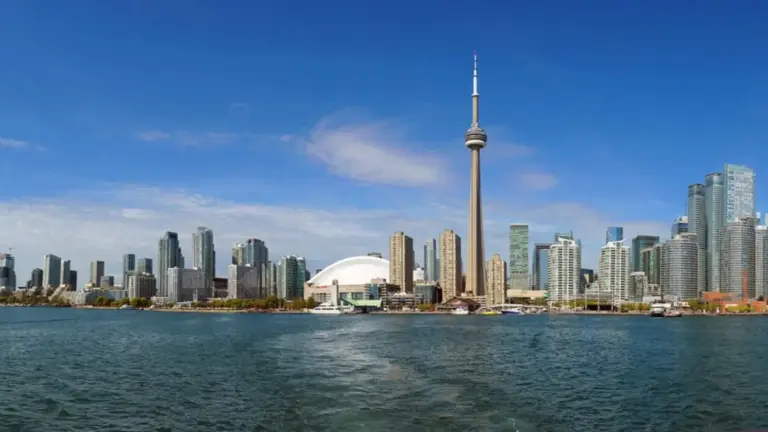

Toronto is usually better for a calmer daily life, more space between intense moments, access to Ontario health coverage when eligible, and an easier relationship with parks and neighbourhoods. New York City is usually better for career scale, late-night energy, cultural depth and public transit that keeps running all night.
Neither city is cheap. Neither is easy for everyone. The right choice depends on your legal right to work, income, health needs, career and tolerance for noise, pressure and winter.
Toronto vs New York at a glance
| Question | Toronto | New York City |
|---|---|---|
| Pace | Busy but easier to step away from | Fast, dense and intense |
| Career | Strong in finance, tech, health, film and services | Larger market and higher ceiling in many fields |
| Housing | Very expensive, with more low-rise areas inside the city | Extremely expensive, especially near Manhattan job centres |
| Transit | Useful network, but subway closes overnight | Much larger network with 24-hour subway service |
| Health care | OHIP for eligible residents, with wait and access limits | Insurance system tied to job, plan and personal cost |
| Green space | Ravines, waterfront and large parks are part of daily life | Excellent parks, but dense streets dominate more trips |
| Nightlife | Good, but many areas shut earlier | Deeper and later across more scenes |
| Social life | Polite and quieter, but friendship can take work | More direct, social and transactional at the same time |
Our short verdict
Choose Toronto if you want a major city that gives you room to recover. Choose New York if the city's scale is part of the opportunity you want.
Toronto often wins the ordinary week. New York often wins the extraordinary night.
That is an opinion, not a universal result. A high-paid New Yorker with good insurance may have an easier life than a low-paid Torontonian with a two-hour commute. A Canadian newcomer without U.S. work status cannot treat the cities as an equal choice.

Housing: both cities can hurt your budget
Toronto rent is high and home ownership is out of reach for many workers. CMHC's Toronto rental data shows that new purpose-built supply has helped vacancy, but it has not made Toronto cheap.
New York City is also under severe pressure. Manhattan asking rents are not a fair stand-in for all five boroughs, just as downtown condo rents do not represent all of Toronto. Compare the neighbourhoods that fit your real commute.
Look beyond advertised rent:
- Is heat included?
- Is laundry in the unit, building or down the street?
- Does the lease have legal rent rules?
- What deposit is allowed?
- How much does the commute cost?
- Do you need a broker or moving fee?
- Can your income and credit pass the application?
Add the cost of getting the apartment. In New York, a broker fee may apply to some rentals. In Toronto, a tenant may need first and last month's rent and moving-elevator bookings. Rules and market practices change, so use the written lease and current government guidance instead of a friend's old deal.
Then compare space honestly. Record bedroom size, storage, laundry, outdoor space, building age, cooling and the noise you hear at night. A cheaper apartment can become expensive when you need storage, a laundromat and frequent rides home.
Toronto can offer more quiet residential streets close to the core. New York can offer a more complete life without leaving one dense neighbourhood. Both can push a lower-income renter far from work.
Work and salary: New York has the larger stage
New York has greater scale in finance, media, fashion, arts, advertising, law and many corporate fields. That can mean more roles, higher U.S.-dollar salaries and more people doing very specific work.
The cost is competition. A high salary can disappear into rent, health insurance, tax and long hours. Work culture varies by employer, but New York often rewards speed and availability.
Toronto is a smaller market. It still has major finance, film, technology, health, education and professional-services sectors. It can be easier to build a cross-industry network because the same people and companies appear again.
Compare actual offers, not city averages. A U.S. salary and a Canadian salary use different currencies, taxes, benefits and health systems.
Build a one-page offer comparison:
| Item | Toronto offer | New York offer |
|---|---|---|
| Take-home pay in the currency you spend | ||
| Rent and required housing fees | ||
| Health premium, deductible and expected care | ||
| Transit and occasional car trips | ||
| Paid vacation and holidays | ||
| Retirement match or pension | ||
| Expected weekly hours | ||
| Trips home to family |
Do not convert the salary and stop. A higher number can buy a harder week. It can also create a career jump that is worth the cost. The table forces you to name the trade.
Work authorization comes first
A Canadian citizen cannot simply move to New York and start a job. A U.S. citizen cannot simply work in Toronto. Immigration status is a legal requirement, not a detail to solve after signing a lease.
Some professionals may qualify for work status under trade agreements. Others need employer sponsorship, family status, study permission or another route. Use U.S. Citizenship and Immigration Services and Immigration, Refugees and Citizenship Canada information. A forum post is not legal advice.
Do not accept cash work or misstate your role at the border. If your case is complex, speak with a qualified immigration lawyer licensed in the relevant country.
Status also affects the risk of losing a job. If permission is tied to one employer, a layoff can become an immigration deadline as well as an income problem. Ask what happens to work status, health coverage and a partner's permission before moving.
Health care: very different risks
Eligible Ontario residents can apply for OHIP, which covers many medically necessary hospital and doctor services. It does not cover every drug, dental service, eye exam, therapy or ambulance cost.
The hard part in Toronto can be access. Finding a family doctor and waiting for some specialists can take time. Provincial coverage is valuable, but it does not promise fast care.
New York has world-leading hospitals and specialists. Access depends heavily on insurance, network rules, deductibles, copayments and ability to pay. A strong employer plan can provide quick choices. Losing a job can also change your health coverage.
If you have a chronic condition, compare the exact doctors, drugs and plan terms before moving. This can matter more than rent.
Make a health file before the move. List prescriptions, doses, specialist names, expected appointments and the cost of care not covered by the public plan or private insurance. Ask how long your current medication supply can legally travel and how you will obtain the next refill.
Ontario coverage does not solve dental, therapy, routine vision or every medication bill. A U.S. insurance card does not guarantee that a preferred doctor or hospital is in network. Read the boring pages. They contain the expensive part.
Transit: New York wins size and overnight service
New York's subway runs 24 hours a day, though individual routes change during late-night maintenance. The network covers more ground and supports a culture where many people do not own a car.
Toronto's subway does not run all night. Blue Night buses and streetcars operate after the subway closes, usually every 30 minutes or better on designated routes. The TTC network is useful, but gaps, street traffic and construction can turn a short map distance into a long trip.
Toronto's streetcars make the city legible and pleasant when they move. New York's subway makes more late nights possible without planning the last train.
For either city, compare door-to-door trips at the hours you will actually travel. A home beside a map line can still have poor weekend service.
Run four trips from every apartment you seriously consider:
- Home to work on a weekday morning.
- Work to home after 10 p.m.
- Home to a close friend or partner.
- Home to the airport with luggage.
The best transit city can still give you the worse personal commute. A line change, long station walk or infrequent bus at the end matters more than the number of routes on a citywide map.

Walking and cycling
New York is a stronger walking city at a larger scale. Shops, food, services and people continue for block after block. The sidewalks feel like part of public life.
Toronto is easier to escape. Ravines, residential streets, the waterfront and large parks can appear close to dense areas. But wide roads, highway barriers and broken bike routes make some short trips unpleasant.
Cycling comfort depends on the exact neighbourhood in both cities. Do not choose based on one protected-lane photo. Trace the full route, including the dangerous intersection at the end.
Food: New York has scale, Toronto has range without as much ceremony
New York has more restaurants at nearly every level, including tiny specialist spots, late-night counters and institutions that shaped global food culture.
Toronto's strength is the ease of moving between cuisines shaped by Scarborough, North York, Etobicoke, the inner suburbs and nearby cities. Some of the best food is outside downtown and easier with a car or long transit ride.
New York wins depth and late hours. Toronto can offer very good food with less pressure to turn every meal into a scene.
The winner changes by cuisine. It also changes by budget after tax and tip.
New York's strength is that a narrow craving can have several specialists within the subway network. Toronto's strength often appears across the wider GTA, where excellent food may sit in a strip plaza with an awkward transit trip.
If food is central to the move, test the life around it. Can you reach the restaurants you value after work? Can you afford them regularly? A city with a longer list is not automatically better when your budget turns the list into screenshots.
Arts, music and nightlife
New York wins on volume. On one night, it can offer more theatre, jazz, dance, visual art, comedy and niche events than one person could track.
Toronto has a serious cultural life, including TIFF, major theatre, galleries, live music and festivals. The scene is smaller and sometimes easier to enter. You may see the same artist or organizer in several places and become part of a community faster.
Toronto nightlife often ends earlier or becomes concentrated in fewer districts. New York gives night people more choices after midnight.
If live music matters, see our Toronto live music venue guide. If you need 3 a.m. options every week, New York is the more natural fit.
Parks, water and quiet
New York has Central Park, Prospect Park, the Hudson River parks, beaches and many smaller green spaces. Its best parks are world-class.
Central Park map
Central Park, New York, NY 10024, United States
Prospect Park map
Prospect Park, Brooklyn, NY 11225, United States
Hudson River Park map
Hudson River Park, New York, NY 10014, United States
Toronto's advantage is how often nature cuts through the city. The ravine system, Toronto Islands, Tommy Thompson Park on the Leslie Street Spit, and the lakefront offer space that feels separate from the street grid.
Toronto Islands map
Toronto Islands, Toronto, ON
Tommy Thompson Park map
1 Leslie Street, Toronto, ON M4M 3M2
Toronto also makes it easier to live on a quiet residential block without leaving the central city. That quiet can feel peaceful or boring, depending on what you want.
Weather
Toronto has colder winters and more reliable snow. New York winters are generally milder, but wet cold, wind and sudden storms can still be unpleasant.
New York summers are often hotter and more humid. Toronto has humid heat too, with the lake sometimes cooling and sometimes adding dampness.
Weather is also about your trip. A ten-minute walk in snow can be easier than a delayed outdoor subway platform in freezing rain.
Cleanliness, noise and personal space
Toronto often feels cleaner and less intense. Streets can still have litter, construction, crowding and serious public-health problems.
New York is louder, denser and more physically close. Many people love the energy. Others find that constant input exhausting.
Do not turn this into a moral judgment about residents. Density, building age, sanitation systems, tourism, traffic and government services shape the experience.
Friendship and community
Toronto can feel polite but closed. People may be friendly at work and slow to invite someone into an established circle.
New Yorkers can seem blunt but helpful. The city also has many newcomers actively building networks. At the same time, ambitious schedules can make friendships feel planned weeks ahead.
Your best chance in either city is repeated contact. Join one class, volunteer shift, sports league, faith group, music scene or neighbourhood project. Friendship rarely arrives from choosing the right postal code.
The first year can feel different from the fifth. New York's density creates more invitations and more people passing through. Toronto's slower circles can take longer to enter but may become stable. These are patterns, not personality rules.
Ask where your repeated contact will happen. A building with shared space, a neighbourhood gym, a weekly class or friends within 30 minutes can matter more than a city's reputation for friendliness.
Taxes, benefits and the cost nobody posts in salary threads
Tax comparisons are not one simple percentage. Federal, provincial, state and city rules interact with income, deductions, family status and benefits. New York City residents can face city income tax. Ontario residents pay Canadian federal and provincial tax.
Do not use a generic calculator as a final answer for a cross-border move. Ask a qualified cross-border tax professional when stock, retirement accounts, rental property, self-employment or residency dates are involved.
Also compare what the tax and employer package buys. Parental leave, vacation, health insurance, disability coverage and retirement matching can move thousands of dollars. So can an unpaid waiting period between jobs.
Which city is easier for families?
Toronto often feels easier for a family that values quieter streets, parks and access to Ontario health coverage when eligible. New York can offer a remarkable car-free childhood, deep cultural access and neighbourhoods where daily needs are close.
The real decision is more local:
- Which public school can the child attend from the exact address?
- What does child care cost, and is a space actually available?
- Can a stroller reach the platform without carrying it on stairs?
- How long is the trip to grandparents or emergency support?
- Can the apartment hold the family for more than one year?
- What happens to health insurance during parental leave or a job change?
Do not move based on the citywide school reputation. Catchments, admissions and support services can change block by block.
Toronto versus New York for an ordinary weekday
Imagine Tuesday, not Saturday.
You wake up, travel to work, buy lunch, finish late, collect groceries, exercise and call family. Which city makes that sequence easier at your income and address?
New York may win because the subway, food and services remain available late. Toronto may win because the home is quieter, the commute simpler and the park or waterfront closer. A remote worker may care more about apartment space than office access. A performer may accept a smaller room to be near auditions and venues.
Write the weekday in hours and dollars. That is more useful than asking which skyline feels exciting.
Toronto is better for you if…
- you want a calmer major city
- you value ravines, lake access and quiet residential streets
- you are eligible for Ontario health coverage and do not want U.S. insurance risk
- your career has good Toronto opportunities
- you want city life without full intensity every day
- you already have Canadian status, family or community here
New York is better for you if…
- your field benefits from a much larger market
- you have legal U.S. work status
- you want 24-hour transit and late-night choices
- you accept smaller space for greater access
- culture and professional ambition are central to your daily life
- the salary and insurance in a real offer support the move
A decision checklist before moving
- Confirm work authorization in writing.
- Compare two real job offers after tax, currency and benefits.
- Price three realistic neighbourhoods in each city.
- Test the commute at rush hour and late night.
- Compare health coverage, doctors and prescriptions.
- Budget for moving, deposits, furniture and travel home.
- Visit for an ordinary week, not only a holiday weekend.
- Decide which city makes the life you want easier to repeat.
Frequently asked questions
Is Toronto cheaper than New York City?
Toronto is often cheaper than Manhattan, but both cities are expensive and neighbourhoods differ widely. Compare real rent, taxes, transit, health costs and salary in the currency you will earn.
Does Toronto have better health care than New York?
Toronto offers OHIP to eligible residents for many medically necessary services. New York can provide fast access through strong private insurance, but costs and networks matter. The better system for you depends on eligibility, plan and health needs.
Which city has better public transit?
New York has the larger network and 24-hour subway service. Toronto has a useful subway, streetcar and bus network, plus Blue Night service after the subway closes. New York wins overall coverage and late-night freedom.
Is Toronto safer than New York City?
City-wide labels hide large differences by neighbourhood, time and type of incident. Review current official crime data and your exact route. Feeling calmer is not the same as a complete safety measure.
Can a Canadian move to New York for work?
Only with appropriate U.S. work authorization or immigration status. A job offer alone may not be enough. Check official USCIS information and get qualified legal advice for a complex case.
Is New York better for a career?
New York offers more scale and a higher ceiling in many fields. Toronto may provide a better balance or stronger network in your specific sector. Compare actual roles, pay, hours, insurance and immigration risk.
Which city is better for families?
Toronto may feel easier for space, parks and Ontario health coverage. New York can offer excellent schools, culture and car-free life in the right neighbourhood. Child care, school eligibility and housing can change the answer quickly.
Which city is better without a car?
New York is generally easier without a car because its transit network is larger and runs all night. Many central Toronto neighbourhoods also support car-free life, but trips across the region can be slower.
The bottom line
Toronto is the better home when you want a large city with an off switch. New York is the better engine when you want scale and can afford the pressure. Choose the city that supports your real weekday, not the city that produces the better holiday photos.