



Toronto can feel like it is in a recession even when the official answer is not clear. Layoffs, empty storefronts, food bank use and rising debt are serious warning signs. But a quiet coffee shop or a long line for a free doughnut cannot prove that the whole city is in a recession.
The best answer is that Toronto's economy is mixed. The unemployment rate improved in the year to July 2026, while consumer insolvencies and food bank use remained painfully high. Some households are doing well. Many others are living through a personal recession right now.
This guide explains which Toronto recession signs matter, which ones can fool us and what to watch next.
The quick answer
- A recession is a broad fall in economic activity, not just one slow business or one expensive month.
- Toronto's unemployment rate was 6.7 per cent in July 2026. That was lower than the recent high of 9.0 per cent in July 2025.
- Toronto consumer insolvencies rose 8.1 per cent in the 12 months ending June 2026 compared with the previous 12 months.
- Toronto food banks recorded more than 4.1 million visits from April 2024 to March 2025. A visit is not the same as one unique person.
- Layoffs, fewer work hours and rising insolvencies are stronger signals than restaurant promotions or short lineups.
- Strong concerts, sports crowds and luxury spending do not prove that everyone is fine. A city can have wealth and hardship at the same time.
Our view is simple. Toronto does not need an official recession label before residents deserve to take the warning signs seriously.
What does recession actually mean?
A recession is a broad and lasting decline in economic activity. Economists look at production, jobs, income, spending and other measures.
People often use a shortcut of two straight quarters of falling real gross domestic product, or GDP. GDP is the value of the goods and services an economy produces. The shortcut can be useful, but it is not the only way to judge a downturn.
Toronto does not get a neat, real-time recession switch. Local information arrives at different times and measures different things. Some figures cover the City of Toronto. Others cover the larger Toronto census metropolitan area, which includes nearby municipalities.
This is why two people can argue about whether Toronto is in recession and both point to a real number.
Toronto's economy is giving mixed signals
The latest useful measures do not all point in the same direction.
| Toronto signal | Latest verified figure | What it tells us |
|---|---|---|
| Unemployment | 6.7% in July 2026 | Better than the 9.0% recent high in July 2025, but still painful for people looking for work |
| Consumer insolvencies | 22,488 in the 12 months ending June 2026 | Up 8.1% from the previous 12 months |
| Food bank use | 4,124,313 visits from April 2024 to March 2025 | Record pressure on household food budgets |
| Crowds and discretionary spending | Mixed by event, neighbourhood and income | Busy venues can exist beside deep hardship |
Statistics Canada reported that Toronto's unemployment rate was 6.7 per cent in July 2026. It was little changed that month, but down from 9.0 per cent one year earlier.
That improvement matters. It also does not mean every worker is safe. An unemployment rate can fall while one industry, age group or neighbourhood is still struggling.
The Office of the Superintendent of Bankruptcy recorded 22,488 Toronto consumer insolvencies over the four quarters ending in June 2026. That was 8.1 per cent more than in the previous four-quarter period.
An insolvency is a formal bankruptcy or consumer proposal. It appears late in a household's financial trouble. Many people cut food, delay bills or borrow for months before making a filing.
Daily Bread Food Bank and North York Harvest Food Bank recorded more than 4.1 million food bank visits in Toronto from April 2024 to March 2025. That was up 18 per cent in one year and 340 per cent since 2019.
These are visits, not 4.1 million different people. One household may visit more than once. Even with that limit, the growth is a clear sign of severe pressure.
The strongest everyday recession sign is layoffs
One laid-off friend is a personal tragedy, not a citywide data set. Several rounds of layoffs across different employers can be a meaningful warning.
Watch for a pattern:
- companies freeze hiring
- temporary contracts are not renewed
- new graduates apply for months without interviews
- workers lose hours before they lose jobs
- teams are told to focus on cost cutting instead of growth
- people take work far below their experience level
Official unemployment data can miss part of the experience. Someone who stops searching may no longer be counted as unemployed. A person who gets five hours of work a week is employed, even if they need a full-time job.
Look at unemployment together with employment, hours worked, job vacancies and wage growth. One number never tells the full story.
Empty storefronts need context
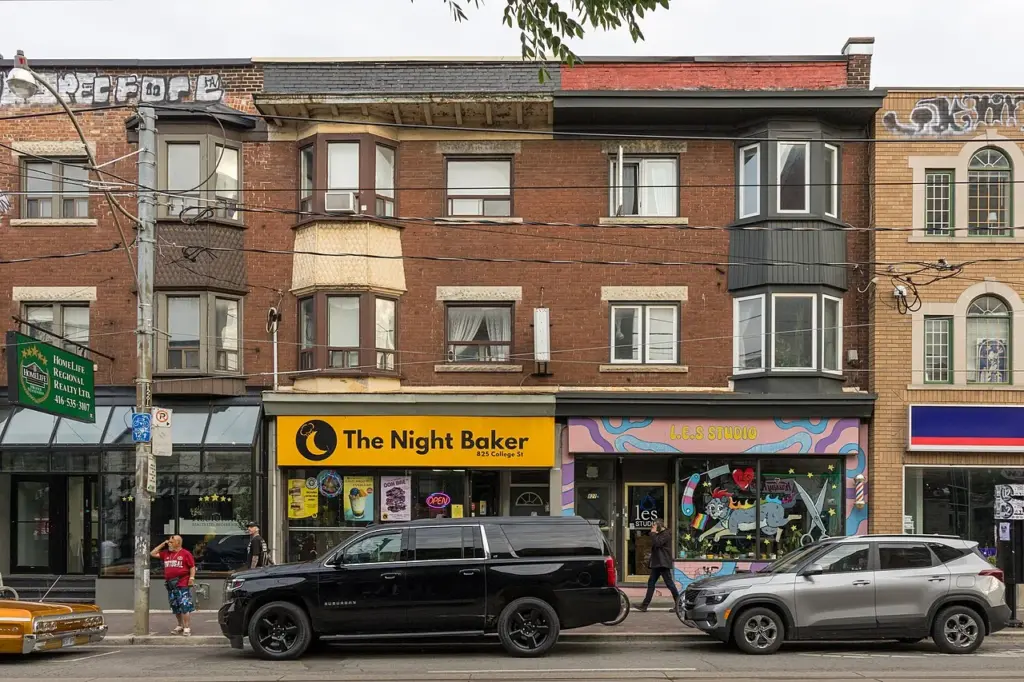

An empty storefront looks like a recession sign because it is visible. The cause may be weak sales, but it may also be a rent increase, redevelopment, a lease dispute or a business owner retiring.
One vacancy tells us little. A growing group of long-term vacancies on several shopping streets is more useful.
The type of replacement matters too. If an independent shop closes and another local shop opens, the street may be changing rather than shrinking. If many units remain empty for months, that suggests a deeper problem with demand, rent or both.
Do not count a papered window as a permanent closure until the business or property owner confirms it. Renovations can look like failure from the sidewalk.
Restaurant specials can mean several things
People notice more happy hours, value menus, loyalty offers and two-for-one deals when budgets tighten.
A promotion can be a sign that a restaurant needs traffic. It can also be a normal launch plan, a seasonal offer or a way to fill a slow Tuesday.
The stronger pattern is not the ad by itself. It is several things happening together:
- fewer customers at normal meal times
- smaller average orders
- more discounting over several months
- reduced hours
- fewer staff on a shift
- repeated closures in the same price range
Restaurant sales measured in dollars can rise even when people buy fewer meals because prices are higher. Ask whether sales volume changed, not only revenue.
Long lines for free things are weak evidence
Toronto residents have lined up for openings, giveaways and novelty food in good years and bad years.
A very long line for a free item may show that people want to save money. It may also show social hype, limited supply or a fun event. The line cannot tell us the income of the people in it.
Discount gas lineups have the same problem. They show that drivers notice price. They do not prove a recession by themselves.
Treat a line as a clue about consumer mood, not an economic measurement.
Packed lunches can be a real household signal
When office workers bring lunch more often, they may be trying to save $15 or $20 a day. That can add up to hundreds of dollars each month.
But return-to-office rules also change the size of the lunchroom. A fridge can look unusually full because more staff are in the office on the same days.
A better question is why the habit changed. If workers say they stopped buying lunch because rent, debt or groceries took the money, the budget pressure is real even if it does not prove a recession.
Repair shops and second-hand stores may get busier
During hard times, people often repair shoes, luggage, phones and appliances instead of replacing them. Second-hand stores may gain customers. Free trails may feel busier while paid fitness memberships are cut.
These are sensible responses to high prices. They can also reflect environmental choices and changing fashion.
Look for the trend across several months. A single crowded thrift store on a Saturday is not enough.
Haircuts and cosmetic services can show cutbacks
A person can stretch six weeks between haircuts to eight or ten. They can delay teeth whitening, cosmetic work or another service without giving up a daily need.
That makes optional personal services sensitive to weaker spending.
The business still needs comparison data. A quiet week may reflect weather, holidays, construction outside the door or a new competitor. A sustained fall in bookings is more useful than one owner's impression.
More payday loans and debt ads are warning signs
A growing line at a payday lender is troubling. So are more ads for consumer proposals, bankruptcy help and employment lawyers.
Advertising volume is not proof that more people used the service. A business may simply spend more on marketing.
Formal insolvency data is stronger. For Toronto, the current rise in consumer insolvencies supports the idea that household debt stress has increased.
Anyone considering a consumer proposal or bankruptcy should use a Licensed Insolvency Trustee and understand the fees and consequences. Be cautious with lead-generation companies that only sell your information to another provider.
Food bank use is not a small clue

Food bank demand is one of the clearest measures of household hardship. It still needs careful wording.
A food bank visit is not the same as a unique client. The number can rise because more people need help, because existing clients need help more often or both.
Food insecurity can grow without a technical recession. Rent, low wages, disability, immigration status, family size and food prices can push a household into crisis while total GDP still grows.
That distinction should not make the problem sound smaller. It explains why a city can post economic growth while more neighbours cannot afford groceries.
Encampments show a housing emergency, not a simple GDP test
More visible homelessness is a serious sign of social and economic failure. It is not a clean recession indicator.
Encampments reflect housing costs, shelter capacity, income, health, family breakdown, addiction and other conditions. Some locations may also change when outreach services or temporary shelter sites move.
Do not use people living outside as scenery in an economic argument. The useful question is whether housing loss, shelter demand and chronic homelessness are rising, and what the City is doing about it.
Busy sports and concert crowds do not cancel hardship
A packed stadium can make recession warnings look false. It proves that many people bought tickets. It does not prove that the average household is comfortable.
Toronto has millions of residents and visitors. Higher-income households can keep spending through a downturn. Some fans save for one event and cut elsewhere. Tickets may also have been bought months earlier.
The economy can split. Luxury restaurants and major events may stay busy while small services, neighbourhood retail and young workers struggle.
This split is one reason a downturn can feel invisible to one person and overwhelming to another.
Is this a recession or a cost-of-living crisis?
It can feel like both, but the ideas are different.
A recession is about falling economic activity. A cost-of-living crisis happens when essential expenses rise faster than a household's ability to pay.
Toronto can have slow growth and high living costs at the same time. Economists may call a mix of weak growth and high inflation stagflation, but that label requires more evidence than one expensive grocery bill.
For a household, the label may change little. If rent and food consume the paycheque, the stress is real even while official output grows.
What should Toronto residents watch next?
Use a small dashboard instead of chasing one dramatic clue.
1. Jobs and hours
Watch the Toronto unemployment rate, total employment and hours worked. Pay attention to youth and long-term unemployment when those figures are available.
2. Job vacancies
Fewer openings and longer searches show that employers are pulling back. Separate real jobs from repeated postings that never seem to be filled.
3. Consumer insolvencies
Bankruptcies and consumer proposals show severe debt trouble. Compare the same period year over year because monthly figures can jump around.
4. Food bank demand
Look at unique clients, total visits and the reasons clients report. Each measure answers a different question.
5. Business openings and closures
Track confirmed closures, vacancy duration and new openings. A changing retail strip is not automatically a dying one.
6. Housing stress
Rent arrears, shelter use, evictions and housing starts can show pressure that GDP misses.
7. Spending after inflation
Sales in current dollars can rise because prices rose. Real spending or unit volume tells us more about what people actually bought.
What to do if you are worried about a downturn
You do not need to predict the economy perfectly to reduce your risk.
- List essential monthly costs and know the minimum amount your household needs.
- Build a small cash buffer one step at a time.
- Check your employment insurance record and benefits before a crisis.
- Keep your resume, references and work samples current.
- Avoid taking expensive debt to protect a lifestyle that can be reduced.
- Speak to creditors early if you will miss a payment.
- Use a free or regulated source before paying a debt company.
- Keep spending with local businesses when it fits your budget, but do not shame yourself for choosing the cheaper option.
This is general information, not personal financial advice. A qualified professional can help with a decision that depends on your debt, income or legal rights.
Our take
Toronto's strongest recession warnings are not coffee promotions or quiet furniture stores. They are layoffs, weak job searches, rising insolvencies and record food bank use.
The unemployment rate has improved from its 2025 high. That is good news and should not be ignored. The hardship measures should not be ignored either.
Toronto may not fit one simple recession story. It is a city where economic pain is distributed unevenly. Watch the real measures, listen to people and be honest about the limits of both.
Frequently asked questions
Is Toronto officially in a recession?
There is no simple official city-level recession switch. Economists use several measures, and Toronto data arrives at different times. Current local signals are mixed, with a better unemployment rate but high insolvency and food bank use.
What is the unemployment rate in Toronto?
Statistics Canada reported a Toronto unemployment rate of 6.7 per cent in July 2026. It was down from a recent high of 9.0 per cent in July 2025. The figure covers the Toronto census metropolitan area, not only the City of Toronto.
Are empty restaurants a sign of recession?
They can be one clue, but timing, weather, price, season and local competition also matter. A long pattern of lower traffic, discounting, reduced hours and closures is more useful than one quiet meal.
Why can Toronto feel poor when GDP is growing?
GDP measures total production. It does not show how income is shared or whether rent and food are affordable. A city can grow while many households lose buying power.
Does high food bank use prove a recession?
No. It proves severe food insecurity, which can be driven by rent, low income and high prices even without a technical recession. It is still one of Toronto's most important hardship measures.
Are consumer proposals increasing in Toronto?
Toronto consumer insolvencies, which include bankruptcies and consumer proposals, rose 8.1 per cent in the 12 months ending June 2026 compared with the previous 12 months. The figure comes from the Office of the Superintendent of Bankruptcy.
What is a personal recession?
A personal recession is an informal phrase for a household losing income, work or buying power even when the wider economy grows. It is not an official economic measure, but it describes a real experience.