



Most Toronto parents do not leave work every day at 3 p.m. They use a mix of before-and-after school care, staggered work hours, family help, a sitter or a nearby program that picks children up.
The best place to start is the program inside your child's school. It removes another trip from the day. But a survey, application or waitlist does not guarantee a space. Apply early and build a second plan at the same time.
This guide explains the main Toronto options, current costs, fee help, work changes, school bus limits and the backup plan every family needs.
<div class="lit-quick-picks">
The short answer for busy parents
- Ask the school office who runs care in the building. Get the operator's name, hours, ages, cost and waitlist rules in writing.
- Search the City child care locator too. A licensed program near the school or home may have space when the school program does not.
- Price the whole school year. Include PA days, holidays, summer, late fees, meals and transportation.
- Build around the strictest deadline. If care closes at 6 p.m., a plan that gets you there at 5:58 p.m. is not a safe plan.
- Name two backup adults. Add them to the school's and care provider's authorized pickup lists before an emergency.
- Do not assume working from home solves care. A young child still needs attention while you work.
- Do not compare yourself with every adult at pickup. A grandparent, sitter, night worker or parent on a different shift can all look like a parent who simply left work early.
</div>
Why school pickup is so hard in Toronto
A school day and a workday were not designed to fit together.
Many elementary schools dismiss children around the middle of the afternoon. A full workday may end at 5 p.m. A commute can add another hour. A parent who works in person may be nowhere near the school when the bell rings.
Morning care can matter too. A schoolyard is not free child care before the bell. Ask the school for its supervised arrival window. Do not send a child early unless the school has clearly approved and staffed that plan.
The problem gets harder when siblings attend different schools. It also gets harder when a parent travels against the usual rush-hour flow. A job in north Etobicoke and a school in the east end may be difficult even if neither location is downtown.
The answer is usually not one perfect service. It is a regular plan plus a backup plan.
Start with care inside the school

In-school care is usually the easiest option because the child does not need another ride. Staff receive the child before class or take over after dismissal. Friends from school may be in the same group.
The Toronto District School Board says it supports more than 380 before-and-after school programs. These can be licensed child care, an authorized recreation program or a board-run Extended Day Program.
That does not mean every school has every type. A program depends on demand, space, staffing, financial viability and an operator. Some programs cover Kindergarten to Grade 6. Others have different age limits.
Ask the school office or principal these questions:
- Who operates the program?
- Is it licensed child care, Extended Day or authorized recreation?
- Which grades can enrol?
- What time does morning care open?
- What time does after care close?
- Does it run on PA days and school breaks?
- Is there a waitlist for the child's exact age group?
- Is there a separate application for fee subsidy?
- What happens if a parent is late?
- What support is available for disability, medication or another individual need?
Contact the operator after speaking with the school. The operator controls the live registration details. A school may know that a program exists without knowing whether the Grade 1 room has a space.
A survey or waitlist is not a place
Toronto Catholic District School Board families may be asked to complete an annual interest survey. The survey helps the board judge local demand and whether a program may be viable.
It is not a registration form. It does not promise that a program will open. It does not reserve a seat.
The same practical rule applies to every waitlist. Ask what happens next, how the operator contacts families and how long you have to accept an offer. Keep your phone number and email current.
Apply for a second option while you wait. A family can lose months by treating one waitlist as a future guarantee.
Compare the main before-and-after care options
The name of a program matters less than the hours, supervision, route and fit for your child.
| Option | What it can solve | Main limit to check |
|---|---|---|
| Licensed care in the school | Morning and afternoon coverage without another trip | Space, age group, fees and closure dates |
| Board-run Extended Day Program | Care connected to the school day | Offered only where demand and viability support it |
| Authorized recreation program | Lower-cost activity-based care | Fee subsidy does not apply to this program type |
| City After-School Recreation Care | Very low-cost care for eligible school-age children | Grade 1 or age six minimum, selected sites and no base PA-day coverage |
| Licensed care outside the school | A nearby alternative when the school program is full | Who transports or escorts the child |
| Licensed home child care | Smaller setting and sometimes useful local hours | Location, provider schedule and school transfer |
| Nanny or after-school sitter | Flexible pickup, homework and sibling care | Cost, reliability, references and employment duties |
| Trusted family or friend | Familiar care and flexible help | It still needs a clear schedule, consent and backup |
| Parent work adjustment | Keeps pickup within the household | Employer approval, lost income and long-term strain |
Do not choose from the label alone. Visit if you can. Ask to see what a normal Tuesday afternoon looks like.
What does before-and-after care cost in Toronto?
The price can change by operator, age, schedule and school calendar.
For the 2026-27 school year, the TDSB lists approximate fees of $26 to $42 on instructional days. On non-instructional days, it lists about $44 to $59. Those are planning ranges, not a quote for your child.
The TCDSB's 2026-27 interest survey lists proposed school-age ranges of:
- $25 to $40 a day for both before and after care
- $11.50 to $22 for before school only
- $14.50 to $26 for after school only
Ask whether the fee is daily, monthly or based on every school day. Also ask whether you pay when your child is absent.
The real yearly cost may include more than the posted base fee. Check these items:
- PA-day care
- winter and March break programs
- summer care
- meals or snacks
- activity or trip fees
- late-pickup fees
- registration deposits
- transportation from school
- days when the school is open but the provider is closed
A licensed child care centre cannot charge a waitlist fee. It can have other lawful charges. Read the parent handbook before accepting a space. It should explain base fees, extra fees and whether the program participates in the Canada-wide child care system.
Can the City help with child care fees?
The City of Toronto offers Child Care Fee Subsidy to eligible families. It may be used for licensed child care and a board-run Extended Day Program.
It does not cover an authorized recreation program. Those programs are meant to be low cost or free, but the exact fee still matters.
The City says there is a subsidy waitlist and tells families to apply as soon as possible. At the end of December 2025, 16,367 children were on that waitlist. That number is dated background, not a live count for August 2026.
Use the City child care fee subsidy page to check eligibility, documents and the current process. Applying for subsidy is separate from securing a care space. Do both.
If the cost is difficult but subsidy will not work for your program, ask about the City's Welcome Policy, recreation assistance and any provider-specific support.
Is Toronto's After-School Recreation Care a good deal?
For an eligible child near a participating site, it may be the best-value option in the city.
The City lists its After-School Recreation Care program, known as ARC, at $622.80 for the 2026-27 school year. The City describes that as $3.46 per program day. It runs from September 8, 2026 to June 18, 2027.
ARC is for children ages six to 12. A child must be in at least Grade 1 or turn six by the first program day. It is not a general Kindergarten solution.
Most sites run from school dismissal until 6 p.m. Some end at 5:30 p.m. Certain sites can provide a group walking escort from a nearby school when it is available.
The low price comes with important gaps. The base program does not cover PA days, school holidays or statutory holidays. It is offered only at selected community recreation centres. Registration can fill.
Ask the exact site about:
- the school it escorts from
- who leads the walk
- what happens in severe weather
- the final pickup time
- accessibility and inclusion support
- snacks and activities
- alternate care on school closure days
The City ARC page has current dates, locations and registration details.
What if the school program is full?

Do not wait for a crisis. Build a second route now.
Search near both school and home
Use the City child care locator for licensed programs in the school and neighbourhood. Search near home too. A program close to home may be easier for a second adult to reach.
Ask an off-site operator exactly how the child gets there. “School pickup available” can mean a bus, van, walking group or staff member meeting children at one door. Confirm the school, grades, route and winter policy.
An activity studio may advertise after-school pickup. Treat it as care only if it truly provides continuous supervision, safe transportation, authorized handoff and reliable daily hours. One martial arts class is not the same as three hours of care.
Hire a sitter for the narrow gap
An after-school sitter can pick up the child, provide a snack and stay until a parent arrives. A two-hour shift can still be hard to fill because the worker must travel for a short block of paid time.
Ask for references. Discuss lateness, sick days, school closures, transit, homework, outings and who may enter the home. If the arrangement is regular employment, learn your obligations as an employer. Do not assume calling the person a contractor changes the real relationship.
Use family help with respect
Grandparents and relatives are a major part of many pickup plans. Their time is not an endless free resource.
Talk about the full job. Can they walk safely in January? Do they have the right car seat? Can they manage a sudden fever? What happens when they travel or have a medical appointment?
Put the schedule in a shared calendar. Add the person to every authorized pickup list. Give them school, program and parent phone numbers.
Trade pickup with another family
A two-family trade can work well. One parent handles Tuesday and the other handles Thursday. It reduces paid care without asking one person to help every day.
Write down the days, children, handoff point, food needs, emergency contacts and cancellation rule. Check car seats and insurance if anyone drives.
Do not casually grow the arrangement into an unlicensed group-care business. Ontario rules can apply when one person regularly cares for children from several families.
The work schedules that actually make pickup possible
Many households use one of these patterns.
One adult starts early and the other starts late
The later worker handles the morning. The early worker handles pickup. A schedule might look like 7 a.m. to 3 p.m. for one adult and 10 a.m. to 6 p.m. for the other.
This can remove some paid care. It can also leave the adults with little time together. Test sleep, commuting and dinner, not just school hours.
One adult drops off and the other picks up
This is simple when both jobs are fairly stable. It breaks when the pickup adult travels, becomes ill or gets trapped in a meeting.
Add a named backup. Do not make the morning parent the silent emergency answer every time.
A parent blocks a fixed pickup window
Some parents put pickup on the work calendar and finish a task later. This works best when the employer agrees to the routine and the job can be measured by completed work.
It works poorly when the parent must constantly make up time after bedtime. A plan that depends on years of skipped lunches and late-night work can burn out the family.
Parents work opposite shifts
Opposite shifts can keep an adult available without paying for a full care block. Health care, hospitality, warehouse and other shift workers sometimes use this model.
The hidden cost is sleep and time together. Include handoff time and recovery after a night shift. A tired adult may be home but not able to supervise safely.
One parent reduces paid hours
Part-time work can be the right choice. It is not automatically the cheapest choice, and it should not fall to the mother by default.
Compare the care bill with lost take-home pay, pension contributions, benefits, raises and future job options. Look at both adults' long-term costs. A short-term saving can create a much larger career loss.
Can you ask your employer for a pickup accommodation?
Yes, you can ask. The result depends on the job, the real caregiving need and what would cause undue hardship for the employer.
Ontario's Human Rights Code protects family status. The Ontario Human Rights Commission says an employer may need to consider flexible hours, leave or another work arrangement when a parent has a genuine caregiving conflict.
This is not an automatic right to any preferred schedule. Accommodation is individual. Both sides share responsibility for finding a workable answer.
Make the request specific. Explain the school or care closing time, the commute and the gap you cannot reasonably fill. Offer options such as:
- a stable earlier start and finish
- fixed in-office days that match a co-parent's schedule
- a short pickup break followed by work from home
- compressed hours where the job allows it
- a temporary plan while waiting for licensed care
Keep the conversation and documents. If a serious dispute develops, get advice from a union, an employment lawyer, a legal clinic or the Human Rights Legal Support Centre. This guide is practical information, not legal advice.
Working from home is not the same as child care
Remote work removes the commute. That can turn an impossible pickup into a possible one.
It does not mean a young child can be left to manage alone while a parent joins calls. A child may need food, comfort, help with a conflict, medication or attention outside the home.
Be honest about the job and the child. A quiet ten-year-old for 45 minutes is different from a four-year-old for three hours. A parent who can pause work is different from a worker taking live customer calls.
If home is the final part of the plan, write down what the child may do, who they can contact and what happens during an emergency.
A practical plan for a single parent
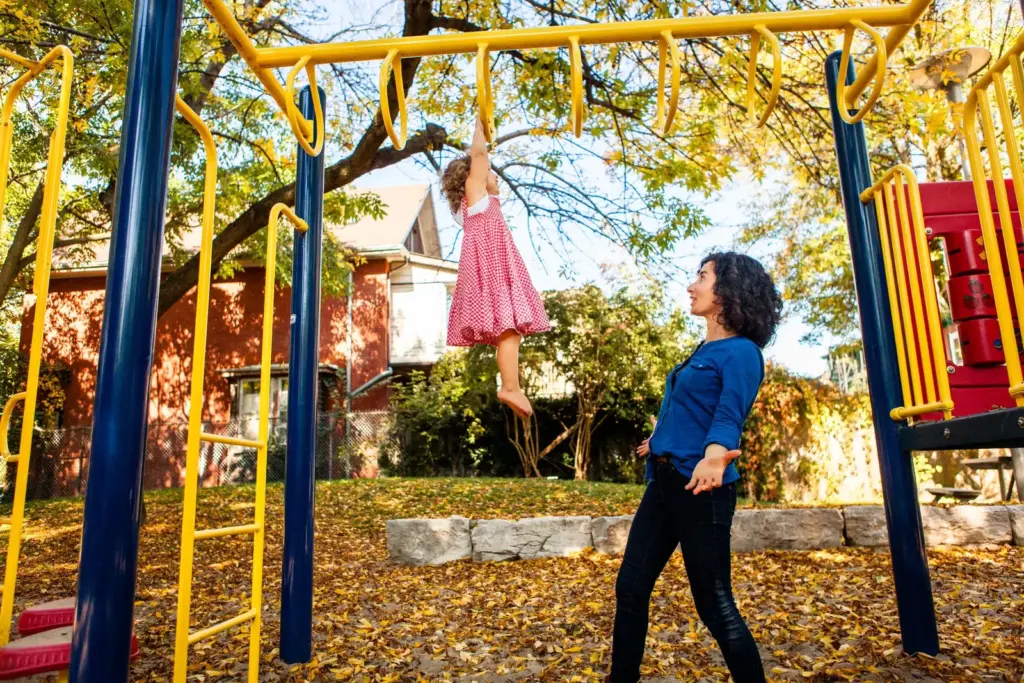
A single parent needs a plan that does not depend on a second adult appearing at the last minute.
Start with the longest reliable care block you can find. Add at least two authorized backup adults if possible. They might be a relative, close friend, neighbour, sitter or co-parent.
Put school days, custody days, PA days and pickup assignments in one shared calendar. Do not keep the only copy on a work computer.
Tell the provider the order to call people. Confirm whether staff will release the child to a backup with photo identification. Give the backup any password or written consent required by policy.
If money is the main barrier, apply for fee subsidy and low-cost recreation early. A community agency or school social worker may also know local supports. Do not wait until an employer changes the schedule or a care space ends.
Will the school bus solve the problem?
Sometimes, but a bus is transportation, not after-school care.
For TDSB students, May 2026 policy information lists distance thresholds of 1.6 kilometres for Kindergarten to Grade 5, 3.2 kilometres for Grades 6 to 8 and 4.8 kilometres for secondary school. TCDSB lists 1.5 kilometres for Kindergarten to Grade 8.
Distance is not the only rule. Program placement, disability, medical needs, boundaries and route safety can affect eligibility. TDSB says wheelchair users are eligible, and children whose medical or disability needs severely limit walking may qualify after review.
A bus may take the child closer to home. An adult may still need to meet the bus. Confirm the stop, drop time, late-bus plan and whether a young child can be released without an adult present.
Use the Toronto Student Transportation Group for current policy and contact the school about the individual route.
When can a child walk home or stay alone?
Ontario does not have one simple legal age that makes every child ready.
The law requires a person responsible for a child younger than 16 to make supervision and care arrangements that are reasonable in the circumstances. Age matters, but it is not the only factor.
Think about the child, route and time:
- Can the child cross each road safely?
- Is the route the same every day?
- Can they manage snow, darkness and a transit delay?
- Do they know what to do if followed or locked out?
- Can they use a phone and name their address?
- Is a trusted adult nearby?
- How long will they be alone?
- Can they handle food, medication, siblings and emergencies?
Kindergarten children should not be used to solve an adult work gap by arriving early or waiting alone after school.
For an older child, practise the route together. Start with a short period. Make a check-in rule. Give them a safe place to go if home cannot be entered.
Build a plan that survives a bad day
A schedule is only real when it handles problems.
Put every school gap on the calendar
Add PA days, winter break, March break, summer, early dismissals and program closure days. ARC, for example, does not include PA days or school holidays in its base 2026-27 program.
Registration for camps can open months earlier. Set reminders before spaces disappear.
Add a pickup buffer
If care closes at 6 p.m., plan to arrive at 5:30. A delayed subway, highway collision or meeting can use that margin.
Ask about late fees and repeated-lateness rules. A fee may not be the only risk. Some providers may reconsider a family's place after repeated late pickups.
Plan for illness
A sick child may need to leave school within an hour. Decide who can leave work, who is second and who is third.
Make sure every adult can reach the school and is authorized. Keep medication information current. A grandparent across the city is not an emergency plan if the child must be collected now.
Plan for transit and weather
Measure the real trip from desk to pickup door at rush hour. Include the elevator, parking lot, TTC transfer and walk through the school.
Test the winter version too. A walking escort or family helper who works in September may not be comfortable in a snowstorm.
Share one written plan
Use a calendar every responsible adult can open. Include the child's location, pickup person, closing time and backup.
Colour can help, but clarity matters more. “Dad pickup” is better than a vague block called “school.”
What to look for when visiting a program
A convenient program can still be a poor fit. Ask what children really do between dismissal and pickup.
Look for calm staff, clear check-in, enough room, accessible washrooms and a safe handoff. Ask how the program handles:
- snacks and allergies
- outdoor time
- quiet space and homework
- conflict between children
- bathroom support
- medication
- disability and inclusion needs
- a missing pickup adult
- severe weather and lockdowns
- staff absence
- trips outside the building
Many children like after care because friends, games, art and outdoor play can make it feel different from class. That is possible, not guaranteed.
Watch your child after the first weeks. Tiredness is normal during a big routine change. Ongoing fear, hunger, sleep problems or behaviour changes deserve a conversation with staff.
The guilt question
Using morning and afternoon care does not make a parent lazy or uncaring. It means the school clock and the work clock do not match.
Do not judge your family by the adults you see at 3 p.m. That adult may be a grandparent, sitter, night worker, self-employed person or parent using a carefully negotiated schedule.
The useful question is not, “Am I the only parent still at work?” Ask, “Is my child safe, known, rested and comfortable, and can our household keep this plan going?”
If the answer is no, change the plan. If the answer is yes, guilt does not make it better.
Frequently asked questions
What time does before-and-after school care run in Toronto?
Hours vary by school and operator. Many after-school programs aim to cover the time from dismissal to about 6 p.m., but some close at 5:30 p.m. Confirm the exact opening and closing time in writing before accepting a space.
How much does before-and-after school care cost in Toronto?
For 2026-27, TDSB gives an approximate range of $26 to $42 on instructional days. TCDSB planning ranges are $25 to $40 for both periods, with lower ranges for only morning or only afternoon care. Your operator's quote, calendar and extra fees control the real cost.
Does every Toronto school have before-and-after care?
No. A program depends on demand, space, staffing, viability and an operator. Ask the school, then use the City child care locator to search nearby if no program or space is available.
Does joining a school care waitlist guarantee a space?
No. A survey or waitlist records interest, but it is not a confirmed place. Apply early and keep another care plan active until the operator gives you a written offer.
Can Toronto child care fee subsidy pay for after-school care?
It may cover eligible licensed child care and board-run Extended Day Programs. It does not cover authorized recreation programs. You need both subsidy approval and an available space, so start both processes early.
Is City of Toronto ARC available for Kindergarten children?
Not under the 2026-27 eligibility rule. A child must be at least in Grade 1 or turn six by the first program day. Families also need to check whether a participating site serves their school and has space.
Can my employer refuse to let me leave for school pickup?
There is no automatic right to any schedule you choose. Ontario family-status protections may require an employer to consider a genuine caregiving conflict and possible accommodation up to undue hardship. Get individual advice for a disputed case.
What age can a child walk home or stay alone in Ontario?
Ontario does not set one simple age for every child. A person responsible for a child younger than 16 must arrange supervision and care that are reasonable for the child's age, ability, route, time alone and other circumstances.
A simple way to choose
Start with care inside the school. It removes the hardest transfer and is often the easiest routine for a young child.
If that is full, search near school and home at the same time. Compare a licensed program, City recreation care and a reliable sitter. Then ask whether a stable work change can close the remaining gap.
Choose the plan that still works on a cold Tuesday when the subway is late and one adult is sick. That is the plan your family can trust.