

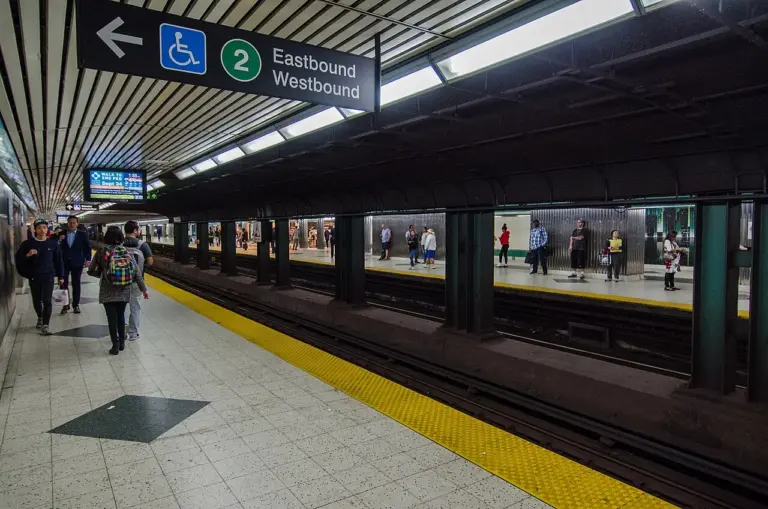

The TTC subway is hot because trains, brakes, motors, lights, people and air-conditioning equipment all release heat into a partly enclosed system. Some heat leaves through shafts, station entrances and train movement. The rest warms the tunnels, platforms and ground.
Toronto could recover part of that heat with heat exchangers and heat pumps. The technology is real. The hard part is finding a nearby building that needs the heat at the same time, then paying for pipes, equipment and construction around an operating subway.
Our verdict is firm. The TTC should first improve comfort, ventilation and reliability. A heat-recovery pilot makes sense only where it helps those goals and has a nearby customer. Toronto has not announced a confirmed TTC station heat-recovery project that we could verify as of August 31, 2026.
Where subway heat comes from
Every moving train loses energy. Regenerative braking can return some electrical energy to the transit power system when another train can use it. Energy that is not recovered becomes heat through braking and electrical resistance.
Other sources include:
- Traction motors and train equipment.
- Friction between wheels, rails and brakes.
- Aerodynamic drag as trains push air through tunnels.
- Lights, escalators, elevators, pumps and station equipment.
- Thousands of passengers giving off body heat.
- Air-conditioning systems moving heat out of trains and into the surrounding space.
- Warm outdoor air entering stations in summer.
Tunnel walls and ground absorb heat over time. Old deep subway systems can become warmer after decades of operation because the surrounding ground is no longer a cool sink.
The verdict: no single fan or train setting created the problem. The heat is built into moving millions of people underground.
Why air-conditioned trains can make platforms hotter
Air conditioning does not destroy heat. It moves heat.
The system removes heat from the passenger cabin and releases that heat, plus energy used by the equipment, outside the train. In an open street, that heat disperses. In a tunnel, it joins other heat.
Turning off train air conditioning would make riders unsafe and miserable. It would not solve the total system problem. The useful question is how to remove or reuse heat after it leaves the train.
The verdict: cool the cars. Fix the tunnel and station heat separately.
Why some TTC stations feel worse than others
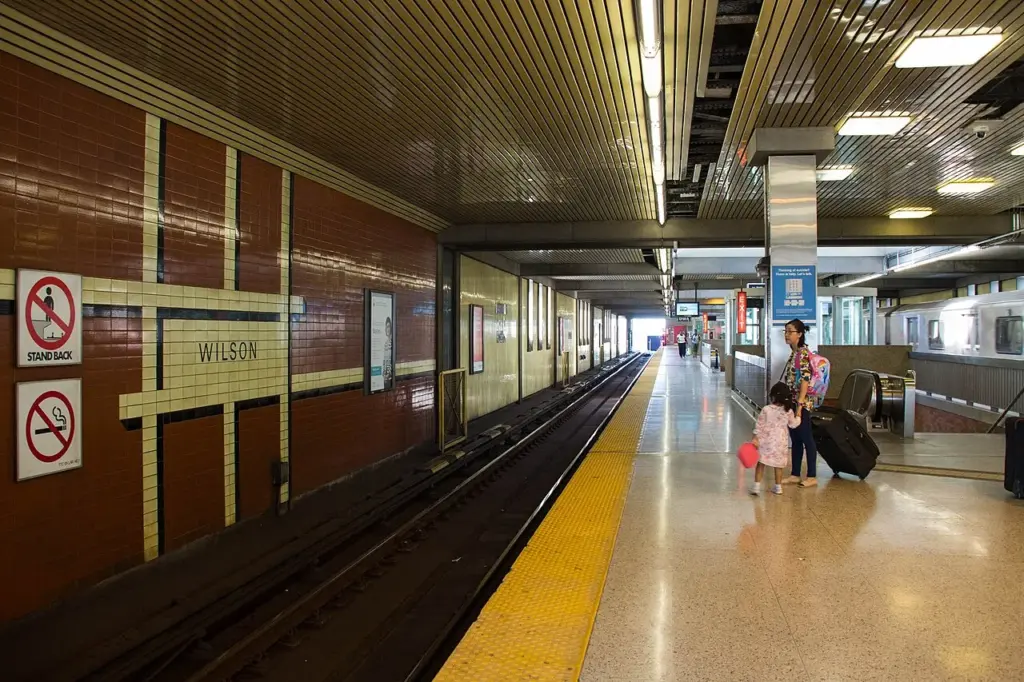
Depth, tunnel shape, train frequency, platform crowding and ventilation differ. An open station such as parts of Wilson can exchange air more easily than a deep enclosed platform.
Busy Bloor-Yonge has frequent trains and large crowds. Heat builds while people wait. Construction barriers, equipment condition and outside weather can change air movement too.
The TTC's Line 1 Capacity Enhancement Program includes ventilation work. Station tunnel fans are important fire and life-safety equipment. That means changes cannot be made only for comfort. Smoke-control performance comes first.
The verdict: Toronto needs station-specific fixes, not one system-wide temperature switch.
Measure the problem before selling the solution
Toronto needs public station-level data during summer heat. One annual average cannot explain a crowded platform at 5:30 p.m.
A useful dashboard would show:
- Platform air temperature and humidity by hour.
- Outdoor temperature for comparison.
- Train frequency and estimated crowd level.
- Major fan status and ventilation mode.
- Particle measurements using a stated method.
- Complaints and heat-related service events.
- Dates of track cleaning and ventilation maintenance.
Sensors must sit in representative locations. A device beside an entrance or fan outlet can read very differently from the centre of a platform. The TTC should publish placement and quality-control notes.
The verdict: if Toronto cannot name the hottest stations and hours, it cannot choose the best fix.

Is subway air dangerous?
Heat and air quality are related but different. A hot platform can feel stale without exceeding a pollutant limit. Subway particles can come from metal wear, braking, dust and outside air.
The TTC says it uses track vacuuming and washing, ventilation-duct cleaning and filtration measures. Its subway air-quality notice explains current work.
People with health concerns should follow medical advice. Move to a cooler area and seek help if you feel faint, confused, have chest pain or severe breathing trouble.
Heat complaints should still be taken seriously even when a legal air limit is not exceeded. Comfort affects whether people choose transit and whether workers can safely do their jobs.
The verdict: publish clear station data and maintenance results. Reassurance without measurements is weak.
What riders and workers need before a heat-recovery pilot
Heat recovery is a climate project. Heat exposure is an immediate comfort and occupational issue.
Basic responses can include functioning fans, working water access for staff, cool rest areas, clear reporting and temporary measures during extreme heat. Some stations may benefit from localized air movement or cooling in staff areas even when full platform air conditioning is impractical.
Riders cannot control how long a delayed train takes. Service reliability is therefore part of heat protection. A five-minute platform wait and a twenty-five-minute wait are different exposures.
The verdict: reduce the wait, fix the equipment and protect staff while studying energy reuse.
Could Toronto use subway heat in buildings?
Yes. A heat pump can take low-temperature heat from air, water or ground and raise it to a useful temperature for space heating or hot water.
A simple version works like this:
- Warm subway air or water passes a heat exchanger.
- A closed loop carries that captured energy to a heat pump.
- The heat pump raises the temperature.
- A nearby building or district-energy system uses it.
- Cooler air or water returns to the subway-side equipment.
The system does not pipe dirty tunnel air into homes. Heat moves across sealed equipment.
New York's Metropolitan Transportation Authority has discussed heat recovery in its climate resilience roadmap, including exploration at East Broadway. Other cities have studied or used related systems.
The verdict: the engineering is believable. The business case must be local.
London is the strongest real-world example
London's Bunhill 2 Energy Centre captures waste heat from a ventilation shaft connected to the Northern line. A heat pump raises the temperature and feeds a district-heating network.
The London Mayor's office says the wider Bunhill network serves about 1,350 homes, two leisure centres and a school. Islington Council described the project as a world-first use of waste heat from the London Underground for an existing district network.
The lesson is not that Toronto can copy one machine into Bloor-Yonge. Bunhill had three advantages:
- A useful ventilation shaft.
- A district-energy network and customers nearby.
- A public partner able to connect the transit source to buildings.
Technical supplier material reports a coefficient of performance above 3.5 in part of the system. In simple words, the heat pump can deliver several units of heat for each unit of electricity used under the stated conditions. Actual performance changes with source temperature, output temperature and operation.
The equipment also has to handle dirty air. Dust can clog heat-exchanger surfaces and raise maintenance cost. Any Toronto design needs filtration, cleaning access and a measured pressure effect on ventilation.
The verdict: London proves the concept. It does not prove every Toronto station is a good site.
The customer has to be close
Low-temperature heat is not worth moving many kilometres. Pipes cost money and lose heat. The best customer is usually beside or above the station.
Good candidates could include:
- A new residential tower.
- A hospital or long-term-care building with steady hot-water need.
- A recreation centre or pool.
- A university building.
- A district-energy loop serving several buildings.
The customer should need heat when the subway produces it. Winter is a good match. Summer can be harder because buildings want cooling while the subway has even more unwanted heat.
Thermal storage can move energy from one time to another, but storage adds space and cost.
The verdict: start where a major redevelopment touches a hot station and has a year-round heat load.
Hot water may be a better customer than space heating
Toronto buildings need the most space heat in winter, when subway stations may be cooler. Domestic hot water is needed all year. Pools and recreation centres also carry steady loads.
A strong project can combine several uses:
- Preheat domestic hot water year-round.
- Provide space heat during winter.
- Send heat into a district loop serving several buildings.
- Use thermal storage to shift heat from low-demand hours.
- Reject or move heat differently in summer.
The building's required water temperature matters. A heat pump works harder when it must raise low-grade tunnel heat to a high output temperature. Lower-temperature heating systems can improve efficiency.
The verdict: find the steady heat buyer first, then size the recovery system.
.jpg)
Would heat recovery cool the platform?
It could remove some heat. It would not turn a platform into an air-conditioned room by itself.
The amount depends on air flow, heat-exchanger size, operating hours and how much energy the customer takes. A system designed for building heat may reduce local temperatures modestly. Crowds and arriving trains keep adding heat.
A poorly placed exchanger could interfere with ventilation or collect dust. Maintenance access is essential. Fire and smoke-control rules limit where equipment can sit.
The honest goal should be measurable: remove a stated amount of heat, cut a nearby building's energy use and avoid harming station safety.
The verdict: promise kilowatts and temperature data, not a cool-platform miracle.
Heat recovery and station air conditioning are different projects
Full platform air conditioning would need to remove heat continuously while trains push air in and out of open tunnels and doors. It would also release heat somewhere else. Enclosing platforms with screen doors can change ventilation and cooling possibilities, but that is a major safety and capital project of its own.
Heat recovery captures useful energy. Ventilation moves heat and contaminants. Local cooling protects a selected space. Regenerative braking prevents some heat from being created. Toronto will likely need a mix.
Do not let a politician announce recovered heat as though riders will feel cool next summer. The benefit may appear mainly on a nearby building's energy bill.
The verdict: state the project goal in one sentence and measure that goal.
What about regenerative braking?
Modern electric trains can use their motors as generators while slowing. The electricity can be used by another train, returned to the traction network or stored where equipment supports it.
This is usually a better first recovery target than collecting low-grade heat after energy is lost. Electricity is more flexible and can reduce the heat created in the first place.
The system still uses mechanical braking in some conditions, and not every regenerated unit can be accepted at every moment. Wayside energy storage can help, but it also costs money and needs space.
The verdict: prevent waste before trying to harvest it as heat.
The TTC's environmental planning material says regenerative braking can return electricity to the third rail for a nearby train to use. If no train can accept the energy at that moment, storage or other traction-power equipment may increase reuse.
Toronto should publish how much braking energy is generated, accepted and lost by line and time. That lets engineers compare an electrical-storage project with a tunnel-heat project using the same money.
Why Toronto has not built it already
The TTC has urgent capital needs: signals, trains, elevators, state-of-good-repair work, fire ventilation and service capacity. Heat recovery competes for design attention and construction access.
Ownership is also complicated. The TTC may control the station. The City may own land. A private developer may own the building that needs heat. Toronto Hydro or a district-energy operator may be involved. Contracts must decide who pays, operates, saves and carries risk.
The station cannot close for months so a climate demonstration can be installed cheaply. Night work is slower and expensive.
The savings may be good over decades and still be too small to justify a difficult retrofit at one old station.
The verdict: attach the idea to planned construction. Do not tear up a finished station only for a press release.
Toronto already recovers waste heat elsewhere
The City supports wastewater-energy projects that capture heat from sewer water with heat exchangers and heat pumps. Toronto's wastewater energy page explains the approach.
That matters because it proves the city can work with low-temperature urban heat. Wastewater offers a steadier flow and easier heat-transfer medium than dusty subway air, so it is not the same project.
The lesson is useful: connect an available heat source to a large nearby customer through a long-term energy agreement.
The verdict: copy the project structure, not the exact equipment.
Toronto planners have already put subway heat on the idea list
The City's Scarborough Centre Secondary Plan study said future planning should consider heat recovery from subway tunnels, while noting that this type of application was still at an early adoption stage. That is useful because Scarborough Centre combines transit, redevelopment and possible district-energy planning.
It is not an approved TTC heat project. It is a planning signal. The right next step is a site screen that compares tunnel heat with wastewater, geothermal, building cooling and other low-carbon sources.
A district system should use the source with the best lifetime cost and reliability. Subway heat does not win merely because it sounds clever.
The verdict: study it at Scarborough Centre, but make it compete honestly with other energy sources.
Where a Toronto pilot would make sense
The strongest pilot site would have:
- A known heat problem.
- Planned station or ventilation construction.
- A large development next door.
- A year-round hot-water or heating need.
- Space for equipment and maintenance.
- Clear energy meters before and after.
- A partner willing to sign a long contract.
A new transit-oriented development is more promising than a random old platform. Line 5 and future station projects can reserve space earlier, although every site needs engineering review.
The project should publish capital cost, expected energy, actual energy, platform temperature effect, maintenance downtime and greenhouse-gas reduction. If the results are weak, say so.
The verdict: one transparent pilot is better than ten vague studies.
A practical Toronto site scorecard
Give each candidate evidence for these questions before spending on detailed design:
| Test | Strong candidate | Weak candidate |
|---|---|---|
| Heat source | Measured high and steady heat flow | Occasional heat inferred from complaints |
| Nearby customer | Large year-round heat need beside the site | Small building several blocks away |
| Construction | Planned station or development work | Finished station requiring new closure |
| Space | Mechanical room, shaft and pipe route available | No safe maintenance access |
| Ventilation | Recovery can work with fire and smoke control | Equipment constrains life-safety fans |
| Ownership | Clear public or long-term partner | Several owners with no agreement |
| Economics | Competitive lifetime cost and funding | Depends on a short demonstration grant |
| Measurement | Baseline sensors and separate energy meters | Savings calculated only by a model |
The best candidate might not be the hottest famous station. A quieter station beside a new pool, hospital or large housing project may produce a cleaner business case.
The verdict: choose the site that can work for thirty years, not the name that gets headlines.
What a pilot report must reveal
Publish the full result after at least two heating and cooling seasons:
- Capital cost, including transit shutdown and design costs.
- Annual electricity used by pumps and heat pumps.
- Heat delivered to the customer.
- Peak output and seasonal performance.
- Platform or shaft temperature change.
- Filter cleaning, failures and maintenance hours.
- Effect on ventilation and fan energy.
- Greenhouse-gas savings using a stated baseline.
- Customer energy savings and contract terms that can be public.
- What Toronto would change before a second project.
If the trial performs poorly, publish that too. Failed assumptions can save more money than a polished case study.
The verdict: public infrastructure deserves public performance data.
What the TTC should do first
- Publish station temperature and ventilation performance during heat events.
- Fix failed fans, blocked ducts and maintenance problems.
- Improve regenerative-braking use and energy storage where cost-effective.
- Screen major station projects for a nearby heat customer.
- Build one heat-recovery pilot with a redevelopment partner.
- Report comfort and energy results for at least two full seasons.
Riders should not be told to wait for an experimental energy project while basic ventilation is broken. Climate innovation and maintenance are not substitutes.
For late-night riders dealing with service limits rather than heat, our guide to getting around after the subway closes explains the real alternatives.
The final verdict: reuse the heat where the numbers work. Cool and maintain the subway everywhere.
Frequently asked questions
Why are TTC subway platforms so hot?
Trains, braking, motors, equipment, people and air conditioning all add heat. Enclosed tunnels and warm surrounding ground make it hard for that heat to escape.
Does train air conditioning heat the subway?
It moves heat from inside the train to the tunnel or station and adds some equipment heat. Turning it off would harm riders and would not solve the wider heat problem.
Can Toronto use TTC heat to warm condos?
Yes in principle. A heat exchanger and heat pump could serve a nearby building, but distance, cost, construction and the building's heat demand decide whether it is worthwhile.
Would heat recovery make stations cool?
It may remove some heat near the equipment. It would not provide full platform air conditioning unless designed at a much larger scale.
Does the TTC already recover braking energy?
Modern electric trains can use regenerative braking, but how much energy is reused depends on the traction system and whether another train or storage system can accept it at that moment.
Why not install air conditioning on every platform?
Open entrances and train tunnels make full cooling difficult and expensive. The rejected heat also has to go somewhere. Targeted ventilation and local cooling can be more practical.
Has Toronto approved a subway heat-recovery pilot?
We could not verify a confirmed TTC station heat-recovery project as of August 31, 2026. Recheck TTC and City project pages for later announcements.
Is subway heat recovery safe?
It can be designed safely, but equipment must not interfere with fire ventilation, evacuation or maintenance. A TTC pilot would need engineering and regulatory review.