


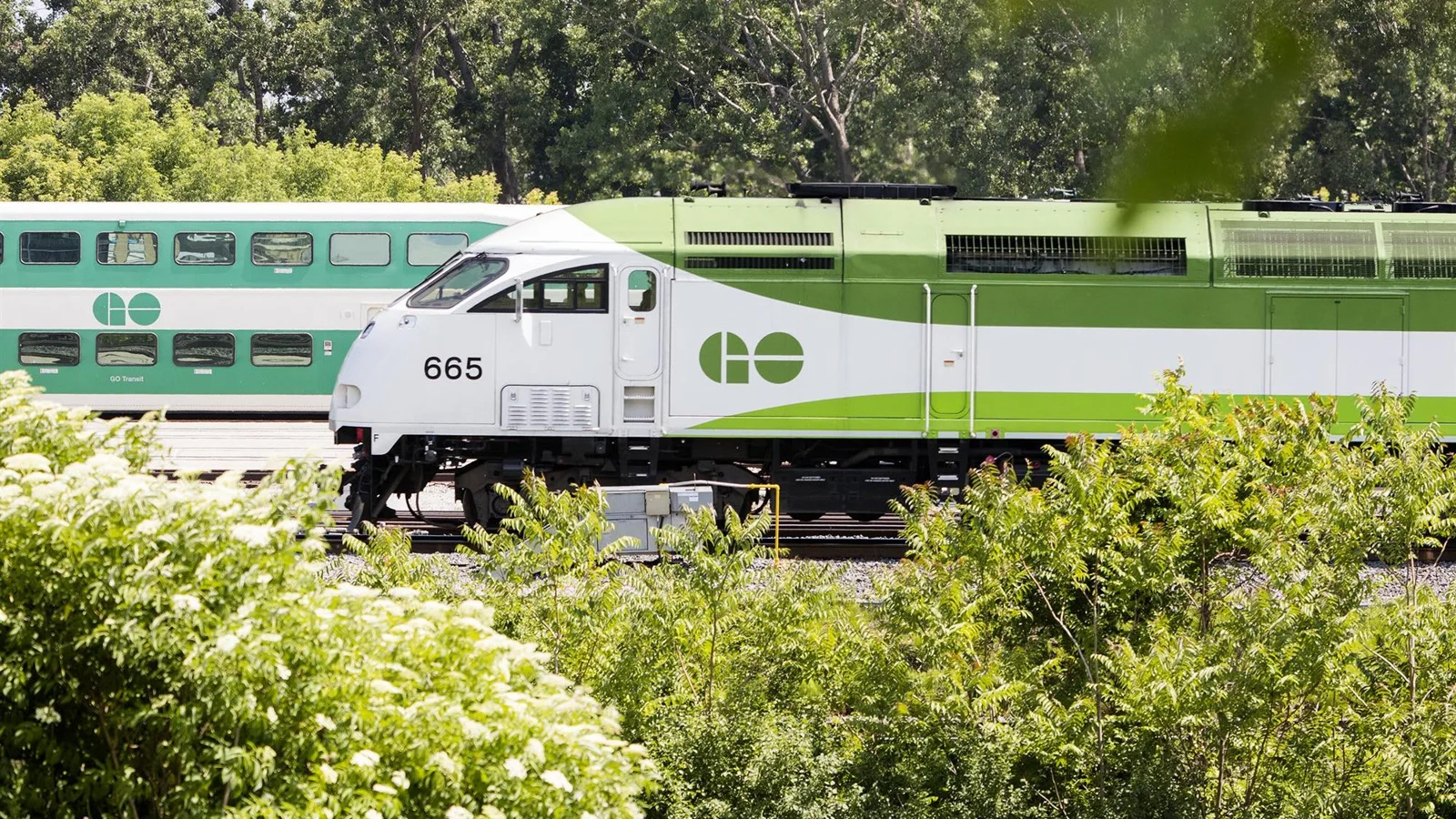
Don't sign a Toronto lease on the strength of a Kitchener GO line on a map. A workable Toronto-to-Kitchener commute needs a westbound trip that reaches your office on time and an eastbound trip that gets you home after work.
Our pick is to test a real working day before committing. If that journey only works when every connection lines up, living closer to the job is the stronger choice. One remote day does not fix four exhausting travel days.
Plan the office door, not just Kitchener GO
Start with GO's trip planner and enter the actual weekday and arrival time you need. Then check the Kitchener train and bus timetable.
Don't copy a weekend trip or assume eastbound morning service has a matching westbound train. The direction matters. So does the date: work and timetable changes can alter an otherwise familiar journey.
Kitchener GO is not every office in Kitchener-Waterloo. Add the walk, local transit connection or taxi from the station to your workplace. Use Grand River Transit to check that final leg, including the return after your shift.
Compare the whole week

Write down the time you leave home, reach work, leave work and return home. Include the fare for every leg. A Toronto subway ride, GO journey and local connection can make a very different budget from the headline train fare.
Compare these options using your own start and finish times:
| Arrangement | Main question |
|---|---|
| Transit from Toronto | Does a missed connection leave a usable backup? |
| Driving | What does the trip cost with parking, fuel and wear? |
| Carpooling | Can everyone keep the same work hours? |
| Consecutive office days with an overnight stay | Does the room cost buy back enough time? |
| Moving closer to work | Is the shorter commute worth the change in neighbourhood? |
An overnight stay only makes sense if the dates, cost and employer expectations work. Don't build a housing decision around a flexible arrangement that hasn't been agreed.
Do one ordinary weekday trial
Make the trip at the time you would actually commute. A quiet midday test won't answer a morning-work question.
Try the return as well. Check what happens if a meeting ends late or you miss the planned departure. Set a personal limit for how much time and money you will spend getting home.
The September timetable linked by GO on September 29 gives a concrete warning: the first direct weekday train shown from Union to Kitchener leaves at 8:49 a.m. and arrives at 10:26 a.m. That is too late for a 9 a.m. start.
Route 30 instead shows a 6:16 a.m. bus from Highway 407 Bus Terminal reaching Kitchener GO at 7:47 a.m. You still need to reach that terminal and then your office.
The same weekday timetable shows a direct train back from Kitchener at 3:43 p.m., arriving at Union at 5:17 p.m., then another at 8:48 p.m., arriving at 10:35 p.m. That gap is the deal-breaker for many standard office days.
These are timetable checks from September 29, not a guarantee against disruption. Confirm your date in the live planner.
For the wider budget, see our GO Train commute cost guide. Choose the Toronto base only after the return journey, office connection and backup all work on paper and in a trial.
Why the Toronto neighbourhood changes the answer
A downtown address near Union and a North York address near the subway route to Highway 407 create different journeys. Neither is simply “living in Toronto.” Compare the first leg before comparing rents.
For a later start near Kitchener GO, a direct train from Union can be attractive because it avoids a highway bus connection. For an early start, the route through Highway 407 Bus Terminal deserves a separate test. It is not interchangeable with starting at Union.
If you live east of downtown, add the trip across Toronto before the intercity leg. If you live near a west-end GO station, check whether the specific westbound train stops there. A station appearing on the line map does not prove every departure serves it.
Do not choose a neighbourhood from an optimistic station-to-station time. Choose from the time you need to leave your front door.
Kitchener, Waterloo and Cambridge are not one destination
An office near Kitchener GO has a different commute from one near the University of Waterloo, an industrial area or a Cambridge business park. Search the actual street address in Grand River Transit's trip planner.
Check the walking route between the railway station and the local connection, not just the vehicle travel time. Include waiting, crossings and the final walk from the stop. Try it with the bag and footwear you would normally carry to work.
A short taxi connection can occasionally rescue a late arrival. It is a weak everyday plan if the fare erases the reason for living farther away. Put that cost in the budget rather than treating it as an exception every week.
GRT has its own fare system and GO rebate
GRT's Connect-to-GO programme uses an EasyGO card, enrolment and a separate validator. A PRESTO tap alone does not pay the local leg. The rebate applies to eligible stored-value trips, not GRT passes.
Register the EasyGO card, then enrol through GRT's feedback form, a service centre or 519-585-7555. Provide your PRESTO number as the programme requires. Validators are at Kitchener Train Station, Pinebush, Sportsworld and University of Waterloo.
Going from GO to GRT, tap EasyGO at the connection validator first, then on GRT within the transfer window. Going from GRT to GO, tap when boarding GRT, then at the validator within that window. Both taps are needed for the rebate.
The programme expanded to GO bus transfers on April 1, 2026. Use the location maps on the programme page to find the validator before your trial day.
Toronto's fare integration also has payment and transfer conditions. Use the same eligible payment method throughout the applicable transfer. A separate bank card and phone wallet should not be treated as one payment method.
Get the exact GO fare for your stations and passenger category. Budget the local connection using the payment you will actually use.
A weekly time budget makes the trade-off obvious
Consider a hypothetical journey taking two hours each way from home to office. That is four travel hours per workday. Two office days use eight hours a week; three use 12; five use 20.
Now add the gap between the time a workable service arrives and the time work begins. Arriving 45 minutes early may protect the start time, but it still costs 45 minutes of your day. Waiting for a late train home does too.
Use this worksheet for your own route:
| Part of the day | Record the real time |
|---|---|
| Leave home | Include walking to the first stop |
| Reach intercity departure | Include a sensible boarding buffer |
| Arrive in Kitchener | Use the actual service, not a line average |
| Reach office | Include GRT, walking or taxi |
| Leave office | Use the normal finish, not the earliest possible day |
| Next workable departure | Include the consequence of missing it |
| Reach home | This is the number to compare with local housing |
If the day only works with a shortened lunch, an early departure and no late meetings, get the employer's agreement before signing a lease. A friendly comment from one manager is less secure than an agreed schedule.
Driving: include more than fuel
A reverse direction does not remove Highway 401 congestion, collisions or winter disruption. Check the route at your actual work times and run a weekday trial. A quiet Sunday estimate is not a commute test.
Budget for fuel, parking, maintenance, tires and the wear from repeated long trips. If you are buying a car because of the job, include insurance, financing and depreciation in the comparison. Those costs exist even in a week with fewer office days.
If a map suggests Highway 407, inspect the exact tolled section and use its current calculator. Do not compare a toll-road drive with a transit fare while leaving tolls out of the driving total.
Carpooling can divide costs, but agree on departure times, late meetings, sick days and backup transport. The arrangement needs to work on the day one person cannot drive.
Two consecutive days can be better than scattered days
For a two-day office requirement, consecutive days with one overnight stay can reduce repeated travel. Price a real room on the nights you would need, including tax and any parking. Ask whether the employer contributes before assuming it will.
This arrangement also changes your home life. Meals, caring duties and evenings away matter alongside the room rate. It is a practical option for some workers, not a clever trick that makes distance disappear.
If office days are unpredictable, living nearer the job is the stronger choice. If they are rare and fixed, keeping a Toronto base becomes more defensible.
Make a backup plan before the first disruption
Save the next bus and train options for the return direction. Know the last connection that gets you all the way home, not merely partway along the line. Check GO construction and service notices before each commuting day.
Set a maximum emergency taxi or hotel budget in advance. If one missed service regularly means a costly rescue, that is part of the route's real cost. Do not dismiss it as bad luck after the third occurrence.
Our verdict stays the same: a Toronto base can work for a flexible, infrequent commute. For a fixed early start and normal late-afternoon finish, prove both directions first. The timetable is the constraint, not your willingness to sit on a train.
Frequently asked questions
Can I commute from Toronto to Kitchener by GO?
GO serves the corridor, but that does not prove the timetable fits your work hours. Check a specific weekday trip in both directions and include the office connection.
Is Kitchener GO close to every Waterloo office?
No. Your workplace may need a further local transit trip or another connection. Plan to the actual office address.
Should I use a weekend schedule to estimate it?
No. Use the working day and time you need. Weekend service and weekday commuting needs are different.
Is driving automatically quicker?
Compare the full trip at your work times, including parking. A map estimate from another hour is a weak basis for a long-term housing choice.
What should I settle with my employer first?
Confirm office days, start and finish times, and how much flexibility is real. A commute that relies on unofficial exceptions is fragile.