



For most Toronto homes, drinking cold tap water is the sensible starting point. A filter is useful when it solves a specific problem, such as a taste you dislike or lead from old plumbing. An expensive system isn't automatically a better choice.
Our pick is simple: use the tap, check your home's plumbing, and buy only the treatment you need. A certified pitcher is the easy alternative for renters. The main deal-breaker is possible lead in the water reaching your kitchen. The City's treatment results can't answer that question for your home.
In this guide
What Toronto's water report tells you
Toronto treats water from Lake Ontario. The City monitors it at its plants and across the distribution system. Its water-quality reports are a better starting point than a filter sales pitch.
That doesn't make every pipe, faucet or building the same. A good city-wide result cannot prove that an individual kitchen has no plumbing problem.
The 2025 analysis summary reports an average hardness of 119 mg/L as calcium carbonate. Its measure of chlorine left after treatment includes chloramines, which help kill germs in water. Neither a mineral reading nor the presence of a disinfectant is, on its own, evidence that the water is unsafe.
Skip claims that Toronto has the world's best water. There is no useful global ranking behind that promise. The useful question is whether your own water needs treatment, and why.
For a closer look at the system, watch for R.C. Harris Water Treatment Plant on the Doors Open Toronto listings. It participated in May 2026. A future tour date still needs confirmation. Don't arrive expecting daily public access.

Live in an older home? Check for lead first
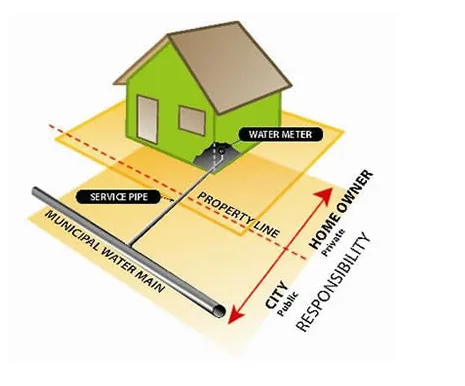
The service pipe carries water from the street into your home. Lead service pipes are most likely in Toronto houses built before the mid-1950s. Older solder and brass fittings can also contribute lead. You cannot rule it out by looking at a clear glass of water. Toronto's lead information explains the risks and next steps.
The City says buildings with more than six units did not use lead service pipes because those pipes could not support the required pressure. That is a point about the service line. It isn't a promise that every fixture in every apartment is lead-free.
Get a free lead test
Call 311 to register for Toronto's residential lead-testing program. It's for residents, not just property owners. Follow the kit's collection instructions. Don't improvise a flushing routine before taking the sample.
Kit pickup locations include 5100 Yonge Street, 1530 Markham Road, 850 Coxwell Avenue and 399 The West Mall. Return locations differ, so check the program page before travelling. The City says results arrive by regular mail within 30 days of receiving the sample.
Testing is the best next step if you don't know your service-line material. A cheap meter that measures dissolved solids is not a lead test.
What to do while fixing a lead problem
Use cold water for drinking, cooking and making formula. Toronto's lead guidance says to run the cold tap for at least five minutes after water has sat in the pipes for several hours. Flushing is a temporary measure. It does not replace a certified filter or pipe replacement.
Choose a filter specifically certified for lead reduction, and follow its replacement schedule. Boiling does not remove lead. Health Canada's lead advice explains why hot water and standing water need care.
Don't dismiss lead because only adults live in the home. Children and pregnancy need particular care, but adult exposure also matters.
Replace both parts of the service line
The public and private portions have different owners. Replacing just one portion can disturb lead and temporarily increase levels. Ask about the City's priority lead-service replacement program when arranging your own work.
The City also has targeted filter assistance. Eligibility rules apply, including household and income conditions for its faucet-filter rebate. Ask 311 which program fits your situation. Don't assume a free testing kit includes a free filter.
A filter for taste is a reasonable choice
You don't need to prove that tap water is dangerous to prefer a different taste. Some people like it cold. Others notice a pool-like smell, a metallic taste or seasonal earthiness.
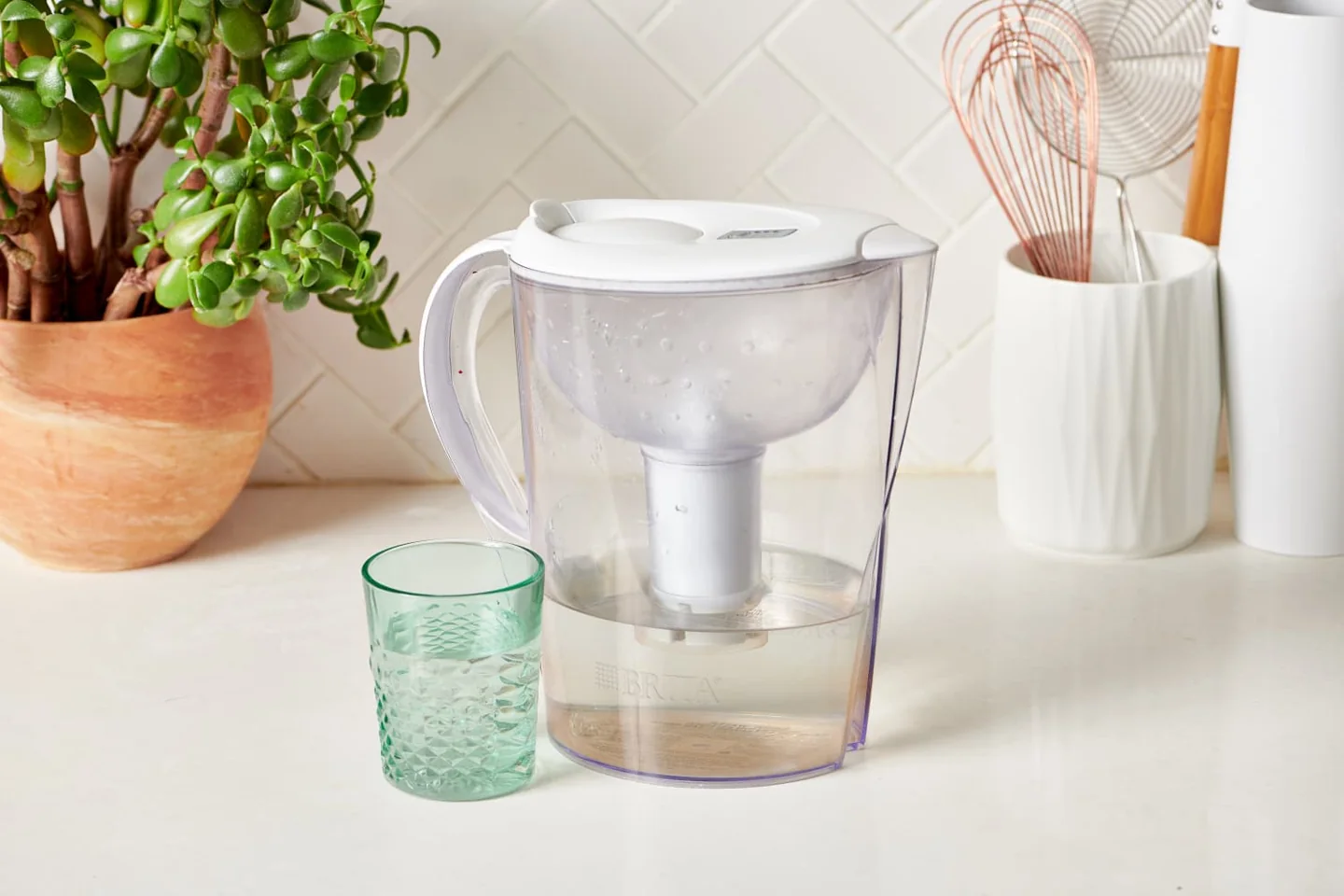
Try a clean covered pitcher in the fridge first. It costs less than a filter, and temperature alone can change what you enjoy. A reusable bottle also saves you from buying water whenever you leave home.
Two washable bottles can be easier to fit in a small fridge than a large jug. Refill one while using the other. If you prefer bubbles, sparkling water is a taste choice too. You don't need to dress that preference up as a health claim.
Don't build a day out around guaranteed free Starbucks water. We could not confirm a Canada-wide, no-purchase entitlement on September 15, 2026. Its coffeehouse policy reserves its spaces for customers and staff. Ask at the counter and carry your own supply.
Chilling is not a treatment for lead or other contaminants. Nor does leaving a jug on the counter reliably remove chloramine. The EPA's chloramine guidance specifically warns against relying on standing or boiling water for that job. Look for a chloramine-reduction claim if that is the concern you want to address.
Toronto says an earthy or musty taste can occur in late summer or early fall as Lake Ontario warms and algae affect taste. Water remains safe during those seasonal taste events. But a new smell can also come from a building's plumbing. Don't label every change “just algae.”
The City's taste and odour checklist helps separate a drain smell from the water itself. Take a glass into another room before judging the smell. If a problem persists, report it through 311.
Cloudiness that clears after a few minutes can be trapped air. Persistent cloudiness, sediment, unusual colour or a sudden change deserves a check. Note whether one tap or every tap is affected. That detail helps the City or a plumber narrow down the cause. See Toronto's tap-water guidance.
Choose the filter by its job
The words “filtered,” “pure” and “premium” don't tell you much. The exact model and cartridge matter.
| Your reason for buying | What to check | Our advice |
|---|---|---|
| You dislike the taste | Certified reduction of the taste or disinfectant you want to address | Start with an affordable pitcher or faucet unit |
| Lead is confirmed or suspected | Certification for lead reduction, compatible cartridge and capacity | Prioritize this claim over appearance or brand |
| You want fewer specific chemicals | The performance sheet must name those substances | Avoid broad “removes toxins” promises |
| Scale affects an appliance | Its manual, local hardness and maintenance instructions | Don't buy whole-home treatment based on kettle scale alone |
| A test shows a specific problem | A system matched to that result | Get advice before paying for installation |
NSF/ANSI 42 covers claims about taste and smell, such as chlorine taste and odour. NSF/ANSI 53 covers specified health-related reductions. NSF/ANSI 58 applies to reverse-osmosis systems. A certification number is not a quality ranking, and none means “removes everything.” Check the exact reduction claim in NSF's standards guide.
Brita Standard and Elite aren't interchangeable claims
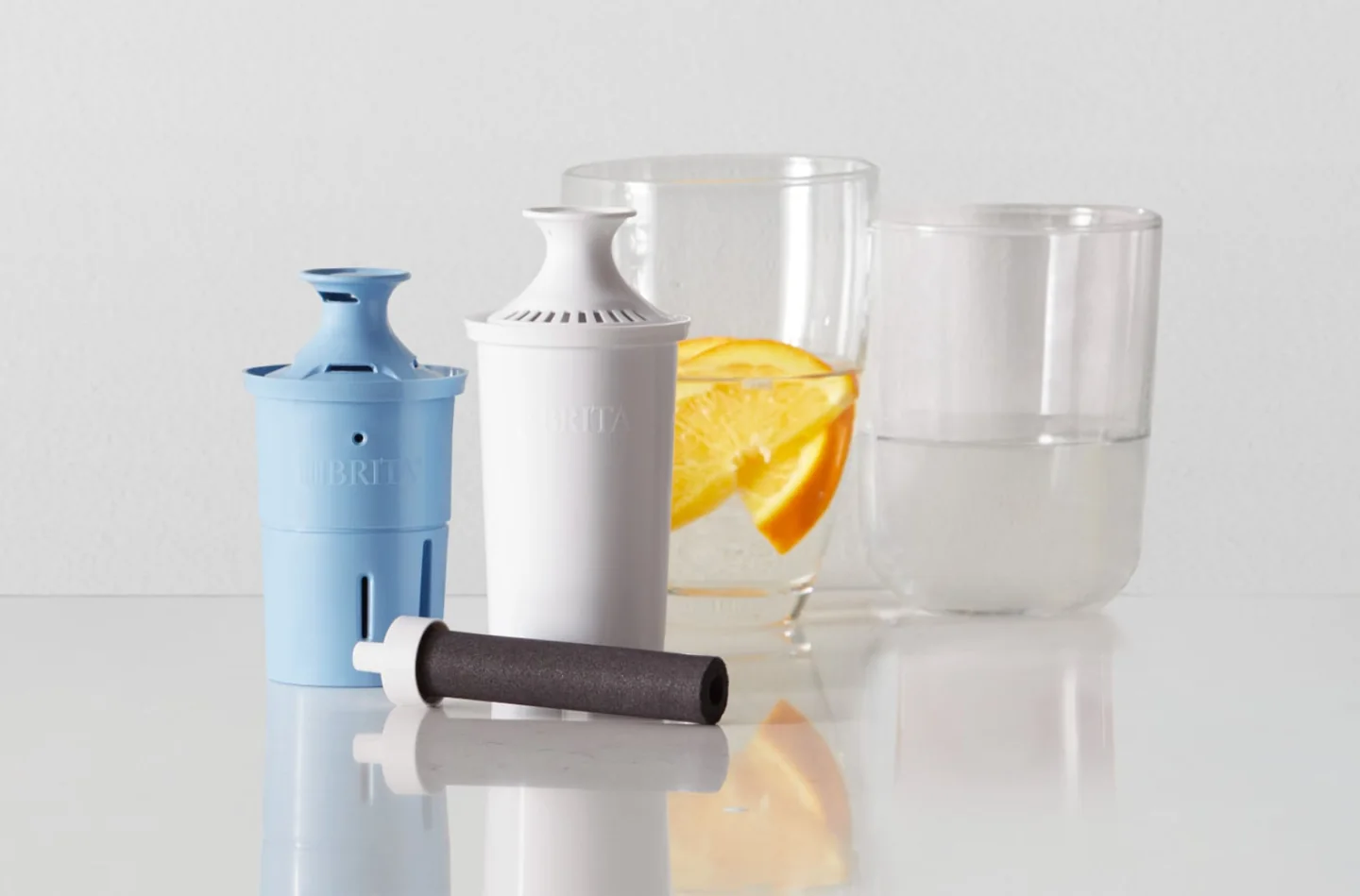
Brita's filter comparison makes an important distinction. Its Standard pitcher cartridge targets chlorine taste and several listed substances, but does not carry the Elite cartridge's lead-reduction claim.
Brita lists Standard replacement at about two months or 40 gallons. Elite is about six months or 120 gallons. Those are maximum usage guides, not permission to ignore the instructions for your household and product.
For a lead concern, check the Elite performance sheet and compatibility before buying. A Brita-branded bottle, faucet unit and pitcher are different products. A refrigerator filter also needs its own certification check.
Under-sink systems trade convenience for installation and upkeep
A plumbed filter avoids refilling a jug. It also brings cartridge costs, space needs and installation work. Renters should check what changes are allowed before arranging it.
Reverse osmosis pushes water through a thin barrier, called a membrane, to remove dissolved substances. Many systems combine that membrane with other stages. Judge the complete system's tested claims. Do not assume the membrane alone handles every disinfectant.
Health Canada says most people eating a reasonably balanced diet do not need mineral supplements simply because they drink reverse-osmosis water. Food supplies far more minerals than drinking water. Its home-treatment advice also stresses correct maintenance.
Our judgement: a whole-home system is too much to buy solely because you dislike a glass of water. Solve a kitchen drinking-water problem at the kitchen unless testing gives you a reason to go further.
Other brands and devices still need a model check
Aquasana, Viqua, Berkey, LARQ, Santevia Mina, Rainfresh, LifeStraw Home and Waterdrop came up during our research. They span different treatment methods, formats and prices. We have not verified a like-for-like Toronto shopping comparison or every current cartridge claim as of September 15, 2026.
Treat those names as options to investigate, not a ranked safety list. Ask for the exact model's certification, replacement cost, capacity and availability in Canada. That evidence could change the buying recommendation.
Loose charcoal sticks, ceramic or clay filters, UV systems and softeners are not substitutes for one another. A clogged ceramic element doesn't identify what it caught. UV doesn't stand in for certified lead removal. A softener addresses hardness, not every drinking-water concern.
A $15 charcoal-stick suggestion at Essence of Life in Kensington, Costco cartridge sales and a claimed $13-a-year Berkey cost remain unconfirmed. Those figures don't establish the current purchase price, replacement cost or certified performance. Get today's figures before comparing them with a pitcher.
Skip a generic marketplace unit whose maker and performance sheet you cannot identify. A low price doesn't make an unknown cartridge equivalent to a certified one.
Keep the pitcher clean and follow the replacement schedule
A filter that looks clean can still be past its rated life. Don't stretch a three-month schedule to a year because the cartridge has not turned brown.
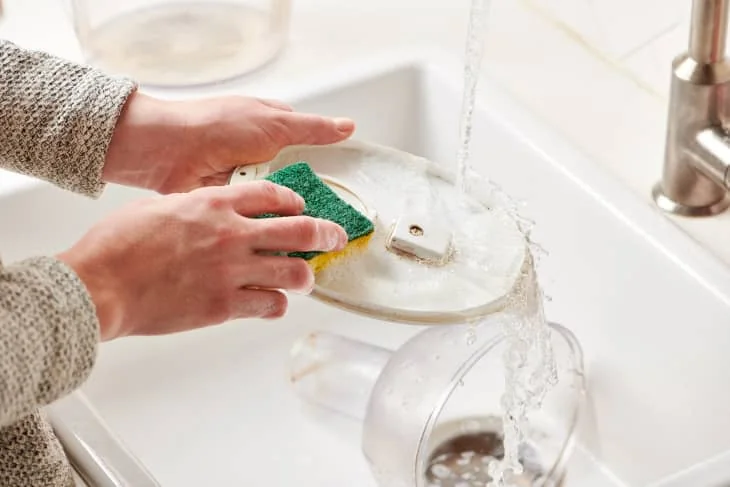
Follow the maker's pitcher-care instructions for cleaning the reservoir, lid, spout and seals. Use the correct replacement cartridge. Mark the installation date where you will see it. If flow slows or a film appears, follow the troubleshooting and cleaning instructions rather than guessing from the colour.
Coffee machines, kettles, humidifiers and dishwashers also have different water requirements. Check the manual before changing the water supply or taking parts apart. A filter does not cancel a coffee machine's descaling schedule. Poor dishwasher cleaning alone does not diagnose hard water.
For plants, use advice for the species you own. Our Toronto houseplant shop guide can help you find a place to ask. Don't infer a drinking-water danger from a plant's brown leaf tips.
Fish are a separate case. Chlorine and chloramine must be neutralized or removed for aquarium use. Ask an aquarium specialist for a product suited to your tank. The EPA explains why water safe to drink can still harm fish.
What about PFAS, microplastics and bottled water?

These deserve evidence, not a promise that any filter fixes them all.
Health Canada's drinking-water objective is 30 nanograms per litre for the sum of 25 specified PFAS, a group of persistent chemicals. Its PFAS advice explains treatment choices and their limits. A claim about two PFAS is not proof that a product removes every compound in the group.
Toronto's 2025 report lists PFAS test results and reporting limits. A result below a laboratory's reporting limit is not proof of absolute zero. We would not use that table to promise that every emerging contaminant is absent.
For microplastics, the City says testing methods are not yet standardized and provincial rules do not currently require routine testing. Treatment can remove small particles, but that isn't a guarantee of zero microplastics. A filter needs evidence for its own particle-reduction claim.
Bottled brands and delivery services, including Cedar Springs, solve a supply or convenience problem. Their names alone don't establish that they are safer than Toronto tap water. We haven't verified a current head-to-head comparison of Flow, Fiji, Perrier or other bottled brands.
Buying cases also means carrying and storing them, then handling the empty packaging. A refillable bottle can solve the basement-fridge or yard-work convenience problem with less packaging. If you grew up somewhere tap water wasn't reliable, use Toronto's reports and a home test to build confidence at your own pace.
Keep emergency water even if you normally use the tap. Toronto's emergency checklist calls for four litres per person per day for drinking and basic hygiene. Everyday fridge convenience, camping and emergency storage are different needs. Plan for each rather than treating every bottle purchase as the same decision.
Diagnose the problem before buying equipment
| What you notice | First step | What a filter can and cannot do |
|---|---|---|
| Chlorine taste or smell | Chill a clean, covered jug in the fridge and compare | A certified taste-and-odour filter may help. It does not fix plumbing. |
| Water only looks rusty at one tap | Compare another tap and follow the City’s colour-change guidance | Sediment filtration may help, but a corroded fixture or pipe needs repair. |
| Concern about lead in an older home | Use the City's testing and service-line process | Choose a filter certified for lead only as part of the response. |
| White scale on a kettle | Treat it as a hardness and cleaning issue | A drinking-water pitcher is not a whole-home softener. |
| Sudden unusual colour, smell or illness concern | Stop guessing and contact the City or a qualified health professional | One consumer filter cannot diagnose every contamination problem. |
Calculate the first-year cost before choosing a system. Include the housing or pitcher, replacement cartridges, plumbing work, test kits and the time needed to clean it. Record the installation date and replacement schedule where everyone in the home can see it.
Run new cartridges exactly as the manufacturer directs. A neglected filter can flow slowly, taste worse or stop performing as claimed. For most Toronto households, drink the tap water. Add a certified filter for a specific problem, not because a high dissolved-solids reading or social post made the water sound dangerous.
Frequently asked questions
Do I need to boil Toronto tap water before drinking it?
Not as a routine step for municipal water meeting drinking-water standards. Follow any official advisory affecting your address. Boiling is not a way to remove lead, and it does not replace a filter chosen for a specific chemical.
Can I use Toronto tap water for baby formula?
Toronto Public Health says tap water can be used, but formula preparation has its own boiling, measuring and equipment rules. Follow its infant-formula instructions and the product label. If your home has a lead concern, follow the City's lead-specific advice before using that water. A regular taste filter isn't enough.
Is Toronto water hard enough to need a softener?
The City says most homeowners do not need one. Mineral deposits are an appliance-care question, not proof of unsafe drinking water. A softener is a different purchase from a filter for lead or taste.
Does a dissolved-solids meter tell me whether water is safe?
No. It gives a combined reading, not the identity and amount of each substance of concern. Calcium and magnesium contribute to dissolved solids too. Use a proper lead test for lead and appropriate laboratory testing for a named concern. Health Canada explains dissolved solids.
Does Toronto add fluoride?
Yes, to help prevent tooth decay. Fluoride isn't something you can assume a pitcher removes. Check the exact product's performance claims if that is part of your decision. Toronto Public Health explains fluoridation.
What if water seems to make me or my pet ill?
Don't diagnose the cause from a taste change or online anecdote. Report a water-quality concern to 311 and speak with a clinician about persistent symptoms. Ask a veterinarian about a pet's needs. A filter purchase is not a diagnosis or treatment plan.
Start with the question you can answer: is this a taste preference, a plumbing concern or a confirmed test result? That will tell you far more than the price of the filter.