


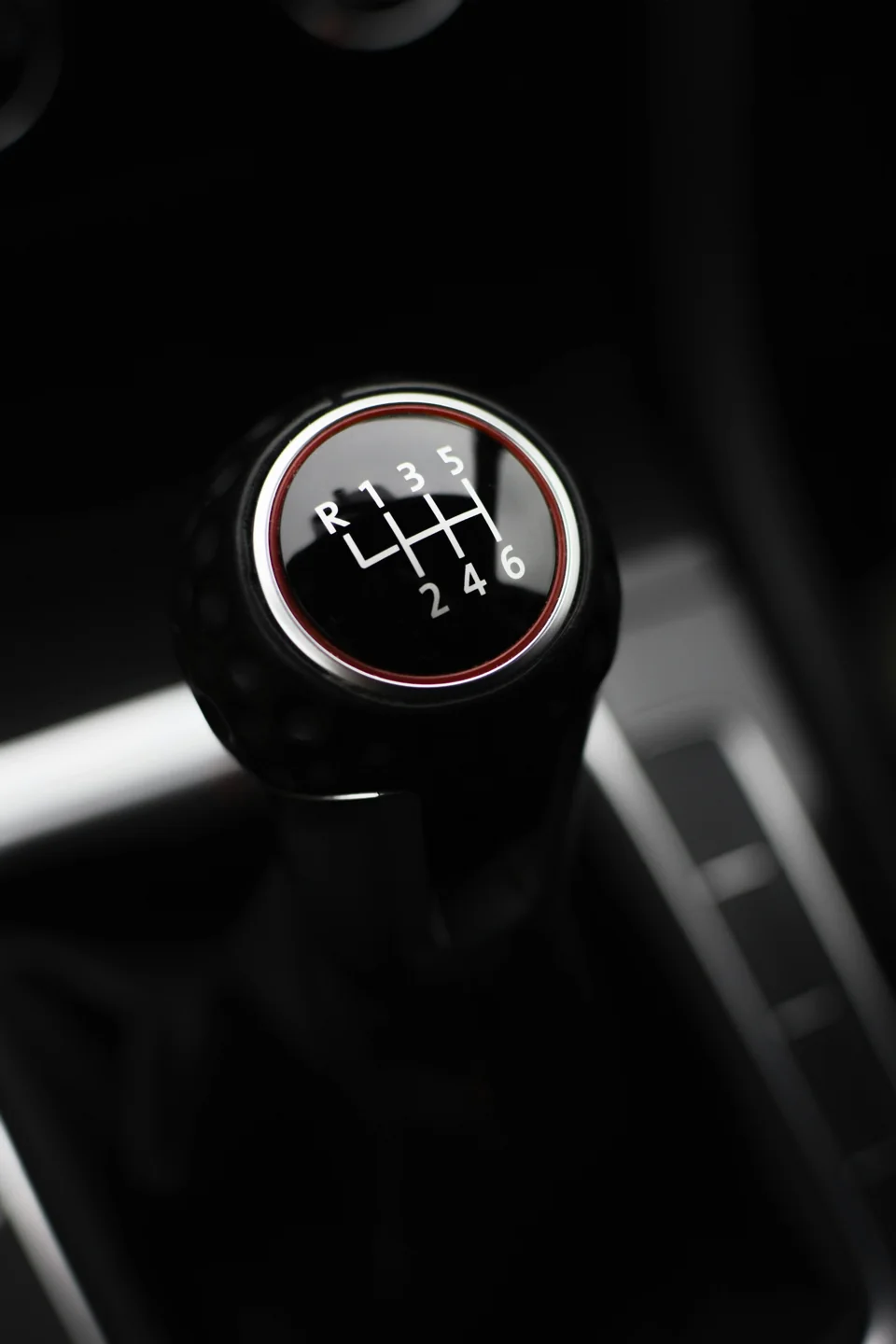
You can learn to drive a manual car in Toronto without owning one. The useful question is which course fits your licence, budget and reason for learning.
Our first pick for a short refresher is Clutch Academy's single 75-minute lesson. For a beginner who wants more teaching time, compare Shifters' 4.5-hour introductory course. If you have only a G1 and need a full beginner-driver programme, start by asking AMB about its manual course.
The main deal-breaker is eligibility. A lesson for an experienced automatic driver is not the same as a course for someone still learning road skills. Do not book until the school confirms that your licence is accepted.
These are research-based picks, not claims that we took the courses. Prices and service pages were checked on September 22, 2026. Ask whether tax and all required charges are included before paying.
Compare manual-driving lessons in Toronto
| School and option | Listed price | Teaching time | Best use | Important limit |
|---|---|---|---|---|
| Clutch Academy single lesson | $110 | 75 minutes | A refresher or first assessment | G2 or G required |
| Clutch Academy Foundations | $300 | Three lessons | A planned progression | Confirm each session's duration in the booking |
| Clutch Academy five-lesson package | $470 | Five lessons | More practice in varied traffic | A package name does not prove that you are ready to drive alone |
| Shifters introductory course | $415 | Three 90-minute sessions, 4.5 hours total | Learning the basics with more time | Etobicoke meeting arrangements need confirmation |
| Shifters city-driving course | $675 | Five 90-minute sessions, 7.5 hours total | Moving from basic control to city driving | Ask whether this is the right entry course for your experience |
| AMB manual lessons or certificate course | Request a current quote | Depends on the programme | G1 course enquiry or G2/G technique lessons | Confirm current manual-car and instructor availability |
For a fair comparison, use the actual minutes behind the wheel. A three-lesson package is not automatically longer than another school's two-lesson package.
Shifters' introductory price works out to about $92.22 per teaching hour. Clutch's single lesson works out to $88.00 per hour. These calculations use the listed price and duration only. They do not include any tax or extra charge not settled by the booking terms.
Clutch Academy: our pick for a first assessment or refresher
Clutch Academy offers private lessons in a supplied manual hatchback. Its current FAQ requires a valid G2 or G licence. The meeting location is selected when booking, so there is no single public office address to travel to for every lesson.
The single lesson is a sensible way to find out what you remember before buying a larger package. The school also lists a shared 2.5-hour session at $220. Confirm how many learners attend, whether that price covers the group and how the driving time is divided.
The good: a clear short-lesson price and a supplied car. The drawback: its cancellation wording is inconsistent. One sentence allows a refund with 24 hours' notice. Another refers to charges after 24 hours from booking. Get the rule clarified in writing before payment.
Choose a single lesson for a refresher. Choose a larger package after you know the instructor's style suits you. Do not use the advertised “confidence” wording as a promise that a fixed number of lessons will make every driver ready.
Map: approximate Toronto service area. Use the exact meeting point on your confirmation.
Shifters: compare the longer introductory course
Shifters' published courses include a training vehicle. The introductory course provides three 90-minute sessions. The city-driving course provides five. That makes the amount of teaching time easy to understand.
The school says it operates in Etobicoke. Ask about the meeting point, accepted licence classes, current availability and whether the course begins in a setting that matches your confidence level.
The strength: a clear progression from basic control to using those skills in ordinary traffic. The drawback: the meeting arrangement may be inconvenient if you live in the east end. Include the journey in your time budget.
There is also a $1,300, 15-hour performance course. Most readers learning for a holiday or a first manual car should skip that as their starting choice. Begin with safe starts, stops and everyday traffic skills.
Choose the introductory course if you want a defined block of time to build the basics. Ask the instructor which course is appropriate before paying for a more advanced label.
Map: approximate service area, not a lesson meeting point.
AMB: the useful enquiry for G1 learners
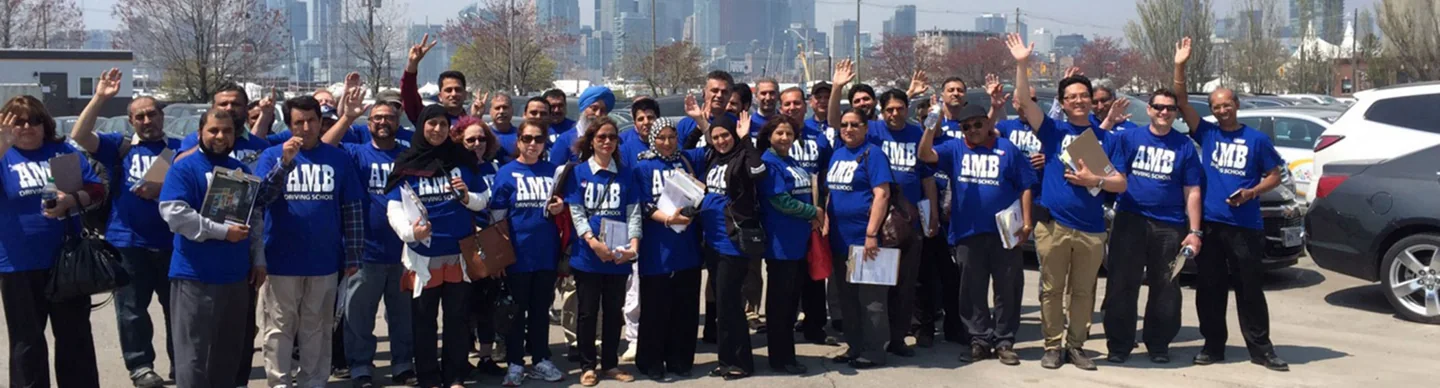
AMB's manual-shift page separates a certificate course from individual lessons for G2/G drivers. This is the first provider in this comparison to contact if you are asking about a beginner course in a manual car.
Its page describes classroom and manual-car instruction. Ask for the full current course outline, price, branch, instructor availability and the manual vehicle arrangement. Do not assume that every listed AMB location has a manual instructor ready to start.
The benefit: it offers a route to discuss manual training alongside beginner-driver education. The limit: the manual page does not give a complete current price comparison. You need a quote for your exact programme.
Before paying for a course sold as government-approved beginner-driver education, use Ontario's approved-school information and directory. Check the exact school location and course. Ontario says a full approved programme includes at least 40 hours across classroom, in-car and flexible instruction.
Choose AMB for a G1 course enquiry. For a licensed driver's short refresher, compare its individual-lesson quote with the two specialists above.
The branch and meeting point must be confirmed with the school. Do not travel to a classroom address assuming that it is your in-car pickup point.
Twenty things a useful manual course should cover
A good lesson is more than getting the car moving once. Use this list to explain what you want to learn. The instructor should choose a safe place and pace for each skill.
- A clear starting assessment. Explain your licence, driving experience and reason for learning. A nervous new driver and a returning manual driver need different lessons.
- A safe seating position. You need to reach the pedals and move the clutch through its full travel without stretching. Ask the instructor to check your setup first.
- The controls in the actual car. Find the parking brake, gear layout, mirrors and other needed controls before moving. Different cars do not all feel the same.
- What the clutch does. Ask for a plain explanation of how the engine and wheels connect. Understanding the purpose helps more than memorizing foot movements without context.
- Finding the bite point. This is the part of the pedal movement where the car begins to take drive. Practise it with the instructor in a suitable setting.
- Smooth starts on level ground. Repeat the start until you can do it without staring at the pedals. One lucky launch is not the same as a repeatable skill.
- Safe stops. You should be able to slow and stop while keeping attention on the road. The instructor should explain the clutch and brake timing for the car.
- Recovering after a stall. A stall is not the end of the lesson. Practise making the car safe, restarting and checking the road before moving again.
- Changing up without looking down. Learn the gear pattern while parked, then build the moving skill under instruction. Your eyes belong on the road, not the gear lever.
- Choosing a gear for speed and conditions. Ask why a gear suits a situation. Avoid treating one fixed speed chart as the answer for every car and hill.
- Changing down smoothly. You need this for slowing traffic and lower-speed turns. Learn ordinary control before chasing advanced techniques from videos.
- Starting on a hill. Tell the instructor if rollback is your main fear. Practise an appropriate method for that vehicle before tackling a steep or busy road.
- Slow traffic. Toronto queues can be tiring in a manual car. Ask how to manage low-speed movement without making the pedals your only focus.
- Turns and intersections. Gear choice should leave enough attention for people walking, cycling and driving. Do not rush from an empty practice area to a difficult junction.
- Reversing and parking. A car that moves forward well can still feel awkward in reverse. Include careful low-speed control and observation in the lesson plan.
- Starting again after an unexpected stop. Practise a calm, safe response to a situation chosen by the instructor. Do not create surprises yourself on a public road.
- Driving on different slopes. A flat practice area does not cover every hill. Build experience in stages rather than saving hills for the first day alone.
- Understanding the car's assistance features. Hill hold, an electronic parking brake and other aids vary. Ask what the training car does and what your own car might do differently.
- A realistic next step. Ask which situations you can handle reliably and which still need supervised practice. “You did well” is less useful than specific feedback.
- A plan for another manual car. Clutch feel, gear spacing and reverse selection can change. Allow time to learn a different vehicle before taking it into demanding traffic.
What to tell the instructor before the first lesson
Say if you are learning for a holiday, buying a car, returning after years away or simply curious. Mention the date you need the skill. A close travel deadline changes how much practice you can realistically fit in.
Explain any access need that affects pedals, seating or movement. Ask whether the vehicle and lesson format can meet it. Do not assume a standard training hatchback fits every driver.
Tell the instructor what worries you most. Hill starts, stalling in traffic and damaging a clutch are different concerns. A clear concern gives the lesson a useful starting point.
Do not turn a rented car into your first lesson
A car rental is a poor substitute for a training vehicle and instructor. The rental's driver rules, permitted uses and insurance terms apply. A friend's confidence is not proof that a rental contract permits instruction.
If a holiday is the reason you are learning, practise well before the trip. Confirm the destination's licence and rental requirements with the official authority and rental company. Ask for an automatic if your skills are not ready for unfamiliar roads.
Learning manual does not remove the need to understand Toronto's local driving rules. Keep road judgement ahead of the novelty of changing gears.
What to check before paying for lessons
Get the price, tax treatment, session duration, car supply, meeting place and cancellation rule in one written confirmation. Ask whether unused package lessons expire and what happens if the training car is unavailable.
Check whether time is private driving time or shared time. A group session may be enjoyable, but it should not be compared with a private session as if every minute were yours at the wheel.
If the school advertises an insurance benefit, ask your insurer before buying for that reason. Ontario says that completing an approved beginner-driver programme does not guarantee an insurance discount. A short manual refresher is also not automatically the same as that full programme.
Older recommendations sometimes refer to manual lessons at a branch of a larger driving-school chain. Current availability at those branches was not confirmed in our September 22, 2026 check. A current branch-specific manual instructor and vehicle confirmation would change that. Book a service the school currently offers, not a course someone remembers from years ago.
More useful Toronto guides
- Toronto driving rules for new drivers and visitors
- Why Toronto car insurance can cost so much
- Ontario tow-truck rights
Frequently asked questions
Do I need my own manual car for lessons in Toronto?
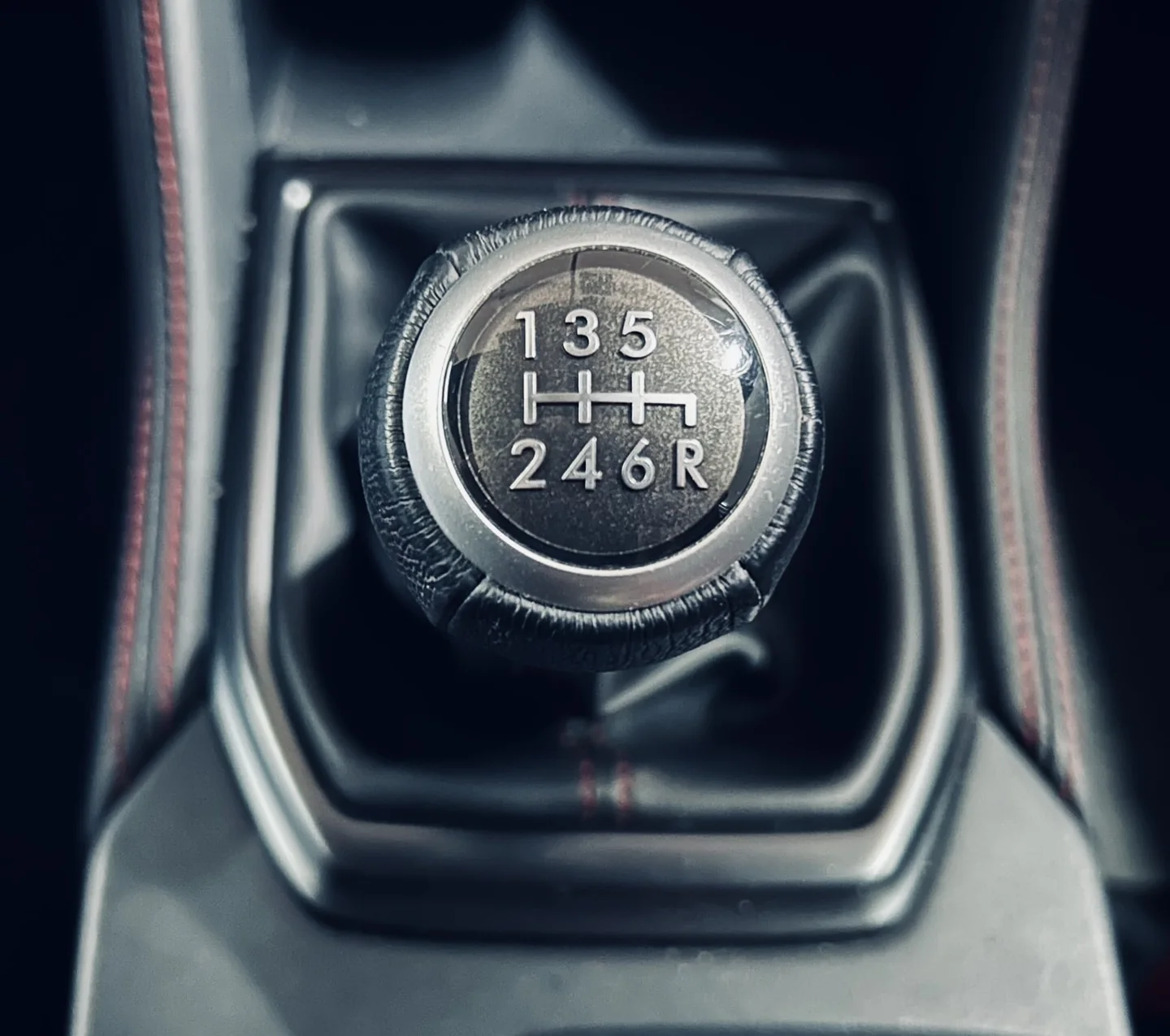
No. Shifters lists a supplied training vehicle, and Clutch Academy describes lessons in its manual hatchback. Ask AMB about the vehicle arrangement for the programme you choose. Confirm the car is included in the final quote.
Can I take manual lessons with a G1?
Do not assume that every manual specialist accepts G1 learners. Clutch Academy requires G2 or G. AMB advertises a manual certificate course, so ask it about the current G1 route and the full programme requirements.
How much do manual-driving lessons cost?
The listed options here include a $110, 75-minute Clutch lesson and a $415 Shifters introductory course with 4.5 teaching hours. Packages cover different amounts of time. Compare minutes, vehicle supply, tax and required fees before choosing.
Will three lessons be enough?
There is no honest promise that three lessons are enough for everyone. Your existing road skills, confidence and practice needs matter. Ask the instructor for a clear assessment of what you can do reliably and what still needs supervision.
What should I wear?
Wear clothing that lets you move freely and shoes that give clear pedal control. Clutch Academy specifically asks for thin-soled shoes and excludes sandals or open-toe shoes. Ask your own instructor about suitable footwear before arriving.
Will I damage the clutch by stalling?
Tell the instructor that this is your concern and ask how the training car is used and covered. Learn the correct response to a stall and follow the instructor's directions. Do not buy a course based on a promise that no learner can ever cause wear or damage.
Is a performance-driving course the right place to start?
For most new manual drivers, no. Start with ordinary starts, stops, hills, parking and traffic. Consider advanced training only after those skills are steady and you have a clear reason for it.
Should I learn manual before renting a car abroad?
Yes, if you plan to rent a manual and cannot already drive one confidently. Finish lessons early enough to judge your readiness. Confirm the rental and licence rules separately, and choose an automatic if that is the safer fit for your trip.
Choose the course that matches your licence and gives you enough useful practice. The goal is calm control in ordinary traffic, not finishing a package as fast as possible.