


Start with the latch, not a new gadget. Toronto's green bin should close fully and lock properly. Keep food smells down, store it securely and put it out on collection morning when your schedule allows.
Our first choice is a working bin in a closed shed, garage or secure enclosure. If you don't have that space, a clean, locked bin with less food waste sitting in it is the practical alternative. Loose bricks and scent tricks are weaker bets. The City's wording is animal-resistant, not a promise that no raccoon will ever get in.
City collection instructions and wildlife guidance checked September 20, 2026.
In this guide
Leave the built-in latch locked for pickup
For Toronto's current green bin, turn the dial to the locked position and set the bin squarely towards the street, with the arrows on top facing the road. The gravity lock releases when the collection truck lifts and tips the bin.
An added bungee is different from the built-in lock. Remove extra ties and bungees before collection. The truck needs to empty the bin without someone undoing your home-made security system. Follow the City's green-bin set-out instructions.
For daytime collection, have bins out before 7 a.m. Putting them out that morning gives raccoons less overnight access. The permitted earliest set-out is 8 p.m. the previous evening. Nighttime collection has a different window: after 6 p.m. and before 9 p.m. on the scheduled day.
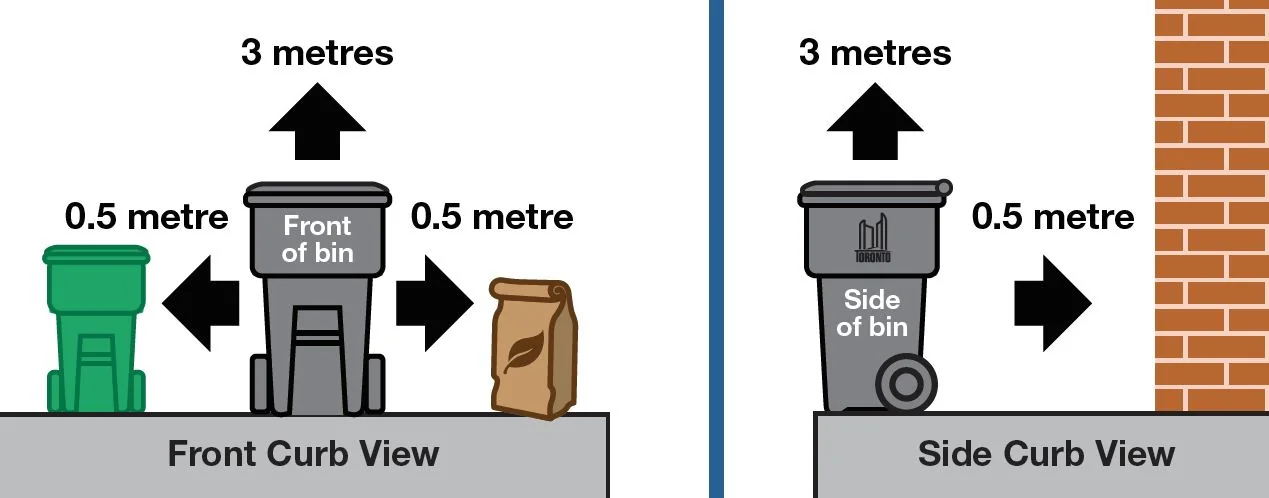
Keep lids closed and leave 0.5 metres between bins. Don't wedge them against a fence at the curb or leave them attached to a wall. Secure storage between collections must still allow proper set-out on pickup day.
Diagnose the actual failure
| What you find | Best next step | What to skip |
|---|---|---|
| Lid or latch does not close | Request a City repair | Buying scents or lights while the bin remains open |
| Bin is found on its side but still locked | Stabilize its storage position or use a secure enclosure | A loose brick that can fall or injure someone |
| Food is pulled out around a closed bin | Check for a gap, crack or spilled scraps nearby | Assuming the raccoon opened the latch |
| Added strap stops the lid opening at pickup | Remove it before set-out and use only for storage | Attaching the bin to a fence at the curb |
| Raids happen after overnight set-out | Put the bin out in the morning when practical | Missing collection by placing it out after the deadline |
Take one photo of the bin before cleaning up. It can show whether the lid opened, the body cracked or the entire bin tipped. That is more useful than changing three things at once and never learning what failed.
Fix a broken lid before buying another deterrent
A latch that doesn't catch, a cracked lid or a damaged handle can undo everything else you're trying.
Toronto provides free repairs for eligible residential garbage and green bins. The service covers houses and apartments above businesses receiving City collection. Most repairs are completed within five business days, according to the City.
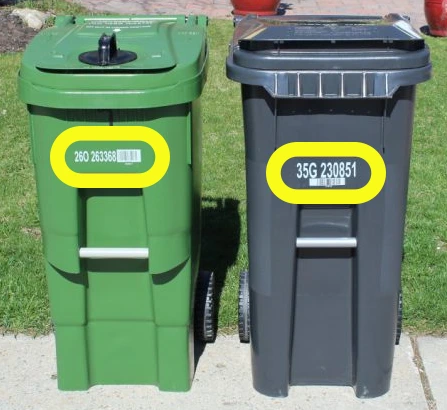
Have the bin's serial number ready. Choose the correct request for lid, body, handle, wheel or metal-bar damage. Leave it on your property where staff can see and reach it from the street. A bin hidden behind a locked backyard gate can't be repaired.
If you want only a replacement lid, start with this repair route. Don't assume you need to buy an entire bin or modify the one you have. For a missing bin or serial number that doesn't match the City's record, follow the missing-bin instructions instead.
Blue bins are different in 2026. Residential recycling is now handled through Circular Materials. Use its repair route or call 1-888-921-2686, rather than filing a City green-bin request.
Make the bin less rewarding
Food smells are the invitation. Freezing scraps until closer to collection can help if you have room. If the freezer is already full, focus on a closed lid, regular cleaning and secure storage.
Toronto allows a regular plastic bag to line either the kitchen catcher or outdoor green bin. You don't need to buy compostable bags. Line one, not both, and loosely tie or twist the bag without a twist tie. Wash the catcher and bin with dish soap. The City's organics guide has the sorting rules.
Don't leave loose food waste beside the bin. Put food scraps in the organics stream and keep food residue out of the other containers as much as possible. Toronto Wildlife Centre notes that food left in jars, bottles and cans attracts animals, which can also become caught in them.
Pet food outside is another easy meal. Bring it in and clean up spilled food. If raccoons find dinner beside the bins, securing the green bin alone won't remove the attraction.
Manage the smelliest waste first
Fish scraps, meat packaging and spoiled food create a stronger reward than a clean paper towel. Freeze the smelliest scraps until collection day if you have room. If you do not, bag them securely within the City's green-bin rules and wash residue from the rim and latch.
Rinse food containers before placing them in recycling. Since January 2026, residential recycling collection questions go to Circular Materials, but removing food residue still helps keep your whole set-out less attractive.
Do not mix ammonia, bleach or other cleaners in the bin. Dish soap and water are the City's stated cleaning method. Strong chemicals can harm people and animals and still fail to solve a broken latch.

If raccoons keep tipping the bins
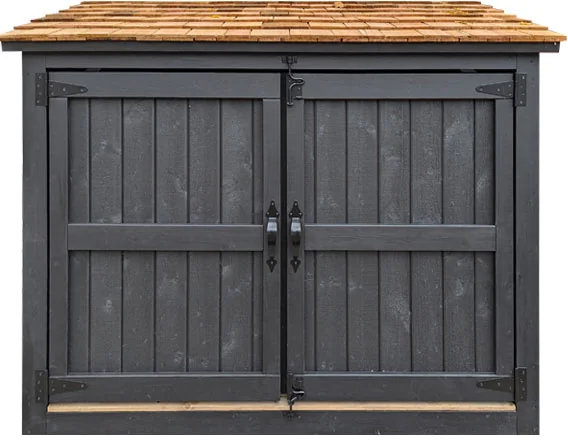
Toronto Wildlife Centre recommends keeping bins inside a closed shed or garage, or using a secure enclosure. For a small property, choose storage you can open easily on collection morning. A difficult setup is one you're less likely to keep using.
The Centre also mentions securing bins with bungees or supporting handled bins off the ground. With a large, full wheeled bin, we prefer stable ground-level storage. Don't hang a heavy bin from a hook unless the support and fixing are suitable for its loaded weight. See the Centre's garbage-bin guidance.
Keeping a bin under a deck only helps if the space actually stops access. Raccoons also use sheltered spaces under decks. Simply moving the bin into the shade doesn't make it secure.
A strap can help in storage, but it is not the first fix
Neighbours commonly report using a bungee around the lid or bracing the handle so a bin cannot be tipped. This can help between collections if the latch already works. It can also create a collection problem if it is left attached.
Use any added restraint only where it does not create a trip, strangulation or access hazard. Remove it before the bin goes to the curb. Do not drill into a City bin or disable its gravity lock. A damaged City bin belongs in the repair system.
If several bins stand together, place them on a level surface and leave enough room to open each one. Wedging bins tightly can hide a spill and make a heavy bin harder to move. A purpose-built enclosure that closes fully is a stronger option than stacking weights on the lids.
Which common fixes are still unproven?
As of September 15, 2026, we have not verified reliable results for Critter Ridder on bins or flashing-light gadgets. We also lack proof for loose patio stones, bricks, diapers or used litter as ways to keep raccoons away. These suggestions come with mixed personal reports, not a dependable comparison. We would need suitable product instructions and stronger evidence before recommending them over physical storage.
Toronto accepts diapers, pet droppings and specified cat litter in the green bin. That sorting rule doesn't prove they keep raccoons away. Dispose of household waste normally. Don't borrow someone else's dirty diapers as a pest-control project.
Our pick is a physical barrier you can maintain. Skip piling loose heavy objects on the lid as your main plan, especially if someone has to lift them in the dark before work.
Check for an animal before putting the bin out
If a raccoon is inside, pause collection of that bin. Don't shut it in, poke it with a tool or send the bin to the curb expecting the truck crew to find it.
Toronto Wildlife Centre says alert, uninjured adults in ordinary bins can often leave on their own when given space and an open exit. Smaller, fully furred youngsters can sometimes struggle in a deep bin. Its guidance describes providing a climbing route, such as a board, and then backing away. Get advice if you cannot do that without approaching or cornering the animal.
Tiny babies can mean a den
Don't assume babies are abandoned because their mother is out of sight. The Centre advises leaving an undisturbed litter where it is so the mother can return and move it, often overnight.
If babies were already moved, follow its bin-den reunification guidance and contact a trained wildlife carer. Don't give them food or water. The right response depends on their age, condition and location.
Keep other people from using the occupied bin. Tell the household or property manager what is happening. That is more useful than trying to photograph the animals at close range.

When to get help
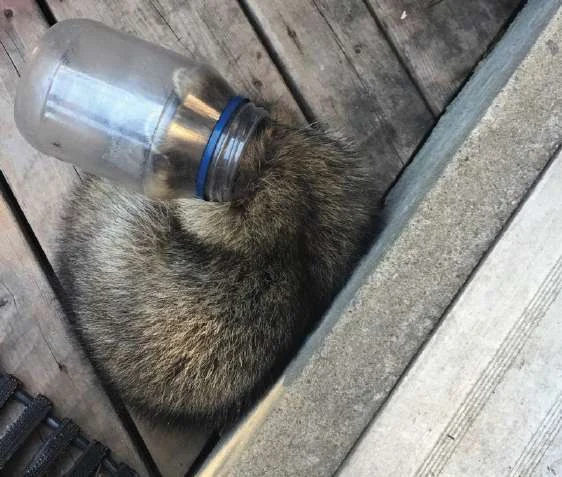
Call 311 for a sick, injured or very young raccoon, or one behaving abnormally. Keep pets and children away. Being outside during daylight isn't, by itself, proof of illness. Confusion, seizures or obvious injury need attention. Toronto's raccoon guidance explains the signs.
For wildlife advice, contact Toronto Wildlife Centre through its assistance form or at 416-631-0662. Its stated hours are 9 a.m. to 6 p.m. daily. Speak to staff before bringing an animal in. An online request sent after closing is not a promise that a rescue team is coming right away.
If a raccoon has entered an attic or another building space, don't seal the opening until you know every animal is out. Young can be left behind. A humane wildlife professional is the better option when you cannot assess the space safely.
Trapping and driving a raccoon across the city is not a good fix for an accessible food source. Toronto's wildlife-trapping rules include humane handling, release within 24 hours and within one kilometre, plus other restrictions. The City also warns that trapping can separate mothers from young. Fix the access problem first.
If someone is bitten or scratched
Wash the wound with soap and water and seek medical care promptly. Report the exposure to Toronto Public Health through 311. A doctor or other health professional can assess rabies and other infection risks.
Do not try to capture the raccoon for identification. Note the time, location and behaviour from a safe distance. Keep pets' rabies vaccinations current and call a veterinarian if a pet had direct contact.
Frequently asked questions
Are Toronto green bins raccoon-proof?
The City calls them animal-resistant. A damaged latch, an open lid or an accessible food source still needs attention. Treat a raid as a reason to inspect the setup, not proof you need an expensive new gadget.
Should I unlock the green bin before collection?
No. Keep the built-in dial locked and point the arrows towards the street. Remove added straps or bungees so they don't prevent the truck from emptying it.
What if a collector says the locked bin can't be emptied?
Check your bin against the City's written instructions and contact 311 about the missed collection. Explain the latch position, set-out and any damage. Don't assume the cause was a lazy worker or a different rule for a contractor's route.
Can I get a new green-bin lid without paying?
The City offers free repairs for eligible damaged residential green bins. Use the lid-damage request and provide the serial number. A repair request is the place to start; it doesn't guarantee a specific replacement part will be sold separately.
Should I feed a raccoon so it leaves the garbage alone?
No. Feeding creates another reason to return. Remove easy food sources and keep your distance. If you take a photo, don't lure it closer or reveal a den's precise location. The City's wildlife-photography advice explains why.
What if a raccoon bites or scratches me?
Seek medical attention immediately and report the exposure to Toronto Public Health. Don't try to catch the animal yourself. A raccoon that looks calm is still a wild animal.
Is it safe to use bleach or ammonia as a raccoon deterrent?
Skip it. The City tells residents to wash bins with dish soap and water. Chemical smells do not repair a latch or stop a bin being tipped, and mixing cleaners can be dangerous.
Can I drill a new lock into a City green bin?
Do not modify the bin. Request a free repair for eligible City-serviced homes when the lid, latch, handle or body is damaged. Added holes can create a new weak point and interfere with collection.
Start with a repair if the bin is damaged. Then remove the food reward and make storage harder to enter. Those steps do more useful work than another brick on the lid.