



If you need low-cost vet care in Toronto, start by separating routine care from a sick-pet visit. Toronto Humane Society is our first place to check for planned vaccines, microchips and other wellness services. For an unexpected treatment bill, ask your veterinarian about the Farley Foundation.
The main catch is important: a subsidized wellness appointment does not replace an emergency clinic. Don't take a sick animal across the city without first confirming that the clinic can see it.
This guide covers the practical choices, their limits and the questions to ask before you spend money. Service details were checked on October 9, 2026.
Which Toronto pet-care service should you contact first?

Our pick for planned care is Toronto Humane Society's Public Veterinary Services. The clear fee guides make it easier to plan a visit. But the clinics have a limited scope, so check the service before booking.
| Your situation | Start here | Main limit |
|---|---|---|
| Vaccines, parasite prevention or a microchip | Toronto Humane Society wellness booking | Limited appointments; not a sick-pet or emergency clinic |
| Spay or neuter surgery on a low income | City SNYP program or THS surgical booking | Eligibility and an appointment are required |
| An unexpected bill for necessary treatment | Your vet, with a Farley Foundation funding request | The clinic applies; funding is not guaranteed |
| You use a shelter or 24-hour homeless service | Ask staff for HelpingPawsTO | A staff referral is the access route |
| Food or temporary pet care during a difficult period | Through Ruff Times or another pet-support program | Supplies, space and intake times vary |
| A pet that needs urgent medical attention | Call a veterinary clinic and describe the symptoms | Don't wait for a subsidized wellness slot |
You can also use our Toronto vet clinic guide to build a shortlist of full-service clinics. The useful question is which clinic can provide the right care, at a cost you understand.
Toronto Humane Society's two wellness locations
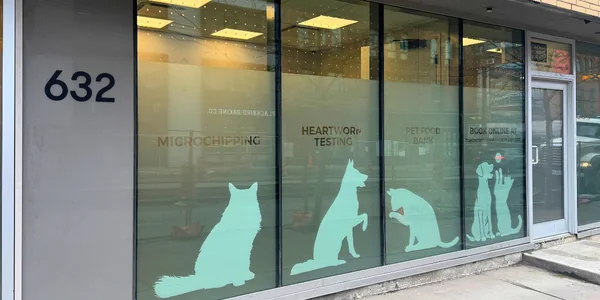
The wellness service page lists 11 River Street and 632 Queen Street East. Both are in the east downtown area. The location shown in your booking confirmation is the one to follow.
The good part is a published service list and a lower-price route for eligible clients. The bad part is that an address on a map can make a clinic look like a walk-in option. These are appointments, and the wellness page says sick pets, emergencies and chronic conditions are outside its current scope.
Choose THS for a planned service it actually offers. Call a full-service vet when the problem falls outside that list.
What does a Toronto Humane Society wellness visit cost?
The official wellness fee guide linked by THS gives these examples. It was the current linked guide when checked on October 9. Ask the clinic to confirm your full total before the appointment.
| Service | Standard price | Bridging price for eligible clients |
|---|---|---|
| Wellness exam | $75 | $52.50 |
| Rabies vaccine | $35 | $24.50 |
| Cat FVRCP vaccine | $35 | $24.50 |
| Dog DHPP vaccine | $35 | $24.50 |
| Microchip implant | $30 | $21 |
| Prescription dispensing fee | $25 | $17.50 |
An exam plus one rabies vaccine comes to $110 at the standard prices, or $77 with bridging pricing. Those are simple sums from the guide, not a complete quote for every pet. Extra services or medicines change the bill.
The same guide says wellness fees have no HST and must be paid in full at the visit. THS does not offer delayed billing or payment plans. That matters if you're choosing a clinic because you need time to pay.
Check eligibility before assuming the discounted price
THS lists ODSP, Ontario Works, Guaranteed Income Supplement and CPP Disability among the qualifying supports. Its site also explains documentation for First Nations, Inuit and Métis clients.
Bring the proof the clinic requests, in the pet owner's name. If you don't have the usual documents, email [email protected] before you travel. A missing document is a problem to solve with staff, not a reason to guess at eligibility.
Make the booking process part of your plan
The clinic's booking instructions explain the client profile and appointment system. Read them before a booking release. Keep your pet's records and your eligibility documents ready.
Check the current release dates on the wellness page. An empty calendar is not a promise that calling will uncover a hidden appointment. Ask about cancellations or a waiting list, but keep another plan if the service is time-sensitive.
The published prices are useful. The availability is the harder part. Book first, then arrange the trip.
Can the Farley Foundation help with an expensive vet bill?

The Farley Foundation supports low-income Ontario pet owners with necessary veterinary care. This is the strongest route in this guide to ask about when the need is treatment rather than a routine vaccine visit.
It is not a clinic, and it is not a cash grant you claim online yourself. Its current eligibility page says veterinary practices submit applications. It lists qualifying benefit recipients and households with annual income below $35,000, among the groups it helps.
The treatment must qualify, the clinic must participate and funding must remain available. Meeting the income rules alone does not guarantee an approval. A practice can also have used its allocation for the year.
Ask your clinic this specific question:
“I'm worried I can't afford this treatment. Do you participate in Farley Foundation funding, and can you check whether my pet and I qualify?”
That is more useful than calling the foundation and hoping it can choose a vet or discuss your application. The foundation directs owners back to the practice for those steps.
What if you don't already have a vet?
Ask a local practice about Pets to Vets, the foundation's route for eligible people without an established veterinarian. The foundation explains that it can help with a first exam and core vaccines to build that relationship.
This deserves a place in your longer-term plan. It is a weak last-minute plan for a pet already in distress. You still need a clinic willing and able to help.
Ask about Farley early in the cost discussion. Don't let a possible grant delay the veterinarian's assessment of an urgent problem.
Free pet support for people using shelters or facing a crisis

HelpingPawsTO: ask shelter or respite staff for the referral
HelpingPawsTO is for clients of Toronto shelters and 24-hour homeless services. Ask staff to submit the referral. The City says clients are notified of an appointment date and time within one business day. That does not mean treatment happens within one business day.
The listed free services include spay and neuter, vaccines, microchips, flea control and health exams. Pet food and supplies depend on availability. The program uses the SNYP truck or Toronto Humane Society at River Street.
The benefit is a staff-supported route that can remove several barriers at once. The limit is its defined service list. Use the referral for the services it covers, and ask staff to help contact a vet separately if the animal is sick.
SNYP: a separate low-income route for spay and neuter
The City's SNYP mobile clinic page says households below $50,000 in income can qualify for subsidized or waived fees with proof. This is a different threshold from Farley Foundation eligibility.
The truck visits locations across Toronto. Don't pick a stop from an old event listing and arrive with your pet. Confirm the current appointment location and any weather-related change.
For routine spay or neuter, compare this with THS's surgical service. Ask what the quoted fee includes, whether a consult is needed and which patient restrictions apply.
Through Ruff Times: help keeping people and pets together

Through Ruff Times at Breakaway Community Services offers temporary pet care, a pet food program and animal-related grief support. It is useful when housing, treatment or another life event makes caring for your animal difficult.
Its temporary-care page says it is not a crisis service and intake can take two to five work days. The food program also has an updates link. Check it before arranging a pickup.
This is support around pet ownership, not an open emergency veterinary clinic. Contact it when temporary care or food would solve the immediate problem. Ask staff about the current intake and the care your animal needs.
When the bill is still too high
Tell the clinic your spending limit before agreeing to a long list of tests or treatments. Ask for an itemized estimate and a clear explanation of what the veterinarian considers urgent.
Useful questions include:
- What does the exam fee cover?
- Which parts of this estimate are needed today?
- Is any follow-up, medicine or testing charged separately?
- Can you check financial-assistance eligibility before treatment starts?
- Do you offer a payment arrangement, and what does it cost?
- If a transfer is medically appropriate, what records will the next clinic need?
A second estimate can help with planned care. But repeated consult fees, transport and a delay can erase the saving. Ask the vet whether there is time to compare, especially when your animal is already ill.
Don't assume an independent clinic has a hardship fund or that a large clinic does not. Ask about help politely and directly. A discretionary reduction is not an entitlement or a dependable city-wide program.
If a clinic offers financing, read the interest, fees and repayment terms. A lower first payment is not always a lower total cost.
Other leads to check, with their limits
As of October 9, 2026, we could not confirm a standing, publicly bookable free treatment program at St. Felix Centre or Kahu Animal Hospital. Confidence is low for that specific claim. Treat them as contacts to ask about current outreach or hardship options, not confirmed free clinics.
Likewise, Toronto Street Cats, Team Cat Rescue and community veterinary outreach groups can be useful referral leads. We have not confirmed that they accept general public requests to fund treatment for any pet. Their species focus, capacity and program rules can change the answer.
If you're helping somebody else, make the call with their permission. Ask about transport, documents and the booking process as well as money. Solving only the fee problem can still leave the visit out of reach.
Make a plan before the next bill
Keep records from every clinic together. Save the pet's microchip number, medicines and contact details. Ask a support worker or trusted friend to help keep a copy if paperwork or phone access is difficult.
When you have some breathing room, look at regular food support and a small emergency fund. Keep your microchip contact details current, too. Our Toronto lost-and-found pet guide explains what to do if an animal goes missing.
The best next step is a call to the service that matches the need. Explain the problem, the budget and the barriers. Get the appointment and expected cost clear before setting out.
Maps for the places mentioned
These are search maps. A result does not confirm a business is open, a particular entrance is usable or an appointment is available. Confirm current official details before travelling.
Search results: Kahu Animal Hospital
Search results: St Felix Centre
Search results: Breakaway Community Services
Frequently asked questions
Is there a free emergency vet in Toronto?
We have not confirmed a general free emergency clinic open to every Toronto pet owner. Contact an emergency or full-service vet and explain the financial problem. Ask about assistance, but don't assume a wellness clinic can handle the case.
Can I apply to the Farley Foundation myself?
No. Its funding applications are submitted by veterinary practices. Ask your vet to check eligibility and available funding, and ask that practice for updates on an application.
Can I use HelpingPawsTO if I am not staying in a shelter?
The City names clients of shelters or 24-hour homeless services. If you use a qualifying service, ask its staff about a referral. If you don't, ask a support worker about other programs rather than assuming the same access route applies.
Does a cheap vaccine price include the exam?
Not necessarily. Ask for the combined total, including the exam and any other service. A single vaccine line on a price sheet is not the whole appointment bill.
Does Toronto Humane Society offer payment plans?
Its current wellness fee guide says fees must be paid in full at the appointment and delayed billing or payment plans are not offered. Budget for the full visit. Ask another clinic about its own terms if spreading the cost is essential.
What should I bring to a low-cost vet appointment?
Bring the booking confirmation, relevant medical records and the eligibility proof the provider requests. Check whether your pet needs a carrier or other handling arrangement. Confirm the clinic address, since the organization may have more than one location.
Can a charity cover the entire bill?
Sometimes assistance reduces a bill, but coverage depends on the program, treatment and available funds. Don't approve work on the assumption that a grant will pay. Ask the clinic to explain your remaining cost before you agree.