


You go back to a Toronto restaurant you loved as a child. You order the same meal. It arrives, but the magic is missing.
That does not always mean the kitchen became bad. The recipe may have changed. The price may change how you judge it. Your palate is older. The dining room may be different. Most of all, the old meal was tied to a person, a birthday or a time in your life that cannot be put back on a plate.
The short answer
| What feels different | What may really have changed |
|---|---|
| The flavour | Recipe, supplier, portion or your own taste |
| The value | Higher price, smaller portion or a different idea of a treat |
| The room | Renovation, lighting, music, service style or a new location |
| The mood | You came back expecting a memory, not only dinner |
| The brand | New owners, a different franchise operator or a smaller menu |
The smartest way to revisit an old favourite is to treat it as a new meal with a history. Do not ask one dinner to make you ten years old again.
Memory is part of the recipe
Childhood food memories are rarely just about salt, sugar or sauce.
Maybe Mandarin meant a grandparent's birthday. Swiss Chalet meant a quiet Sunday when nobody had to cook. Pizza Hut meant a pan pizza in a dining room, not a box at home. A burger at Square Boy may remind you of being handed a few dollars and trusted to order for yourself.
When the people, room and ritual are gone, the same food can feel smaller. That is not foolish. It is how memory works.

Yes, the food may actually have changed
Nostalgia should not become an excuse for every disappointing meal. Restaurants do change.
Ingredient costs rise. Suppliers change. Chains simplify menus. A franchise location may cook differently from another location. A family restaurant can pass to a new generation. A beloved cook can retire. Health rules, labour costs and customer habits can change the way a dish is made.
Portions can also shrink while the plate looks similar. A sauce may be sweeter, thinner or made elsewhere. A crust that once came out of a deep pan may now be designed for delivery.
These are possible explanations. They are not proof about one restaurant. A single weak meal does not tell you why it changed.
Separate three questions:
- Did the company change the recipe or supplier?
- Did this location prepare the item poorly that day?
- Did the item stay similar while your expectation changed?
Only the first question is a brand-wide change. A cold buffet tray, rushed delivery order or overcooked burger can be a one-visit problem. Try to identify what you actually tasted before deciding that a whole chain changed.
Delivery can turn it into a different meal
Some nostalgic food was designed to be eaten immediately. Fries soften in a closed bag. Pan pizza steams in a box. Rotisserie chicken skin changes on the trip home. Ice cream and milkshakes lose texture.
Delivery can also separate the food from the room that made it feel special. You lose the smell, music, server, booth, decorations and moment when everyone starts eating together.
If the old memory happened in a dining room, give the current restaurant one dine-in test before judging it through an app order. If the current location is takeout only, accept that you are testing a new format with the old name.
Price changes the way food tastes
A cheap meal gets more room to be imperfect. A nostalgic meal at a modern price does not.
When a burger costs much more than you remember, you notice the dry bun. When a family dinner becomes a major bill, slow service feels heavier. A child does not see tax, tip, delivery fees or a household budget. An adult does.
That is why “it was better before” can also mean “it was easier to enjoy before.”
Your palate grew up too
Children often love direct flavours. Salt, cheese, sweet sauce and crisp batter are easy to understand. Adults may notice grease, texture and balance more sharply.
You have also eaten more food since then. A first poutine can feel astonishing. The fiftieth has competition. Toronto's restaurant scene now gives diners more choices from more parts of the world. The old favourite is being judged against a much bigger personal menu.
This does not make the childhood meal fake. It means it belonged to the right moment.
Five Toronto revisits that need the right expectation
These places are not being ranked as better or worse than before. They show five different ways a food memory can work.
The Old Spaghetti Factory
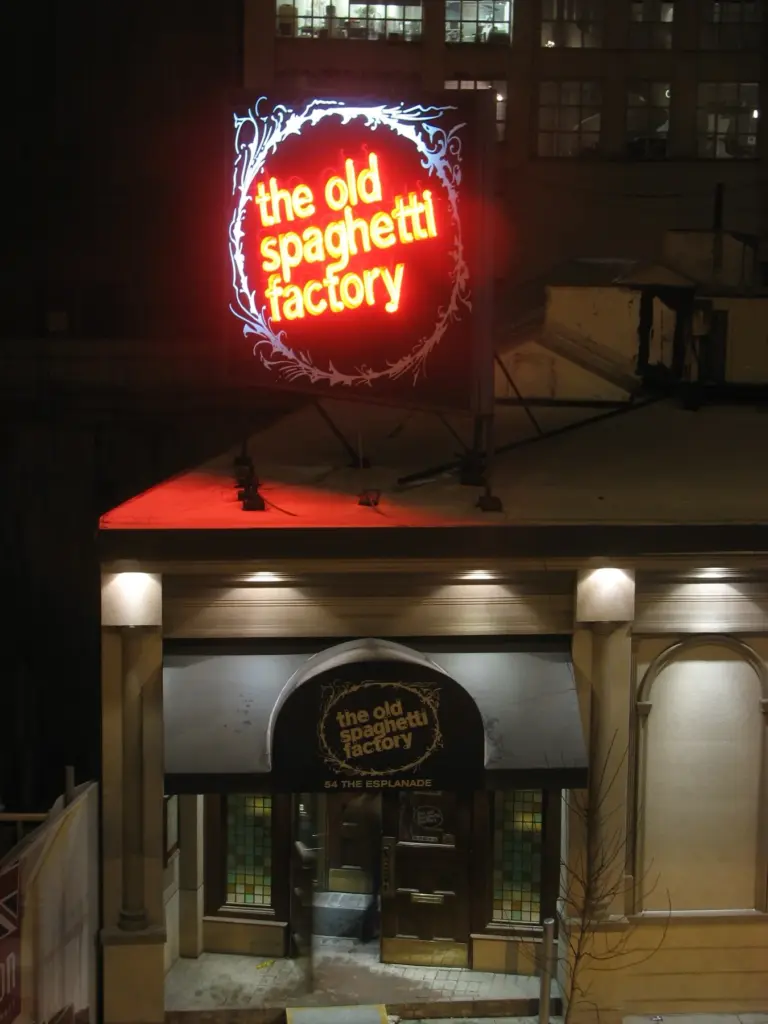
The Old Spaghetti Factory opened its Toronto restaurant in a converted warehouse in 1971. The room at 54 The Esplanade is a huge part of the experience. The streetcar, old signs and busy decorations are what many people remember first.
Go because you want the playful room and a familiar family meal. If you judge it only as a plate of pasta beside every newer Italian restaurant in Toronto, you may miss why it lasted.
The room also explains who will not enjoy it. A person looking for quiet, modern Italian cooking may find the decorations and family noise distracting. A child or adult who enjoys spectacle may care more about the old streetcar than the sauce. That is not avoiding judgement. It is judging the whole restaurant it chose to be.
The Old Spaghetti Factory Toronto map
54 The Esplanade, Toronto, ON M5E 1A6
Swiss Chalet
Swiss Chalet is tied to family dinners, festive meals and a very specific sauce. The experience changes a lot between eating in a dining room and opening a delivery bag at home.
If the memory is about the restaurant, choose a current dine-in location. Toronto still has them, including the Swiss Chalet on Yonge Street near St. Clair. Check the official location page before travelling because chain locations change.
Order the meal you remember before comparing newer menu items. Notice whether the disappointment comes from the chicken, sauce, sides, portion or dining-room format. “It is not the same” is a feeling. Naming the changed part makes the revisit useful.
Swiss Chalet Yonge Street map
1560 Yonge Street, Toronto, ON M4T 2S9
Mandarin
Mandarin made the buffet feel like an event for many Toronto families. The joy was often choice: soup, noodles, fried food, fruit and dessert in one trip.
An adult may now focus on price, lineups or which tray was just filled. A child focused on freedom. The old Yonge and Eglinton branch closed in 2026. For a current Toronto example, use Mandarin Scarborough at 2206 Eglinton Avenue East. Judge the whole outing rather than trying to rebuild one plate from 20 years ago.
Buffets also change minute by minute. One tray may be fresh while another has waited. A fair revisit samples a few core items and does not build a plate from every category simply because it is available. The price pays for choice, service and the room as well as the best bite.
Mandarin Restaurant Scarborough map
2206 Eglinton Avenue East, Scarborough, ON M1L 4S7
Square Boy
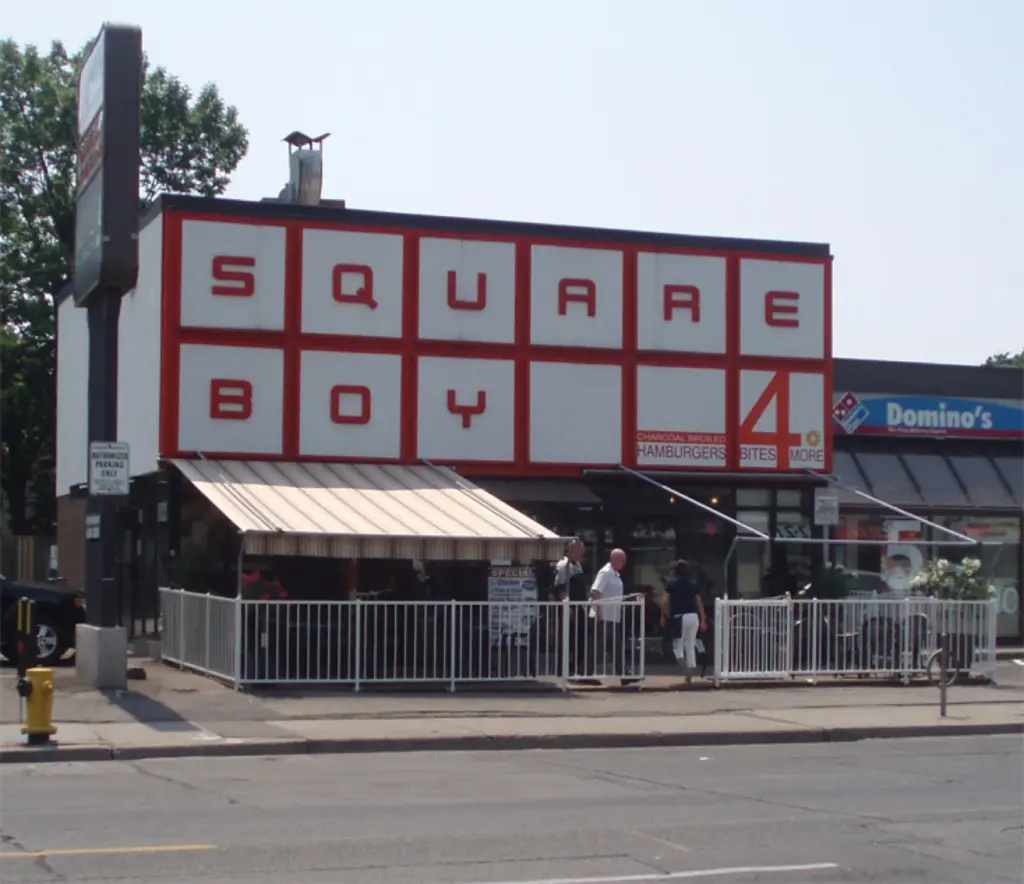
Square Boy at 875 Danforth Avenue is the kind of place people remember through a single order and a simple routine. The cash-only setup and old-school counter are part of its identity.
The useful expectation is a neighbourhood burger stop, not a luxury burger competition. Bring cash and check current hours before going.
Square Boy is a good test of whether you miss flavour or ritual. Order simply, eat it while hot and notice the counter, pace and neighbourhood. Comparing it with a tall chef burger changes the question. The fair comparison is whether it still works as the kind of stop it is.
Square Boy map
875 Danforth Avenue, Toronto, ON M4J 1L8
Open Square Boy in Google Maps. See the Square Boy Place page.
Pizza Hut
For many people, the memory is not only pizza. It is a red-roof dining room, a pan at the table and a group event. Many current Toronto Pizza Hut locations focus on delivery and takeout. The official branch at 810 Church Street, for example, advertises delivery and carryout.
Ordering the same brand at home may not recreate the old outing because the old outing no longer exists in the same form.
If the dine-in ritual is the memory, no delivery branch can fully pass the test. Judge the current pizza as takeout. Keep the red-roof dining-room memory as a separate thing.
Pizza Hut Church Street map
810 Church Street, Toronto, ON M4W 2M4

What about restaurants that closed?
Closed places are the hardest memories because they can never get another fair test.
People still talk about Lick's burgers, Toby's, Lime Rickey's, Mr. Greenjeans, Mission Burrito, Organ Grinder and many other Toronto spots. Some memories are about the food. Others are about a room that let kids feel grown up, or a menu that felt exciting at the time.
Do not rush to find a perfect replacement. A new restaurant should be allowed to be itself. The closest modern burger may use better beef and still not feel like the burger you ate after school.
Closed restaurants also change inside memory. You usually remember the best visit, not the slow Tuesday when the fries were cold. Without a current meal to correct the story, the strongest version wins.
Old menus, family photos, newspaper archives and street images can help preserve the real details. They are better evidence than confidently stating a recipe or price from memory. A former employee or owner may know more, but one person's story can still be incomplete.
Our guide to closed Toronto spots we still miss is a better place to enjoy that history without pretending the past can be copied.
How to revisit an old favourite without ruining the memory
Order the signature item
Do not test a childhood place with a random new menu item. Order the meal that created the memory, if it still exists.
Choose the right location
Chain restaurants can vary. Look for a current dine-in location if the room was important. Read the official menu and location page first.
Go at a calm time
A packed Saturday dinner is a bad place for a delicate memory. A weekday lunch or early dinner gives the restaurant a fairer chance.
Bring the right person
If the memory belonged to a sibling, parent or old friend, the conversation may matter more than the meal.
Allow one new tradition
Order the old favourite, then add something current. The best outcome may not be a perfect copy. It may be a new reason to return.
Do not bring a whole jury
A large group can turn one meal into a public vote on your childhood. Go with one person who understands the memory, or go alone. You will notice the food more clearly and feel less pressure to defend the place.
Set a realistic spending limit
Look at the current menu before leaving. If the price already makes you angry, the meal begins with a problem the kitchen cannot solve. Choose lunch, share a side or wait for a day when the cost feels like an acceptable experiment.
How to tell if the restaurant changed or you did
Ask four questions after the meal:
- Was the food cooked badly, or was it simply different from my memory?
- Did the price change my expectation?
- Was I missing a person or place more than a flavour?
- Would I recommend this meal to someone with no history here?
The fourth question is the most useful. It separates a working restaurant from a personal time machine.
You can also score the revisit in five separate parts:
| Part | Ask |
|---|---|
| Food | Was it properly cooked and enjoyable now? |
| Value | Did the total price match the meal and setting? |
| Room | Did the current space add anything? |
| Memory | Which feeling or person was I really looking for? |
| Return | Would I come back without the childhood story? |
A restaurant can score high on memory and low on current food. It can also serve a good meal that does not unlock the old feeling. Separating those results is more honest than one dramatic verdict.
What if another person remembers it differently?
That is normal. Siblings can remember the same family dinner in opposite ways. One person loved the dessert table. Another remembers waiting in line. A parent remembers the bill.
Do not use one person's nostalgia as proof that a restaurant used to be objectively better. Compare details, not authority. Ask which location, year, dish and occasion they mean.
Is it fair to write a harsh review?
Review the meal you received, not the childhood you could not recover.
It is fair to mention cold food, a wrong order or poor service. It is less fair to say a restaurant is terrible because it no longer feels like a birthday in 1998. Be specific. Give the current team something they could actually fix.
Our take
Toronto needs old restaurants. They give the city continuity. A dining room that has survived several waves of rent, road work and changing taste has value even when every dish is not the best in its category.
But survival does not place a restaurant above criticism. Go back with open eyes. Keep the memory, judge the current meal honestly, and accept that both can be true.
Frequently asked questions
Why does childhood food taste different as an adult?
Your palate, expectations and memories have changed. The recipe, supplier, portion or restaurant may also be different. Usually more than one factor is involved.
Did Toronto chain restaurants change their recipes?
Some chains change ingredients, suppliers and menus over time. A different franchise location can also cook the same item differently. Check current official menus, but do not assume one disappointing meal proves a company-wide recipe change.
Is the Old Spaghetti Factory in Toronto still open?
Yes. Its Toronto location at 54 The Esplanade is open, with current hours and reservations on its official site. The highly decorated room remains a large part of the visit.
Is Square Boy still cash only?
Its current site says the restaurant at 875 Danforth Avenue is cash only. Check the site or call before travelling because payment rules and hours can change.
Are there still dine-in Swiss Chalet restaurants in Toronto?
Yes, but not every location has the same setup. Use the official Swiss Chalet location finder and choose a restaurant marked for dine-in. Do not rely on an old address.
How should I review a nostalgic restaurant fairly?
Describe the current food, service, price and setting. Separate those facts from the feeling that the place used to mean more to you. This makes the review more useful to other diners.
The bottom line
A childhood restaurant can serve the same name and still feel different. Go back for a meal, not a miracle. If the food is good, build a new memory. If it is not, you can let the old one stay good.