

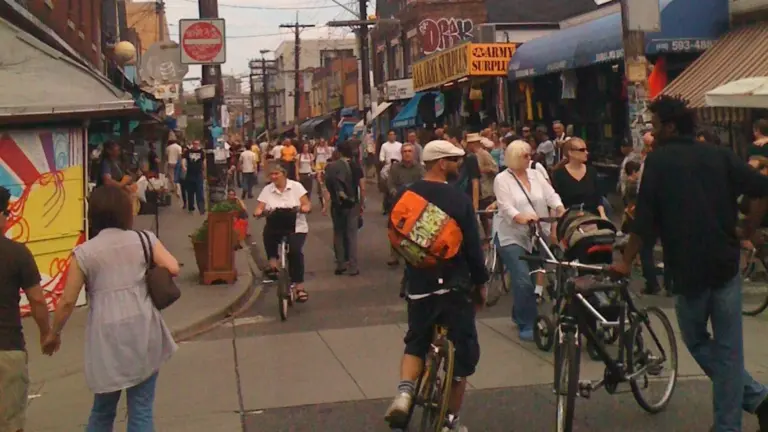

Toronto proved in 2026 that a busy downtown street can close to cars without the city falling apart. The Church Street pilot created two pedestrian blocks between Wellesley Street East and Alexander Street. People used the extra space. The real criticism is that Toronto treated two short blocks as a daring experiment.
Our verdict: Kensington Market should be the next major pedestrian-priority district. Yonge Street through the Eaton Centre area should be the next permanent downtown street. Ossington Avenue is the best weekend-evening candidate. Church Street should return in a longer form. The weakest idea is closing a street for a few hours without shade, seating, toilets, deliveries or a reason to stay. An empty road is not a public space plan.
The 20 locations below include existing pedestrian areas, pilots and editorial candidates. A candidate is not a City proposal unless we clearly say so.
What happened on Church Street in 2026?
The City closed Church Street to regular vehicles between Wellesley Street East and Alexander Street from June 19 to August 21, 2026. East-west crossings remained. The pilot tested a pedestrian-focused street during Pride and the summer.
The closure was short in distance and time. It still mattered because it moved the argument from theory to evidence. People could see the street without through cars.
The City survey remained open until September 7, 2026. A final judgment should use collision, access, business, delivery and visitor data, not only happy photos or angry comments.
Our early view is positive. The site needs more shade, seating, programming and a longer connected stretch if it returns.
Toronto's car-free street types
Not every project needs the same rule.
- A permanent pedestrian street removes regular through traffic all year.
- A pedestrian-priority street allows deliveries, emergency access and some local vehicles at restricted times.
- A seasonal street closes for summer or another set period.
- A weekend or evening street closes only during the busiest social hours.
- An event closure is temporary and tied to a festival.
Kensington Market needs delivery and resident access. Yonge near the Eaton Centre can handle a stronger permanent treatment. Ossington may suit evening closures first. Pick the rule to fit the street.
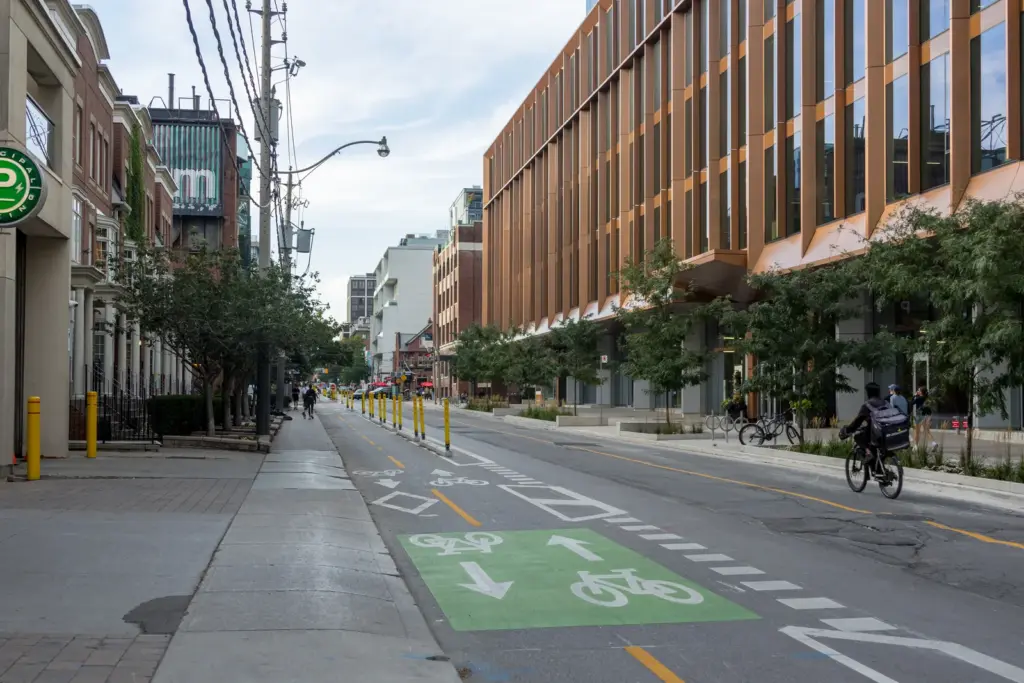

20 Toronto streets and districts that show the possibilities
This map shows an approximate area. Open the full map.
1. Church Street from Wellesley to Carlton
Status: 2026 pilot on part of this stretch, stronger return is an editorial recommendation.
The pilot proved the core idea. Extend it north and south enough to feel like a district, then add trees or shade structures, more seating and proper delivery windows.
Choose this as Toronto's next expanded seasonal project. Do not repeat the exact small pilot and call the work finished.
2. Kensington Market around Augusta Avenue
Status: recurring pedestrian and safe-street debate, not a simple permanent closure.
This is our top pick. People already walk in the road because the sidewalks are too small and the market activity spills everywhere.
Use timed delivery access in the morning, resident permits, accessible drop-off points and barriers that emergency vehicles can move. The current half-pedestrian, half-car condition is worse than making a clear choice.
3. Yonge Street beside the Eaton Centre
Status: YongeTOmorrow redesign work exists. Full car-free treatment here is our recommendation.
Pedestrian demand dwarfs the number of private vehicles the narrow blocks can serve. The subway already provides the main access.
Make this a permanent walking spine with delivery hours. This should happen before another decorative pilot somewhere quieter.
4. Gould Street at Toronto Metropolitan University
Status: existing pedestrian-priority campus street.
Gould shows that removing ordinary traffic can create a useful student public space. It also shows that design and maintenance matter after the ribbon cutting.
Keep it and improve year-round seating, winter clearing and connections to Yonge.
5. Willcocks Street at the University of Toronto
Status: existing pedestrian area.
Willcocks works because it connects campus buildings and gives students room to sit, cross and move. It has a clear daily population.
The lesson is simple. Put pedestrian streets where people already have reasons to be.
6. Market Street beside St. Lawrence Market
Status: pedestrian-focused street with seasonal and managed access conditions.
Market Street is one of Toronto's most convincing small examples. Restaurants and the market create activity on both sides.
Extend the quality of this space into nearby connections rather than treating it as one isolated block.
7. Distillery District internal lanes
Status: established pedestrian district with service access.
The Distillery proves that car-light space can be a destination. Its weakness is that it can feel privately managed, crowded and expensive.
Copy the traffic idea, not the tourist pricing or controlled atmosphere.
8. John Street through the Entertainment District
Status: public-realm corridor with partial redesign, full closure is our recommendation for selected periods.
John connects cultural venues, restaurants, hotels and the waterfront direction. It should be a comfortable walking route, not a narrow compromise beside cars.
Test weekend and event-night closures first. Keep hotel and accessible access on managed side routes.
9. Ossington Avenue from Queen to Dundas
Status: editorial candidate.
Evening restaurant and bar crowds already overwhelm the sidewalks. Cars circle for scarce parking and ride-share vehicles stop in bad places.
Close the core to through traffic on Friday and Saturday evenings. Use side-street pickup zones and early delivery hours. This is the best nightlife pilot.
10. Baldwin Street in Baldwin Village
Status: editorial candidate with a compact restaurant strip.
The block scale is friendly and the food businesses give people a reason to stay. The area is small enough for a manageable seasonal test.
Do it in summer. Keep a clear accessible route and do not let patios consume every metre of public space.
11. Bellair Street in Yorkville
Status: editorial candidate.
Bellair already carries heavy foot traffic and luxury retail activity. Valet and curb access receive too much space.
A high-quality pedestrian treatment would suit the district. The City should require nearby hotels and stores to solve loading instead of protecting the status quo.
12. Queen Street West around Trinity Bellwoods
Status: editorial weekend candidate, not a call to close the full Queen route.
The park edge, shops, streetcar and summer crowds create a strong public-space case. Closing Queen permanently would disrupt transit, so the design must keep streetcars moving.
The better idea is transit-only operation with wider pedestrian edges during selected weekends.
13. College Street through Little Italy
Status: festival closures exist, regular seasonal priority is our recommendation.
The street already shows its potential during events. A summer Sunday programme could support restaurants without blocking transit every day.
Keep streetcars or use a clearly planned diversion. A car-free event that strands TTC riders is poor planning.
14. Danforth Avenue in Greektown
Status: editorial seasonal candidate.
The street has subway access, strong restaurants and a history of large pedestrian events. Start with selected Sundays or evening blocks.
Do not make the closure so short that traffic setup consumes the whole day.
15. Roncesvalles Avenue near Dundas West
Status: editorial event or Sunday candidate.
Roncesvalles has shops, restaurants, transit and a walkable customer base. The streetcar must remain the priority.
Use a transit-only main street with delivery windows, not a total closure that removes the route people use to arrive.
16. Dundas Street West in the Junction
Status: editorial weekend candidate.
The bend near Keele and Dundas creates a distinct district but also awkward traffic. A selected summer closure could reveal how much space people need.
Test one connected section and publish business and traffic results. Avoid a scattered series of tiny fenced blocks.
17. Queen Street East in Riverside
Status: editorial event candidate.
Riverside has a compact business strip, bridge views and strong streetcar access. Selected Sunday closures could connect food, market and art programming.
Keep transit moving. The streetcar should be the way into the car-free event.
18. Queen Street East in the Beaches
Status: editorial seasonal candidate.
Summer foot traffic is high and the commercial strip connects to the lake. A short weekend section could work.
The challenge is local access and a very long streetcar corridor. Use a limited segment and transit-only operation instead of cutting the route.
19. Weston Road through Weston Village
Status: editorial community pilot candidate.
Toronto should not put every public-space experiment downtown. Weston has a GO and UP Express station, local businesses and community events.
Test a market-day closure designed with residents and vendors. This would serve a neighbourhood, not only visitors.
20. Scarborough Civic Centre precinct
Status: existing civic pedestrian spaces with a case for stronger connections.
The plaza and library area already favour people on foot, but surrounding roads and construction can break the network.
Build a clear car-free connection between civic buildings, transit and future development. Scarborough deserves more than a downtown copy.
What makes a car-free street work?
A reason to be there
Food, shops, a market, a library, a campus, events or a park create activity. Closing an empty office street on Sunday will produce an empty street.
Enough time
Businesses and residents need to learn the new pattern. A two-day pilot proves almost nothing about long-term use.
Deliveries that actually work
Set loading hours. Mark bays on side streets. Provide access for large or fragile goods. Do not leave each business to improvise.
Accessible arrival and movement
Create firm, level routes, seating with backs and arms, accessible drop-off points, smooth crossings and toilets. A street without cars can still exclude people.
Shade and weather protection
Toronto's summers are hotter and smokier. A bare road with plastic barricades is not comfortable public space.
Transit that stays useful
Keep streetcars and buses moving where possible. A transit-only street often gives Toronto more benefit than a total closure.
Honest measurement
Count pedestrians, travel times, sales patterns, deliveries, emergency access, collisions, noise and who can use the space. Publish the method and results.
What usually fails
A closure fails when it is too short, hard to find, empty, full of private patio furniture or surrounded by unmanaged traffic.
It also fails when the City calls every inconvenience fatal. A driver taking a different street is not the same as a wheelchair user losing the only accessible entrance.
Business claims need evidence. Some stores benefit from foot traffic. Others need loading or quick pickup. Solve the real operational issue instead of treating all businesses as one opinion.
.jpg)
The Kensington Market plan we would choose
Use a pedestrian-priority zone, not an absolute sealed street. Allow deliveries during a morning window. Give residents and accessible taxis controlled entry at walking speed. Keep emergency access clear.
Install simple rising or removable barriers at key entries. Create marked loading points on the edge. Add public seating that does not require buying food. Provide washrooms and drinking water.
Run the system for a full season. Measure it. Then make it permanent if the evidence supports it.
Kensington has waited long enough for a clear design.
Could Yonge Street really close to cars?
Yes, in selected central blocks. The subway carries vastly more people through the corridor than private vehicles do. Delivery and emergency access can use timed or controlled entry.
The harder question is political, not technical. Toronto keeps asking whether drivers can lose any convenience. It should ask why thousands of people on foot receive the narrow remainder.
The YongeTOmorrow work is useful. The final street should be judged by how much continuous space people get, not how many new pavers appear.
How to support or oppose a project usefully
Read the actual boundary and hours. State the access need or problem. "I like walking" and "I hate traffic" are not enough.
If you support a closure, ask for delivery, accessibility, washroom, shade and transit plans. If you oppose it, explain the trip or service that cannot work and suggest a route or time that would.
Contact the project team and councillor. A detailed local response is more useful than a generic comment under a photo.
Keep exploring Toronto
- Toronto summer date ideas that work without a car
- Twelve underrated neighbourhoods worth walking
- Six short itineraries near the Financial District
Official pages to check
Prices, rules, hours and project details can change. Check these primary pages before you spend money or make a special trip:
- Church Street pedestrian pilot
- Church Street Council item
- Citywide pedestrian streets programme
- Toronto pedestrian street background
Frequently asked questions
Is Church Street permanently car-free?
No. The 2026 project was a summer pilot between Wellesley Street East and Alexander Street. The City must decide what comes next after reviewing results.
What is Toronto's best existing pedestrian street?
Market Street is the strongest small public example because the St. Lawrence Market and restaurants give it daily purpose. The Distillery District is larger but more tourist-focused and privately controlled in feel.
Which Toronto street should become car-free next?
Kensington Market is our top pedestrian-priority district. Yonge Street beside the Eaton Centre is the strongest permanent downtown candidate.
Would a car-free street block deliveries?
It does not have to. Good projects use timed delivery windows, edge loading bays and controlled access for necessary vehicles.
Can streetcars keep running on a car-free street?
Yes. A transit-only street can remove private through traffic while keeping streetcars. This is the better model for Queen, College, Roncesvalles and several other corridors.
Do pedestrian streets hurt businesses?
Results depend on the business, design and access plan. Measure sales patterns and delivery needs. Do not assume every shop gains or every shop loses.
How long should Toronto test a pedestrian street?
A full season is more useful than a weekend. The test should cover ordinary days, busy days, weather changes and delivery operations.