

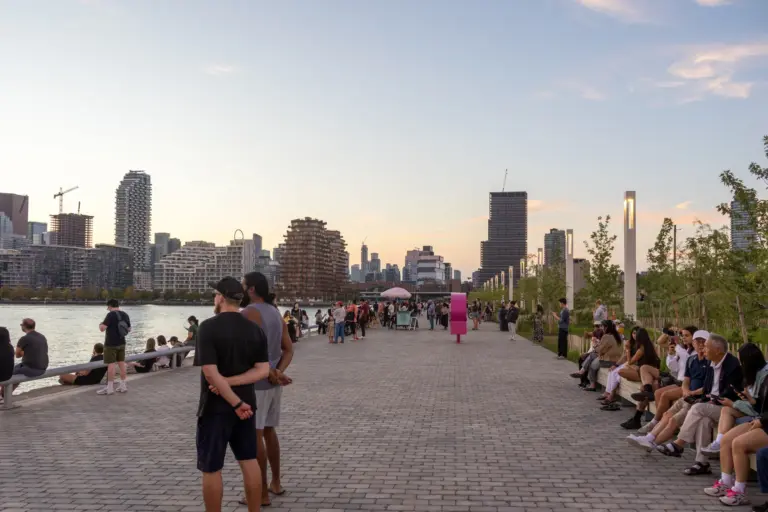

Downtown Toronto has offices, towers, theatres, restaurants and transit. What it often lacks is the easy middle of city life: a clean washroom, a bench in the shade, a late coffee, a safe bike route and a street where walking feels like the main event.
The best downtown improvements are not one giant attraction. They are small systems that make an ordinary Tuesday easier. Here are the changes that would matter most.
The quick list
| What downtown needs | Why it matters |
|---|---|
| More public washrooms | People cannot spend time outside without them |
| Better seating and shade | A city needs places to stop without buying something |
| More pedestrian-first streets | Walking should feel pleasant, not like crossing a highway |
| Later everyday businesses | Downtown should work after office hours |
| Affordable independent spaces | Local shops and music rooms give an area a reason to return |
| Safer bike connections | A protected lane is only useful when the route connects |
| More visible public care | Cleaning, outreach and maintenance shape how safe a place feels |
| Indoor play that is not only shopping | A city centre also needs affordable reasons to stay and have fun |
1. Public washrooms that are easy to find
This is the most basic gap.
A parent with a child, a delivery worker, a person with a health condition and a tourist all need the same thing. They should not have to buy a coffee and hope a private business says yes.
The city needs more washrooms in busy parks, squares, transit areas and night districts. They need long hours, clear signs, regular cleaning, accessible stalls and winter plans. A locked building is not a public service.
An online map also needs live details. It should say whether a washroom is open now, step-free, equipped with a change table and temporarily closed.
The PATH, shopping centres and office food courts are useful fallbacks during business hours. They are not a complete public system. Entrances and washrooms can close early, weekend routes can be confusing and a person should not need to understand a private underground network during an urgent moment.
Toronto should publish one dependable washroom layer for the whole downtown. Each listing should show the entrance, hours, accessibility, family facilities and last inspection. Temporary closure information matters as much as the pin.
Self-cleaning units can help at a few high-use locations. They still need inspection, winter service and a way to call for help. Technology does not remove the need for people to maintain the space.
2. Benches, shade and places to pause
Downtown is designed very well for moving and spending. It is less generous when you simply need to sit.
More benches would help older adults, people with disabilities, pregnant people, children and anyone carrying bags. Shade trees, drinking fountains and covered areas matter during heat, rain and snow.
Seating should not be designed to push away people who need rest. A useful bench has a back, some arm support and enough space around it for a mobility device.
Placement matters. A bench in full afternoon sun does not solve a heat problem. A bench behind a snowbank is not winter seating. The city should test routes used by older adults, hospital visitors, families and transit riders, then place rest points at useful intervals.
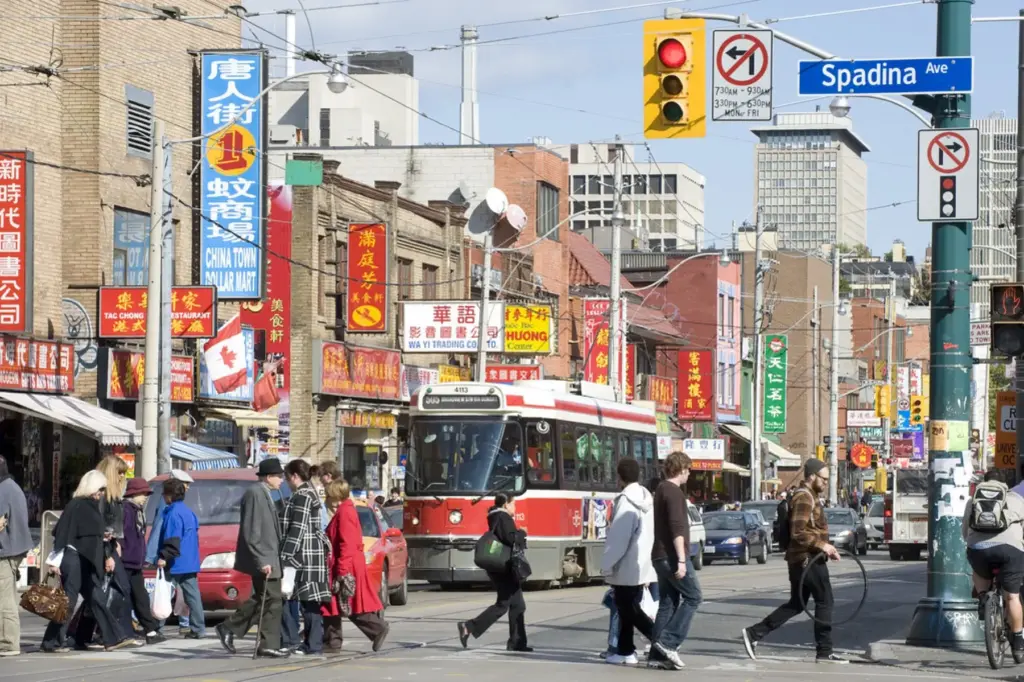
3. Pedestrian streets that feel permanent
Toronto often treats a car-free block as a special event. It should also be normal city design.
The King Street Transit Priority Corridor already shows that a downtown street can give transit and people more importance. The YongeTOmorrow plan aims to improve walking, seating and landscaping on part of Yonge Street. The larger opportunity is to connect these projects into a clear walking network.
That does not mean closing every road. Deliveries, emergency access, accessibility and local businesses still need practical plans. It means choosing a few streets where walking is the main use, then giving them real paving, trees, lighting and year-round care.
Front Street between the Flatiron Building area and St. Lawrence Market is the kind of place where this deserves a serious test. The market, Berczy Park and nearby restaurants already attract people. A pedestrian-first design could connect them instead of treating each as a separate island.
But the design must work after the market stalls close. Lighting, evening food, public seating and regular programming would decide whether it becomes a town square or an empty block. A weekend closure with plastic barriers would not prove the idea either way.
St. Lawrence Market map
93 Front Street East, Toronto, ON M5E 1C3
Open St. Lawrence Market in Google Maps. See the St. Lawrence Market Place page.
4. A better evening economy
Downtown can feel busy at 5 p.m. and oddly thin a few hours later outside the entertainment areas.
The City of Toronto defines the night economy as activity from 6 p.m. to 6 a.m. It includes much more than bars. It includes restaurants, concerts, pharmacies, shops, transit, food workers and people ending a late shift.
Downtown needs more late coffee, simple meals, grocery options and places to sit that do not require alcohol. Later hours only work when transit, lighting, washrooms and worker safety work too.
St. Lawrence Market shows the problem clearly. The building can remain open while many individual merchants have already closed. A useful evening plan would need enough participating vendors, not only a later door-closing time. Small events, food counters and the North Market building could help, but only if the schedule is predictable enough for people to plan around it.
5. Affordable spaces for independent shops
A downtown made only of banks, pharmacies and large chains is convenient but forgettable.
Small bookstores, repair shops, music stores, bakeries and specialty grocers create reasons to visit one block instead of another. They also need smaller units, fair leases and steady foot traffic.
The city cannot set every private rent. It can use public properties, market spaces, cultural buildings and development agreements more creatively. Short-term pop-ups help, but a neighbourhood also needs businesses that can stay long enough to become familiar.
6. More live music rooms and small nightlife spaces
Toronto has major concerts. The fragile part is the small room where a new band, jazz group, DJ or comedy act builds an audience.
Small venues face rent, sound rules, insurance and neighbour complaints. Better soundproofing support and smarter planning can help homes and music coexist. The answer is not to place every venue on one loud street. It is to protect a range of rooms across downtown.
Our guide to Toronto live music venues is a good start for a night out. A healthy city needs the next generation of rooms too.
7. Connected cycling routes and practical bike services
A protected lane that ends at a dangerous intersection is not a complete route.
Downtown needs connections between east-west and north-south lanes, safer turning design and places to lock a bike without blocking a sidewalk. More repair stands and late bike shops would help commuters who discover a flat tire after work.
Bike Share is useful, but it does not replace every need. Some riders carry children, tools or groceries. Cargo-bike parking and larger secure spaces should be part of the plan.
8. Transit that is easier at night
The TTC carries the centre of the city, but late service can be hard to understand when the subway closes, a streetcar diverts or construction changes a stop.
Toronto's Blue Night routes keep service moving after subway hours. The missing piece is often clarity. Riders need better wayfinding between the last train and the correct night stop, more accurate disruption signs and safe places to wait.
Downtown also needs streetcars and buses that are not trapped behind avoidable traffic. Transit priority is a public-space decision because it changes how many cars the centre needs.
9. Everyday food after midnight
Late food does not need to mean only pizza, shawarma and fast-food drive-throughs.
Shift workers and people leaving an event need soup, rice, breakfast, groceries and places where one person can sit comfortably. Twenty-four-hour businesses are difficult to run, especially with labour and security costs. A wider group of places open until 1 or 2 a.m. would still make a major difference.
Our late-night Toronto dessert guide shows the demand. Downtown needs the everyday version too.
10. More useful waterfront connections
Toronto's waterfront has improved, and the opening of Biidaasige Park added 10 more acres of parkland in July 2026. The next job is making the waterfront feel connected to the rest of downtown.
Biidaasige Park map
11 Munition Street, Toronto, ON
People need comfortable walking and cycling routes across the rail and road barriers. Wayfinding from Union Station should be simple. New parks need shade, washrooms, drinking water and transit, not only beautiful opening-day photos.
Quayside and the Water's Edge Promenade can improve the eastern waterfront. They should be judged by how easy they are to reach and use on an ordinary day.
11. Public spaces that invite activity
A plaza should offer more than paving and a sign.
Good public space can hold chess tables, food stalls, winter shelter, small performances, play areas and quiet corners. It can change during the day without becoming a paid event every weekend.
The TOcore plan already treats parks and public space as essential infrastructure. The practical test is simple: can a person spend an hour there comfortably without buying a ticket?
12. Care, cleaning and safety without cruelty
People notice overflowing bins, broken lights, open drug use and someone in a serious health crisis. Ignoring these conditions is not kind to anyone.
The answer cannot be only enforcement or moving people to the next block. Downtown needs regular cleaning, mental-health response, overdose prevention, shelter, supportive housing and staff who can connect people to help. It also needs clear action when someone threatens or harms others.
A safe downtown is not one where poverty becomes invisible. It is one where public space is cared for and people in crisis have somewhere better to go.
What about a large retro arcade downtown?
Yes, this idea belongs in the conversation.
A large retro arcade in the centre could give teenagers, visitors, office workers and adults who do not want a bar somewhere playful to go. The strongest version would mix classic cabinets, pinball, rhythm games and simple food. It would stay open into the evening and charge a clear admission price instead of making every game feel like a small financial decision.
The hard part is downtown rent. Arcade machines use a lot of floor space and need repair. A private operator may need food, events, memberships or a mixed-use lease to survive. A public or cultural building could also offer temporary arcade programmes without pretending the city should operate a permanent game business.
Our view is that downtown needs this kind of indoor fun, but not only one giant arcade. It needs bowling, pool, all-ages music, games, workshops and quiet late spaces too. The real gap is affordable social play that is not shopping and does not require alcohol.
How should Toronto measure whether an improvement worked?
Opening day photos are not enough. Each project should publish a few simple results after six months and again after one year.
For a washroom, show open hours, closures, cleaning frequency and accessibility complaints. For a pedestrian street, show foot traffic, transit delay, delivery access and business turnover. For a bike route, show collisions and whether riders can complete the whole connection without mixing with fast traffic.
Public feedback should include people who use the place at night, in winter and with mobility needs. A project that only feels good at noon in July is not finished downtown infrastructure.
What is Toronto already doing?
Several current projects point in the right direction:
- YongeTOmorrow is intended to improve walking, public seating and landscaping on part of Yonge Street.
- TOcore sets a long-term planning framework for downtown growth, parks and public space.
- The King Street corridor gives streetcars and people more priority.
- Toronto's night economy work recognizes that the city after 6 p.m. needs its own rules and support.
- Waterfront Toronto is building new parks, streets and public access in the east end of the harbour.
These are real steps. They are not proof that the work is finished. Plans should be judged by completed blocks, open washrooms, healthy trees and a better daily trip.
What should happen first?
Our first five would be:
- Open and map more public washrooms with long hours.
- Add benches, shade and drinking fountains on the busiest walking routes.
- Finish a connected pedestrian and cycling network.
- Improve night transit information and safe waiting areas.
- Protect small cultural and retail spaces before they disappear.
These changes are not as dramatic as a new tower. People would feel them every day.
Frequently asked questions
What is downtown Toronto most lacking?
Downtown Toronto most lacks comfortable public basics: washrooms, benches, shade, easy walking routes and useful late-night services. These small systems shape whether people stay or leave after one task.
Does Toronto have a plan for downtown public space?
Yes. TOcore is the city's planning framework for downtown growth, parks and public space. Projects such as YongeTOmorrow and the King Street corridor deal with specific streets.
Why are public washrooms so important downtown?
Without washrooms, children, older adults, disabled people, workers and visitors cannot stay comfortably. A useful washroom must be open, clean, accessible and easy to find.
Is Toronto creating more pedestrian streets?
Toronto has pedestrian projects and car-free events, but the network is still limited. YongeTOmorrow and the King Street corridor move in that direction without making every downtown street car-free.
Is downtown Toronto safe at night?
Safety changes by block, time and situation. Good lighting, open businesses, frequent transit, outreach, cleaning and quick help all matter. If a place feels unsafe, move to a busy area and call 911 for an immediate threat.
What new park opened on Toronto's waterfront in 2026?
Biidaasige Park expanded in July 2026 with 10 additional acres. It is part of the new eastern waterfront landscape. Check current transit and access details before going because the area is still developing.
How can residents support a better downtown?
Use city consultations, contact the councillor for the project area and support independent businesses and cultural spaces you want to keep. Report broken lights, illegal dumping and service problems through 311 with a clear location.
The bottom line
Downtown Toronto does not need one magic attraction. It needs hundreds of ordinary things to work together. A bench, washroom, late bus and small music room may sound modest. Together, they make a city centre worth living in, not only commuting through.